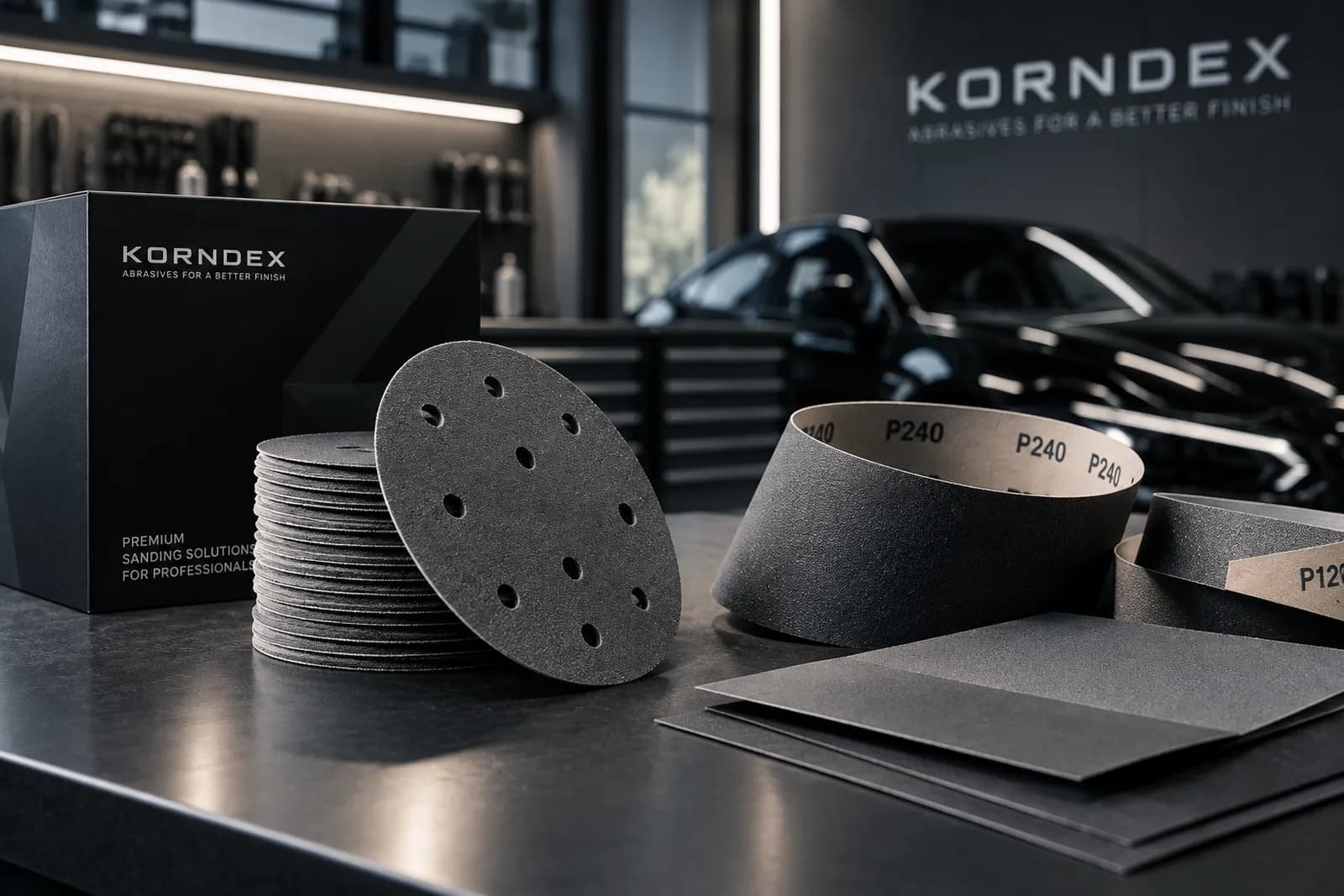
Guide coat for Primer coat Everything that goes with sanding.
Backing pads, interface pads, hand blocks, masking tape, guide coat and dust masks – everything for the job, not just the abrasive.
Accessories – results
- 100 g cartridge + applicator
- Contents
Related guides
Read first, then sand
Why the disc no longer grips the backing pad, how sandpaper stays dry and flat, and how to keep edges straight with a hand block – explained in brief.
Car & paint
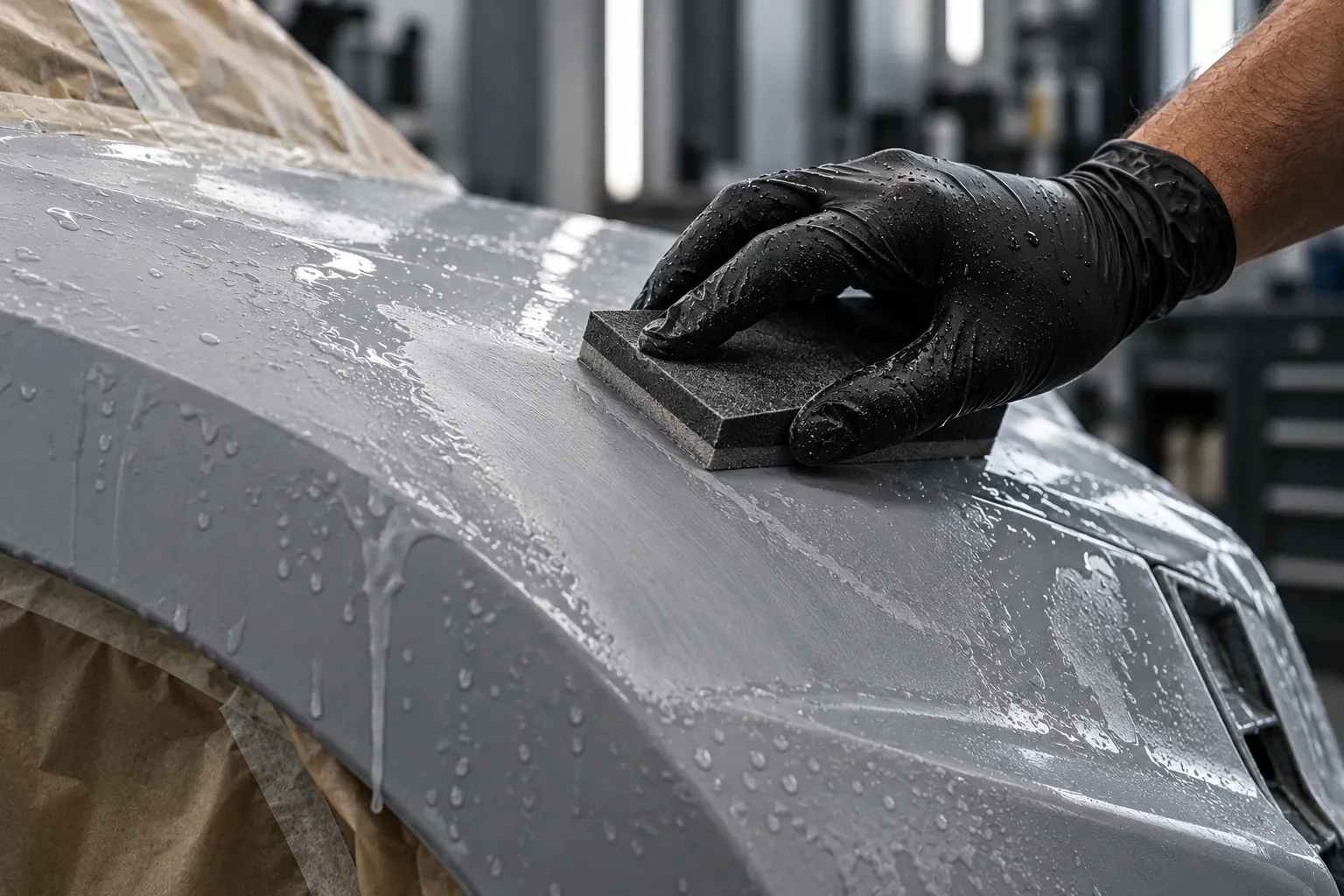
Sanding primer surfacer: wet or dry?
Dry with mesh and dust extraction is faster and cleaner; wet is fine and dust-free. P320 to P400 for the surface, P600 before clear coat or light colours.
P320 → P400 → P600
Read · 1 min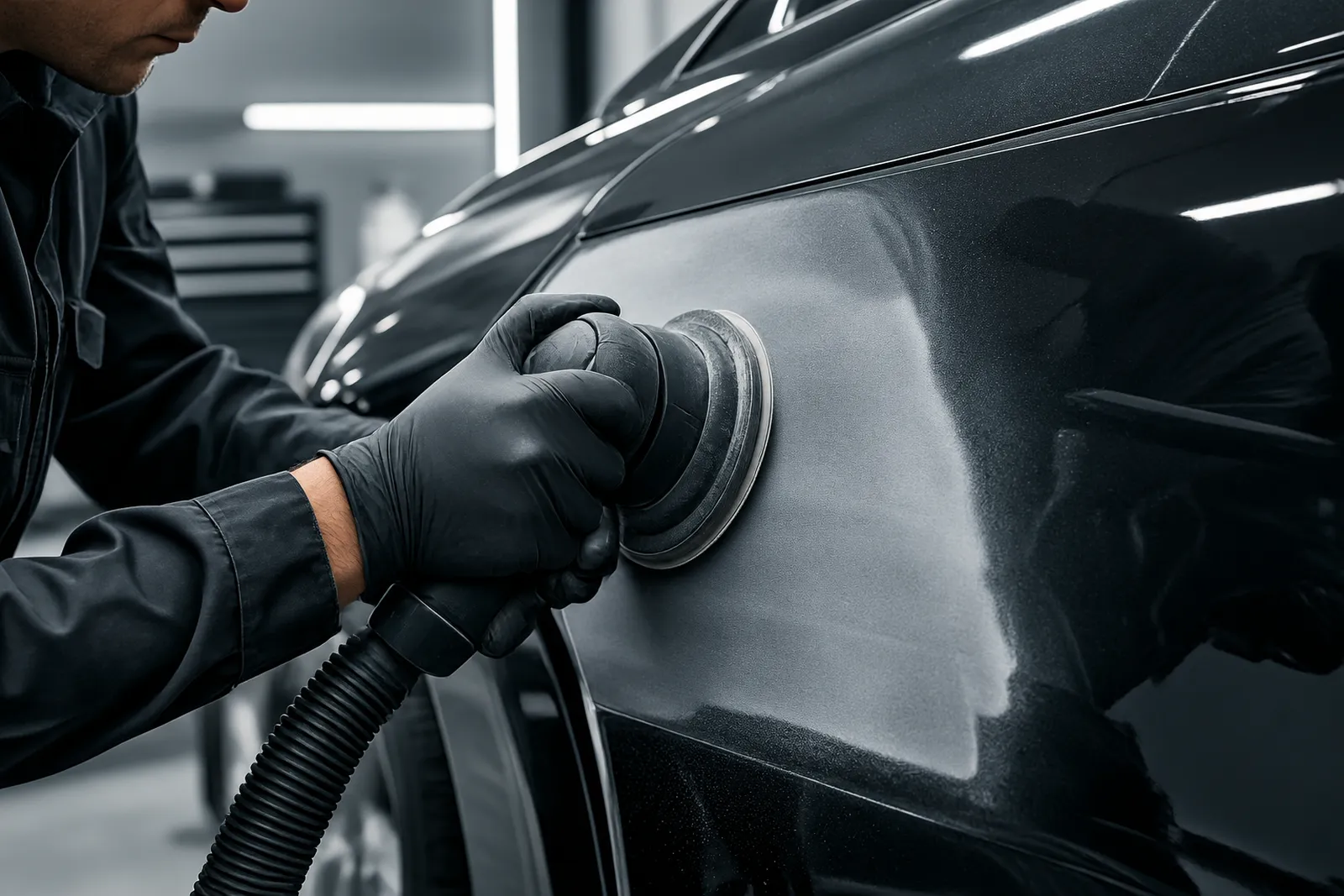
FAQ
Questions about accessories
Which backing pad fits my machine?
Three things have to match: the diameter (125 or 150 mm – the same as the discs), the mount – a 5/16" thread on most random orbital sanders, M8 on some – and the hole pattern for dust extraction. The KORNDEX pad has a 5/16" thread and multihole pattern, so it fits Festool, Mirka, Bosch Professional, Makita, Rupes and others with this mount. Your machine’s manual tells you which mount it has.
Do I need an interface pad?
For paint, curves and edges, yes: the soft layer between backing pad and disc gives a little, follows contours and protects edges. On flat surfaces and for heavy stock removal you can do without. Under mesh discs use a pad with an open structure or matching holes so the dust is still extracted.