Sanders & technique · 1 min read
Sanding dust: extraction and masks
Dust should be extracted before it ever reaches the air – and whatever still rises is caught by an FFP2 mask. Why this also makes your discs last longer.
Last updated: · published
Extract at the source
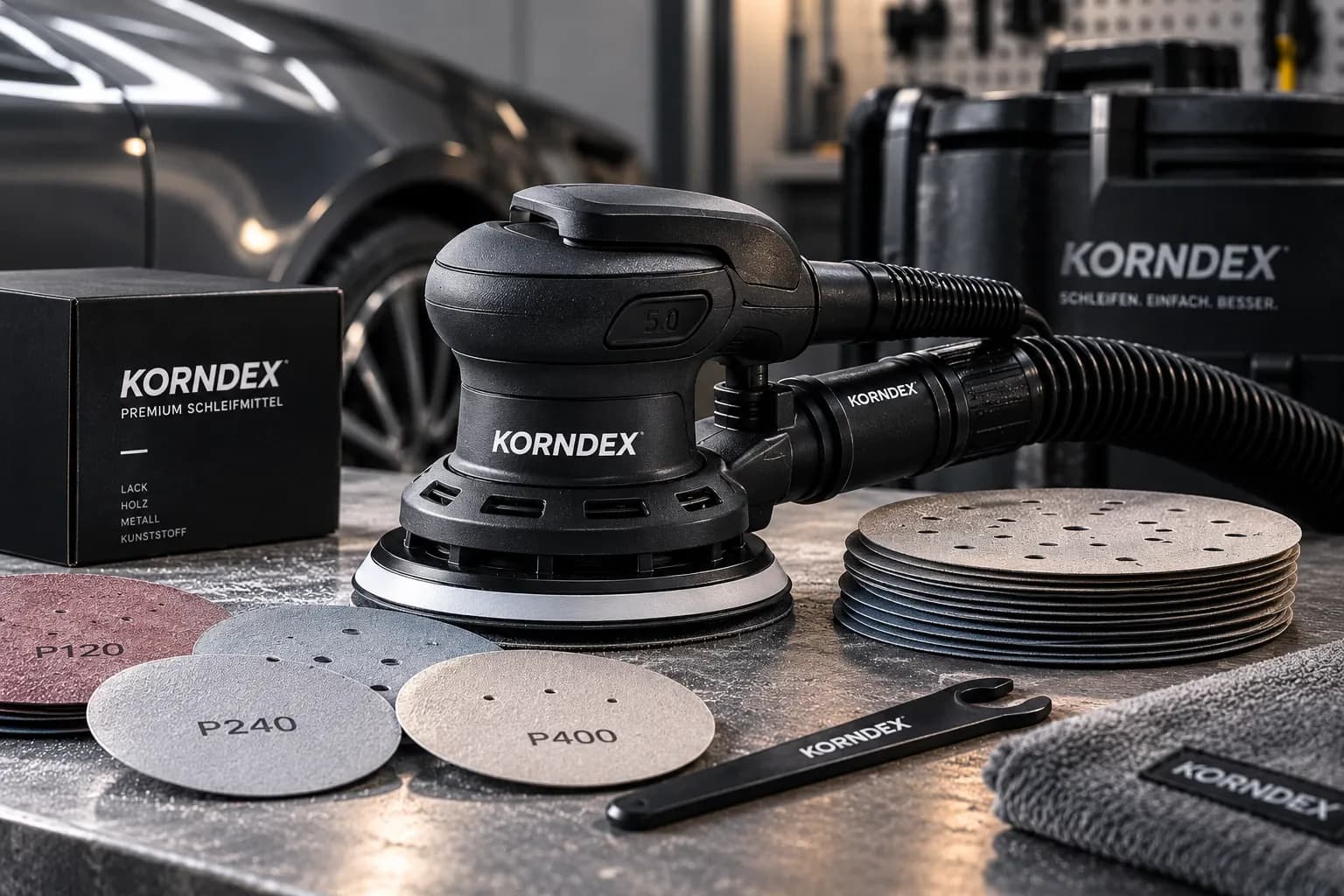
The most effective protection is dust extraction right at the sander: a machine with a perforated backing pad, perforated or mesh discs, and an extractor with a matching hose. Whatever is pulled away at the disc ends up neither in your lungs nor on the freshly sanded surface – and it does not clog the disc.
Mesh discs extract across the whole surface, perforated discs only through their holes. The hole pattern of disc and backing pad must match; multi-hole discs fit every common pattern.
A mask for the rest
Even with extraction, fine dust still rises – when hand sanding, at edges, when tapping out a disc. An FFP2 dust mask filters it. It has to seal tightly; with a beard or the wrong size, air simply flows past the edges.
In Germany, oak and beech dust is classed as carcinogenic, and paint and filler dust do not belong in your airways either. In workplaces, the risk assessment and occupational safety regulations set out what is required.
FAQ
Is an FFP2 mask enough, or do I need FFP3?
FFP2 is enough for sanding dust from wood, paint and filler. Use FFP3 for old coatings that may contain lead, or when a lot of dust is produced without extraction.
Can I use my household vacuum cleaner for extraction?
Occasionally, yes – but fine sanding dust clogs the filter quickly and some of it passes straight through. If you sand regularly, use a workshop extractor rated dust class L or M.