Know-how & applications
Guides to sanding and grits
Short answers to the questions that come up in every workshop – with the grit sequence and the products to match.
81 articles · 6 topics
The film
Read first, then sand
Short answers to the questions every workshop asks – with grit sequence and matching products.
By project
You know what you want to sand, not which grit? Find your part.
By topic
Machines, sandpaper, metal, wood, rust, walls: the guides gathered by topic.
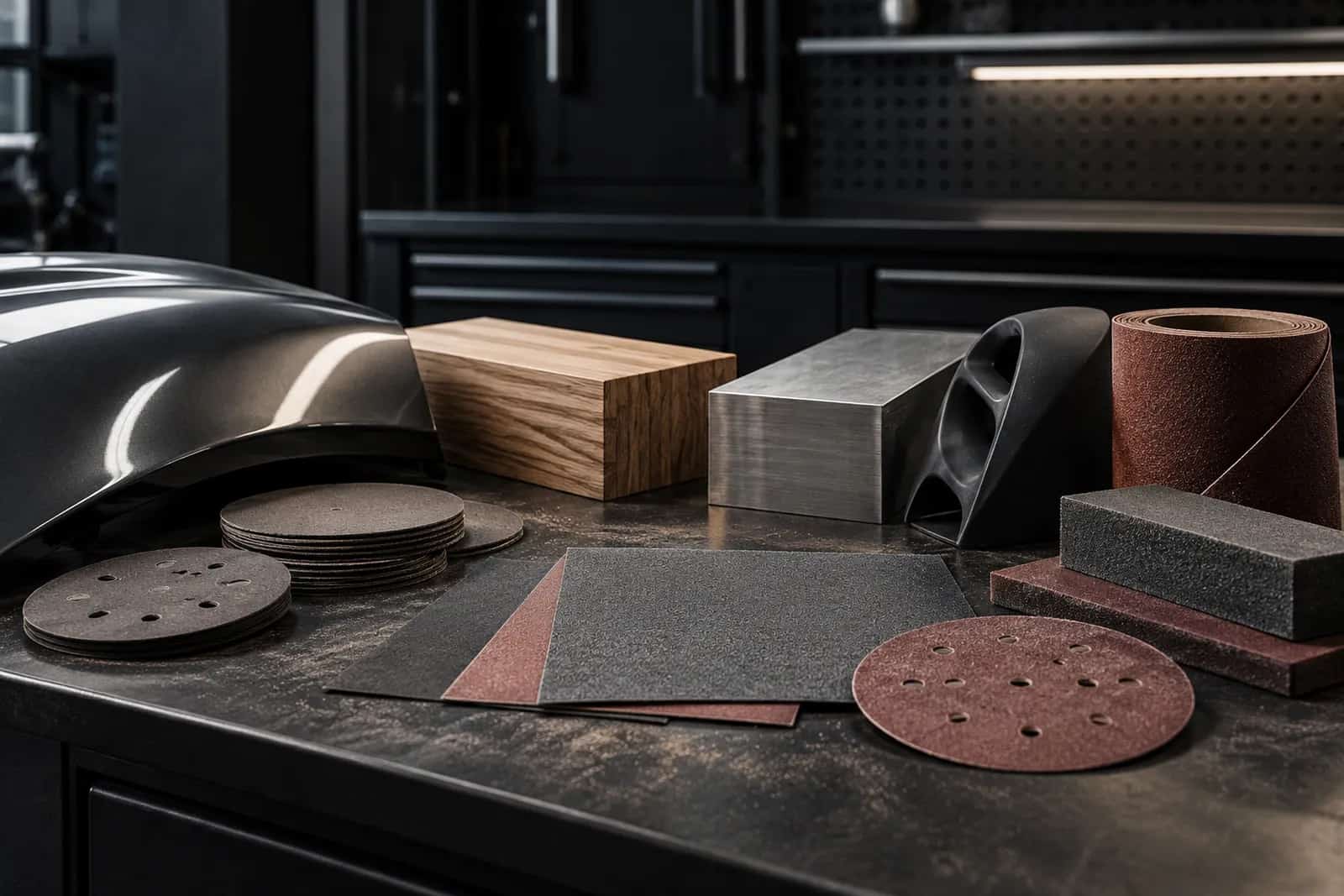
- Random orbital sanders: choosing, accessories, sanding discs
- Sandpaper: types, grits, uses
- Sanding discs: diameter, hole pattern, hook and loop, backing
- Sanders at a glance: orbital, sheet, detail, belt
- Sanding metal: rust, stainless steel, aluminium, brass
- Rust and corrosion: removing, sanding, painting
- Sanding wood: species, furniture, doors, floors
- Which grit for …? The directory
- Preparing to paint: sanding, scuffing, masking
- Sanding walls, ceilings and filler
- Repair and restoration: paint, sheet metal, furniture
- Projects from A to Z: door, stairs, wheel, radiator
- Sanding dust: extraction, mask, disposal
- Polishing and high gloss after fine sanding
- Sanding plastics and composites
- Sanding boats, GRP and gelcoat
- Winter workshop: projects for indoors
- Spring: waking the garden, fence and car from their winter sleep
- Summer: boat, motorhome and outdoor wood
- Autumn: radiators, windows and rust before winter
- Sanding as a hobby: bike, model, furniture, 3D printing
Deciding: one or the other?
Comparisons with a clear recommendation of what suits when.
- Wet or dry sanding?
- Mesh or paper?
- Non-woven abrasive or sandpaper?
- Sanding sponge or sandpaper?
- Random orbital or orbital sander?
- 3 mm or 5 mm stroke?
- 125 mm or 150 mm pad?
- Orbital, sheet or detail sander?
- Corundum, silicon carbide or ceramic?
- Primer wet or dry?
- Fleece, paper or film?
- Which sander?
- Buying a random orbital sander
The most common questions
The short answer right below – the article explains why.
- What grit sandpaper for car paint?P80 → P120 → P180 → P240 → P320 → P400 → P600
- What grit sandpaper for wood?P80 → P120 → P180 → P240
- What grit before painting?P320 → P400 → P600
- What grit for sanding body filler?P80 → P120 → P180 → P240
- Sanding metal: which grit for rust, welds and paint?P60 → P120 → P240 → P400
- Can you sand out scratches in car paint?P1500 → P2000
- Sanding wood before oil or varnish: which final grit?P120 → P180 → P240 → P320
- P240 or 240 grit? Converting grit scalesThe European P-grade (FEPA) and the American grit rating (CAMI) only match in the coarse range. From P240 onwards they drift apart – with a conversion table.
4 topics · 48 articles
By material
Which grit for which surface – with the full sequence.
Car & paint 18 articles
Body filler, primer surfacer, paint and clear coat – the sequence from coarse sanding right up to polishing.
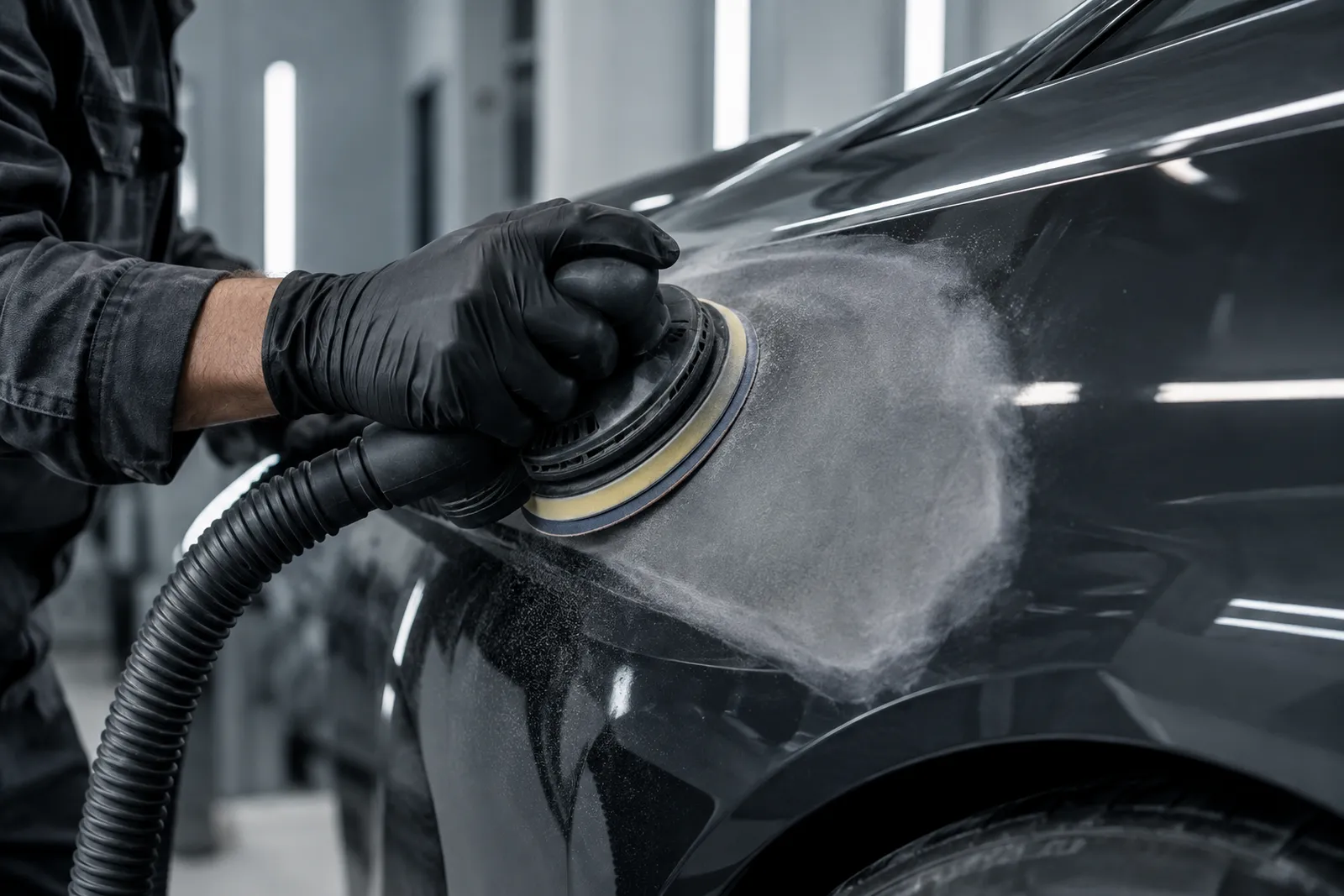
Wet or dry sanding: which grit when?
Dry with dust extraction up to P600, wet from P800 on paint – and what the water really does.
Read · 2 min
What grit for clear coat? Wet sanding P1500 to P3000
Matting before a respray, removing dust nibs and runs, finishing before polishing – three jobs, three grit ranges.
P1500 → P2000
Read · 3 min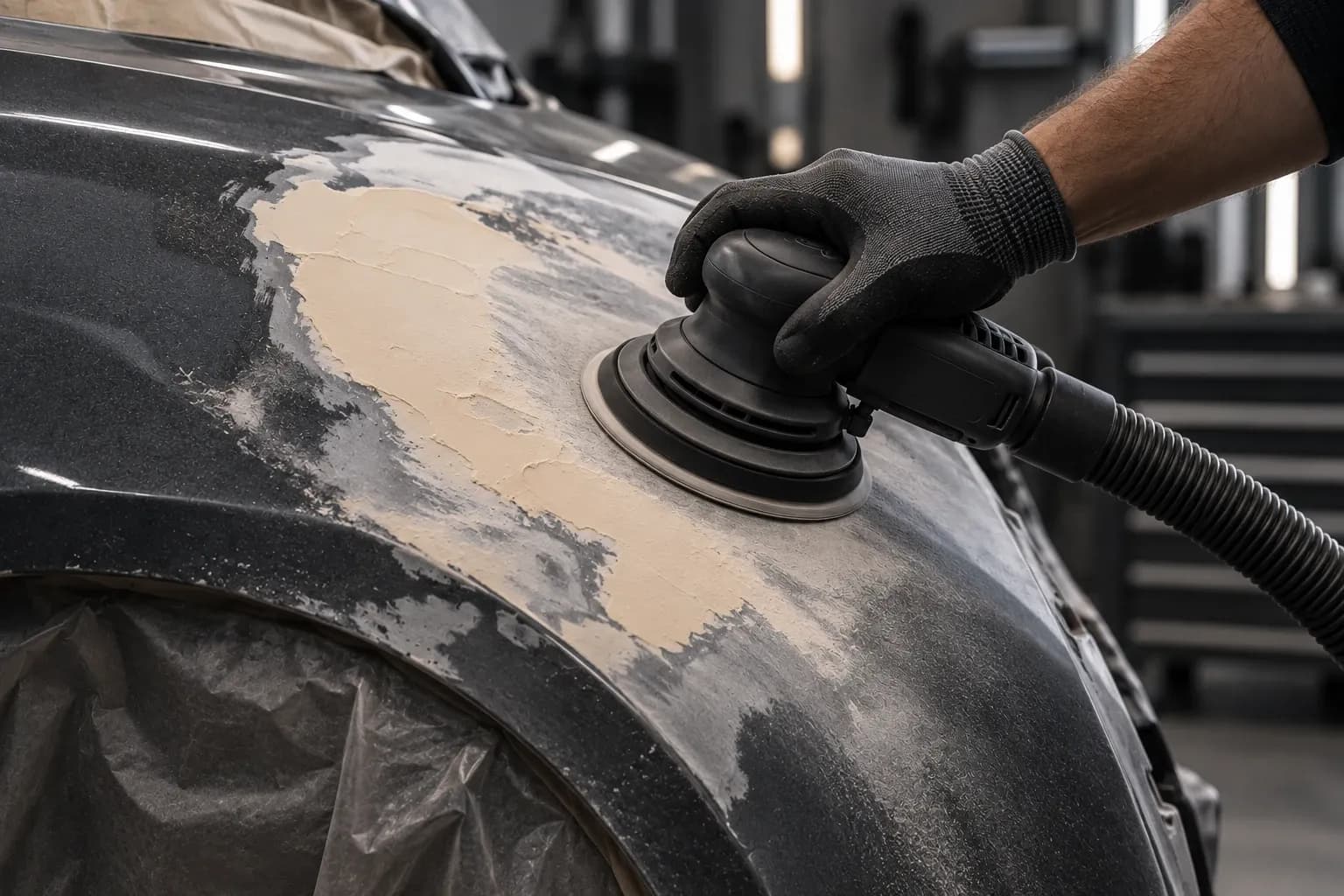
How to avoid pigtails and sanding scratches
Pigtails and scratches under the paint almost always have the same causes: a skipped grit, too much pressure, a clogged disc. How to keep the surface clean.
P120 → P180 → P240 → P320
Read · 1 min
- What grit sandpaper for car paint?P80 – P600
- What grit for sanding body filler?P80 – P240
- What grit before painting?P320 – P600
- Can you sand out scratches in car paint?P1500 – P2000
- Preparing a motorcycle tank for paintingP180 – P800
- Sanding primer surfacer: wet or dry?P320 – P600
- Blending paint: keying the transitions properlyP400 – P1500
- Sanding out orange peel, runs and dust nibs in paintP1000 – P2000
- Repairing stone chips on a car: sanding the edgeP400 – P2000
- Avoiding and removing holograms when polishingP2000 – P2000
- Sanding paint matt: scuffing with P800 to P1000P400 – P1000
Wood 15 articles
Furniture, doors, stairs, veneer: which grit to finish at before oil, wax or varnish.
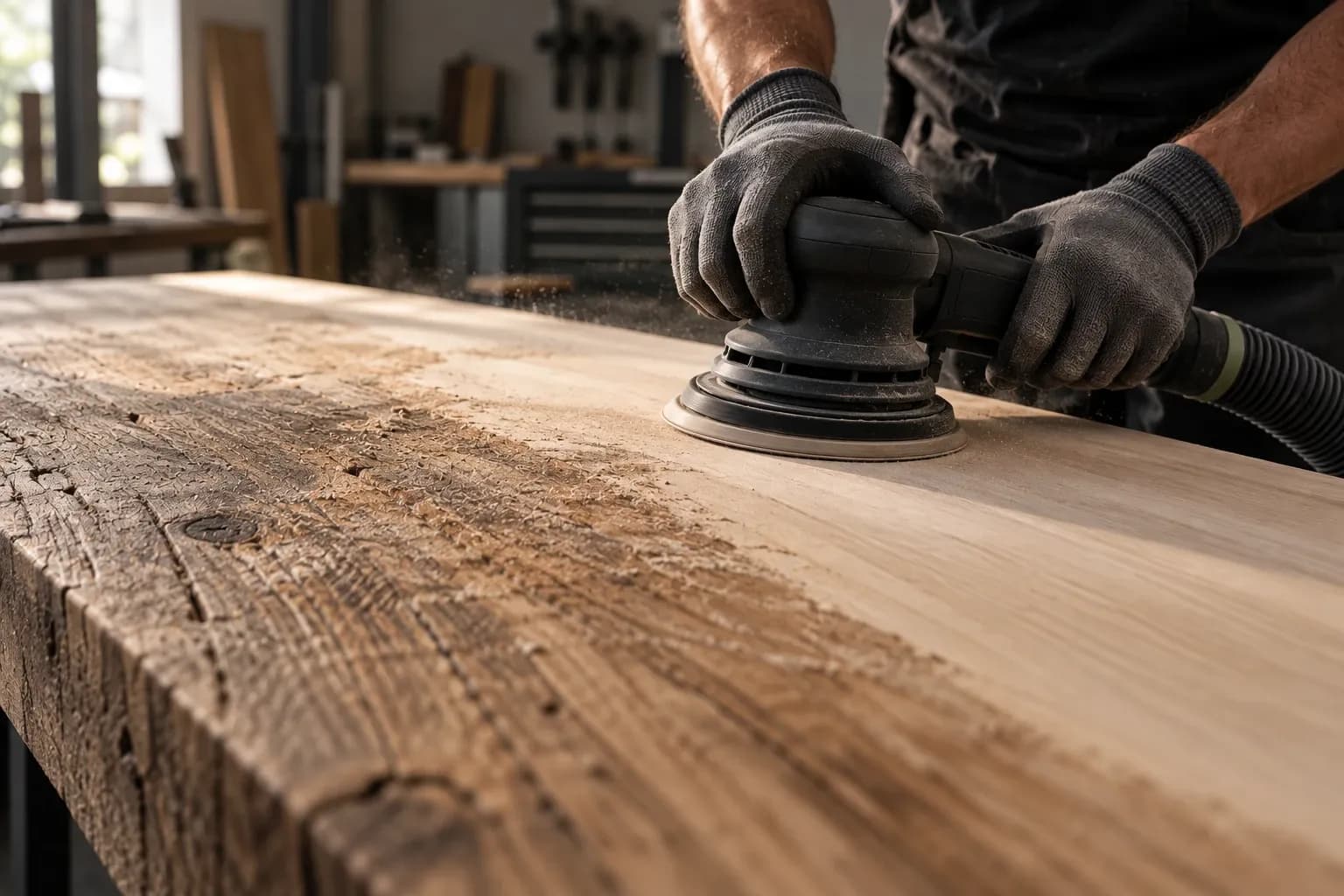
Sanding and repainting an old wooden door
Strip it completely or just key it? When you need P80, when P180 is enough – and why mouldings and edges are sanded by hand.
P80 → P120 → P180 → P240
Read · 2 min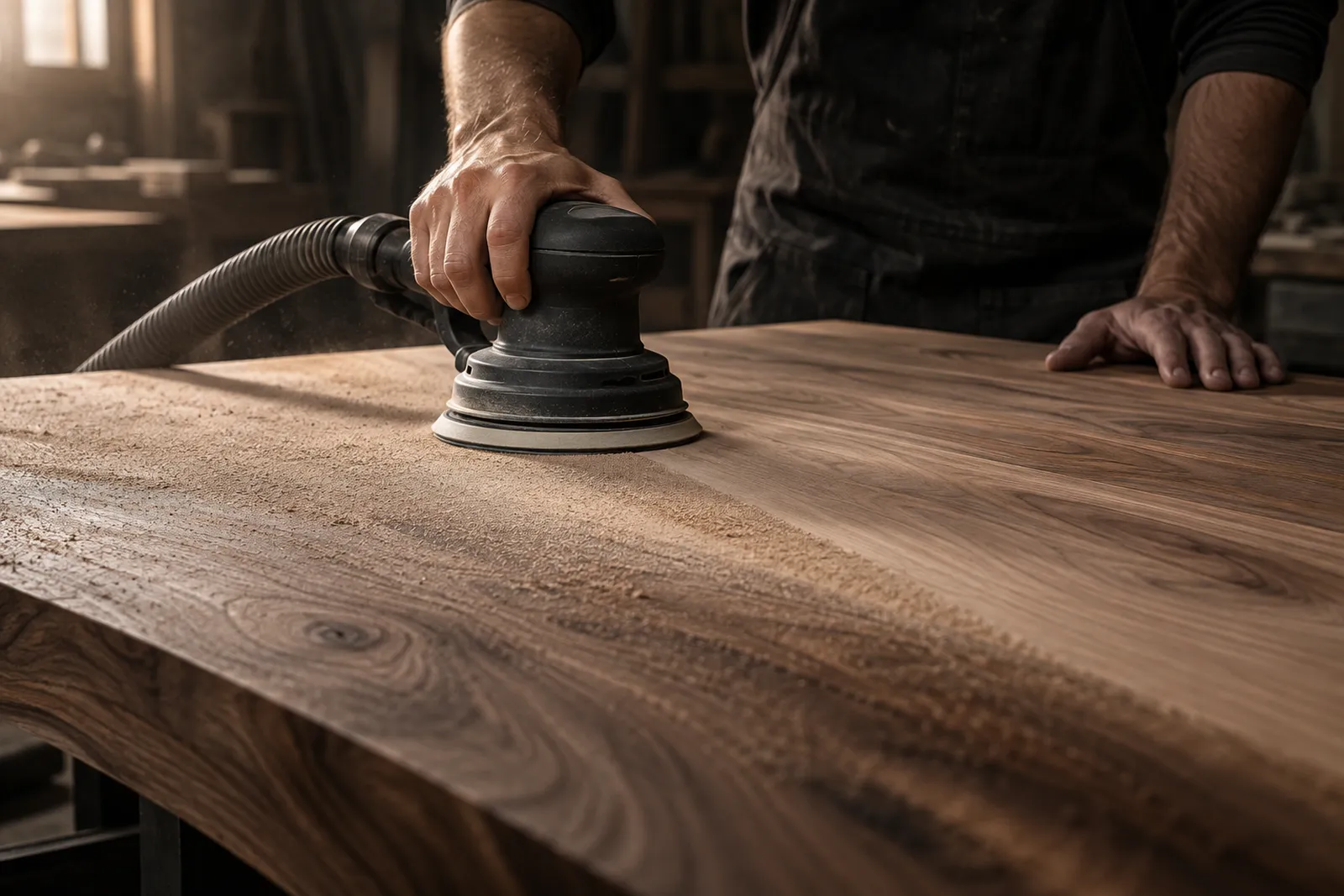
Sanding and repainting wooden windows
Loose paint off with P80, smooth with P120, key with P180 – and why grey, weathered wood has to be sanded back to fresh timber.
P80 → P120 → P180
Read · 2 min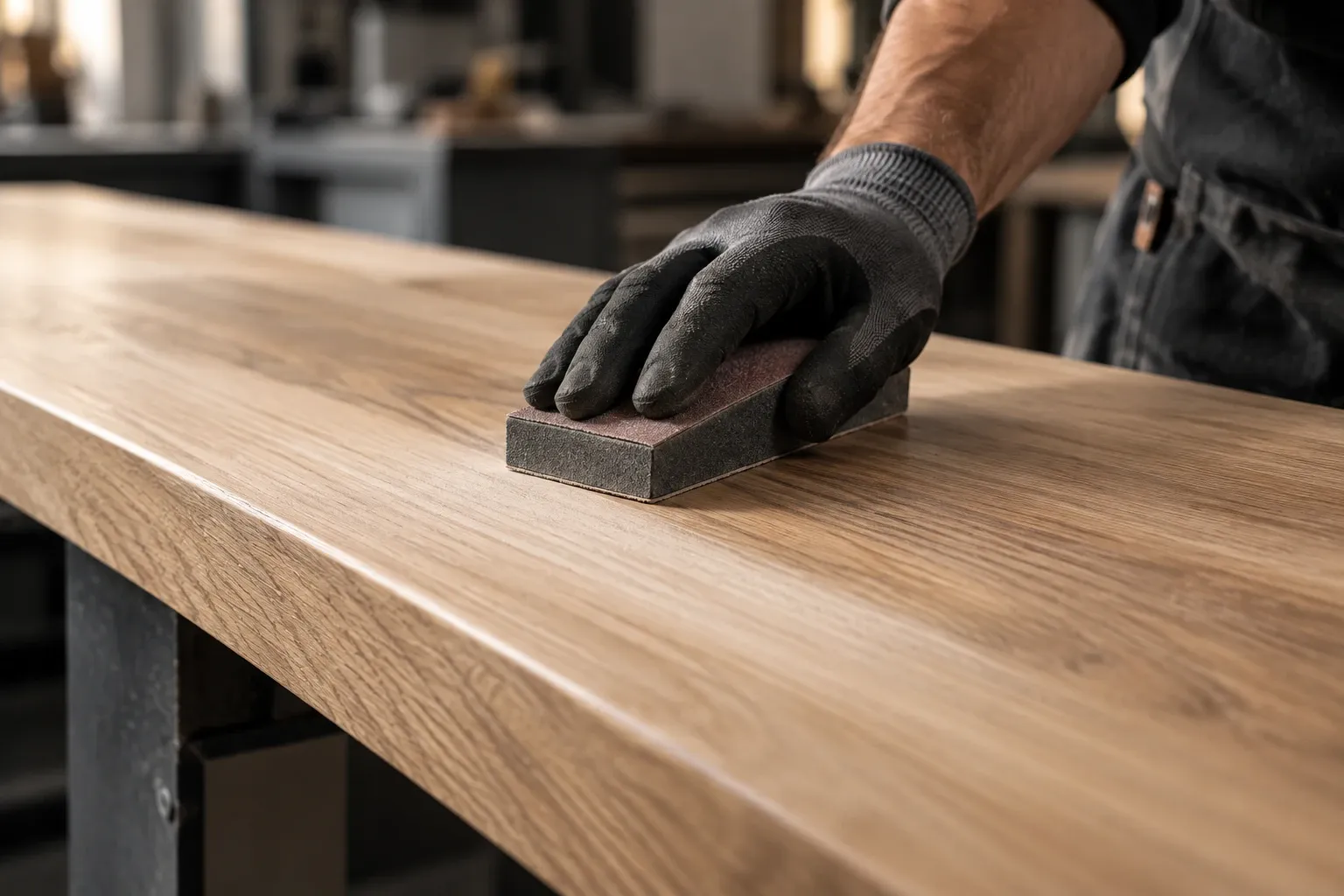
Sanding veneer without sanding through
Veneer is often only half a millimetre thick: never coarser than necessary, never tilt the sander, edges by hand – and how to tell it’s getting thin.
P180 → P240 → P320
Read · 1 min
- What grit sandpaper for wood?P80 – P240
- Keying and repainting painted furnitureP120 – P240
- Sanding and re-oiling a tabletopP80 – P240
- Pine, spruce, larch: sanding softwoodP80 – P180
Metal 8 articles
Rust, weld seams, wheels, brass – removing, keying, painting, bonding.
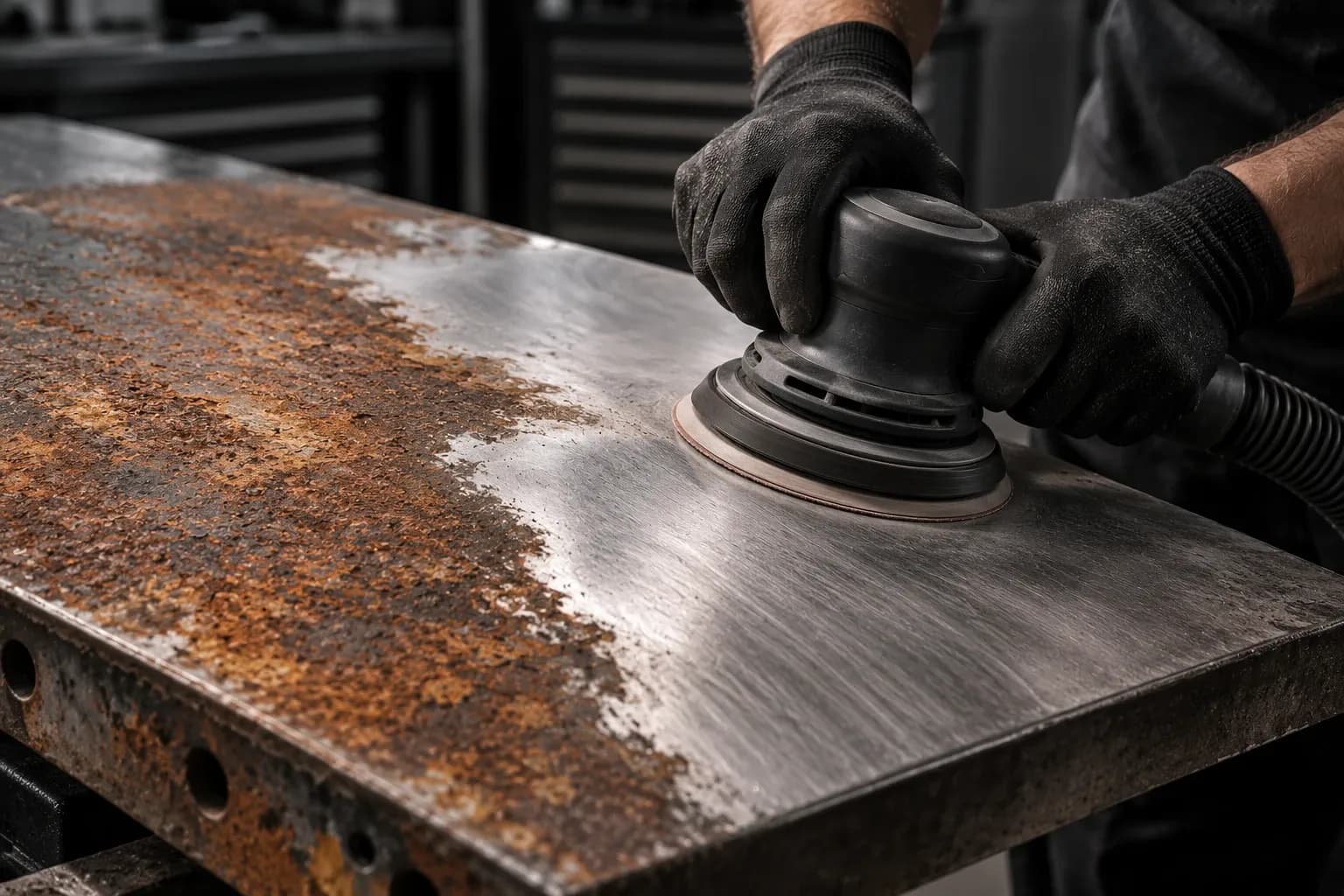
Sanding kerb damage on alloy wheels
Remove the burr with P120, feather the edges with P240, key with P400 before painting: this is how the rim edge gets smooth again – and when a wheel belongs in a specialist workshop.
P120 → P180 → P240 → P320 → P400
Read · 1 min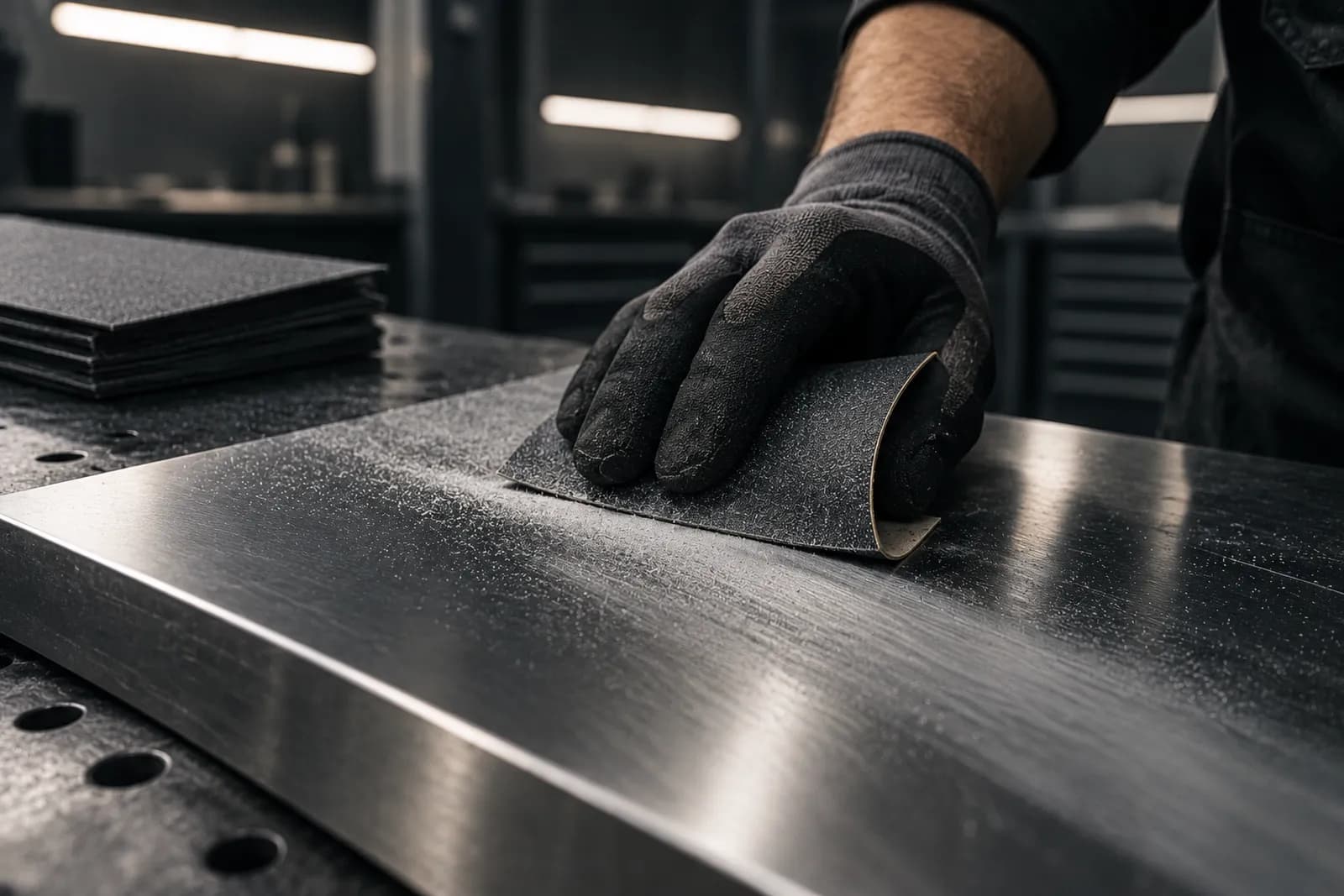
Keying and painting a radiator
Spot-treat rust with P120, matt down the rest with P240 or abrasive fleece – and why you should keep the machine away from the fins.
P120 → P180 → P240
Read · 2 min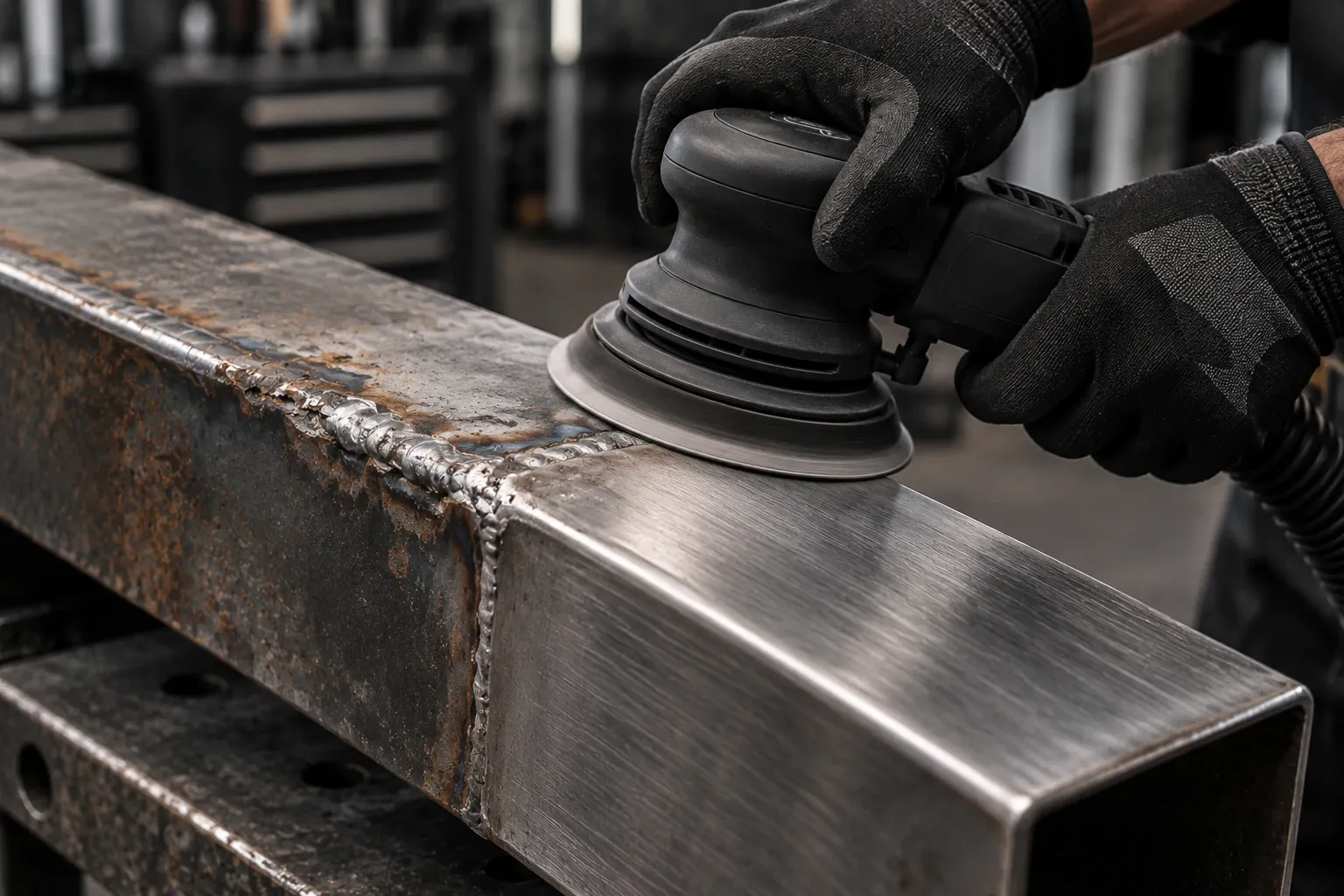
Sanding stainless steel and aluminium
Soft and stainless metals sand differently from mild steel: aluminium clogs, stainless steel discolours. The sequence that gives you an even scratch pattern.
P80 → P120 → P180 → P240 → P320 → P400
Read · 2 min
- Sanding and polishing brass and copperP240 – P2000
- Keying before bonding: metal and plasticP80 – P240
- Sanding a bicycle frame for new paintP120 – P320
Plastic & resin 7 articles
Bumpers, headlights, acrylic, epoxy, carbon: light pressure, little heat, finish fine.
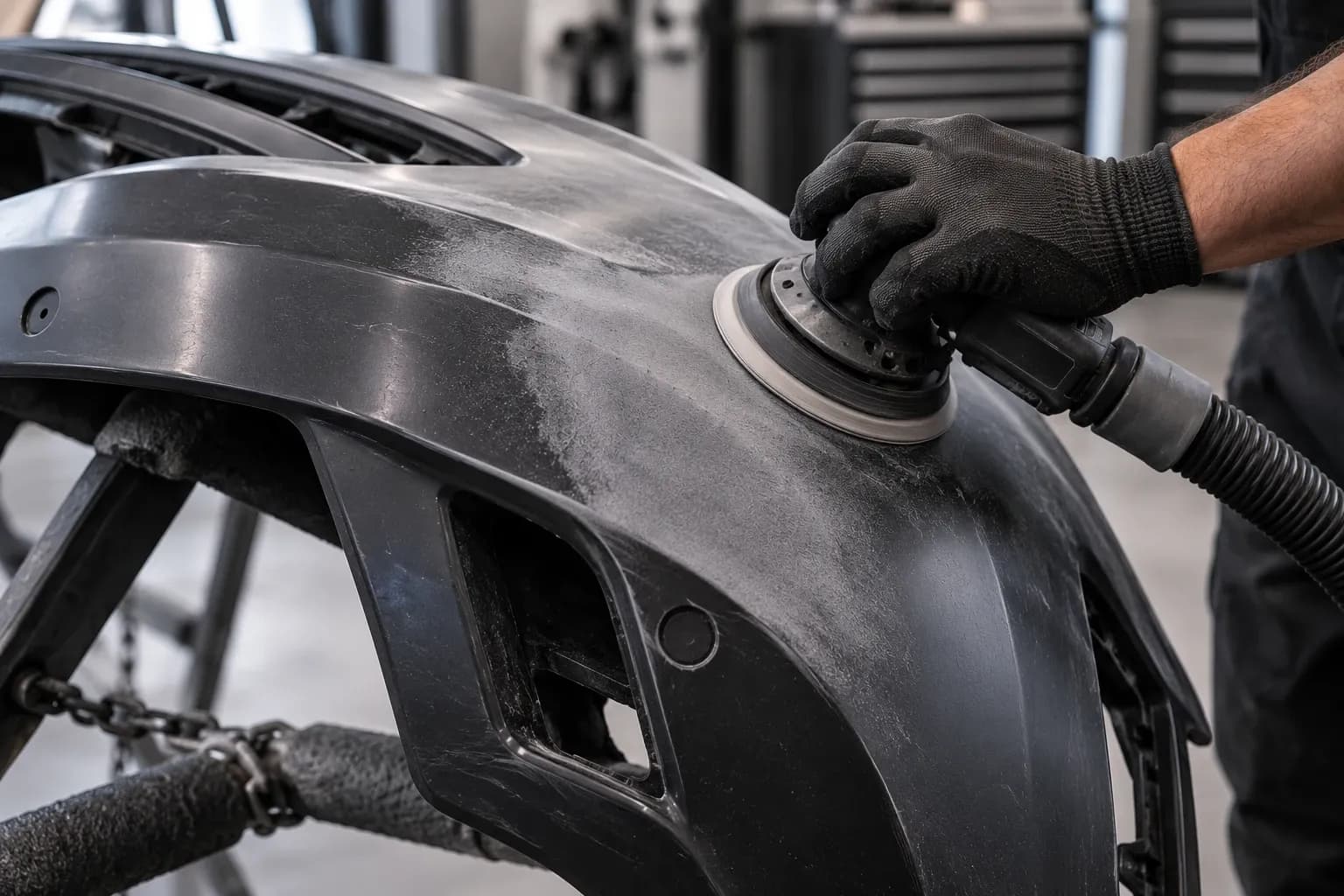
What grit sandpaper for plastic? Preparing bumpers
Bumpers and trim panels smear, warp and reject paint if you treat them like sheet metal. Grit, pressure and the steps that follow.
P180 → P240 → P320 → P400
Read · 2 min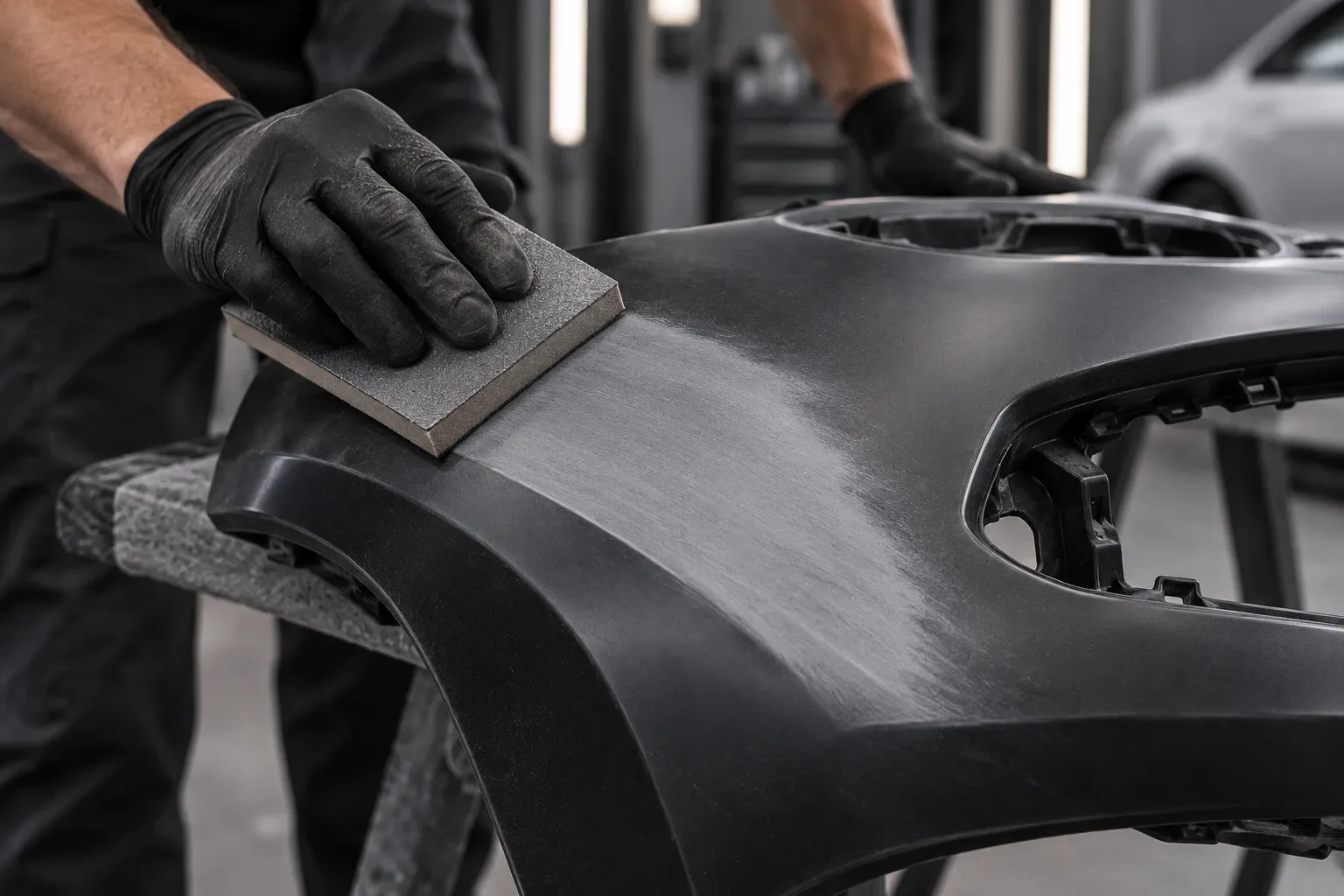
Restoring headlights: which grit?
Wet sand from P800 to P2000, then polish – and seal afterwards, or the lens will be cloudy again after one summer.
P800 → P1000 → P1500 → P2000
Read · 1 minSanding and polishing epoxy resin
River tables and castings: level coarse, then wet sand up to P2000 or P3000 and polish. Why the resin must be fully cured first.
P120 → P180 → P240 → P320 → P400 → P600 → P800 → P1000 → P1500 → P2000
Read · 1 min
2 topics · 33 articles
Technique & tools
Choosing abrasives, setting up sanders, working cleanly.
Abrasives 20 articles
Mesh or paper, abrasive grain, backing pad and interface pad, P-grades and grit – and when a disc is worn out.
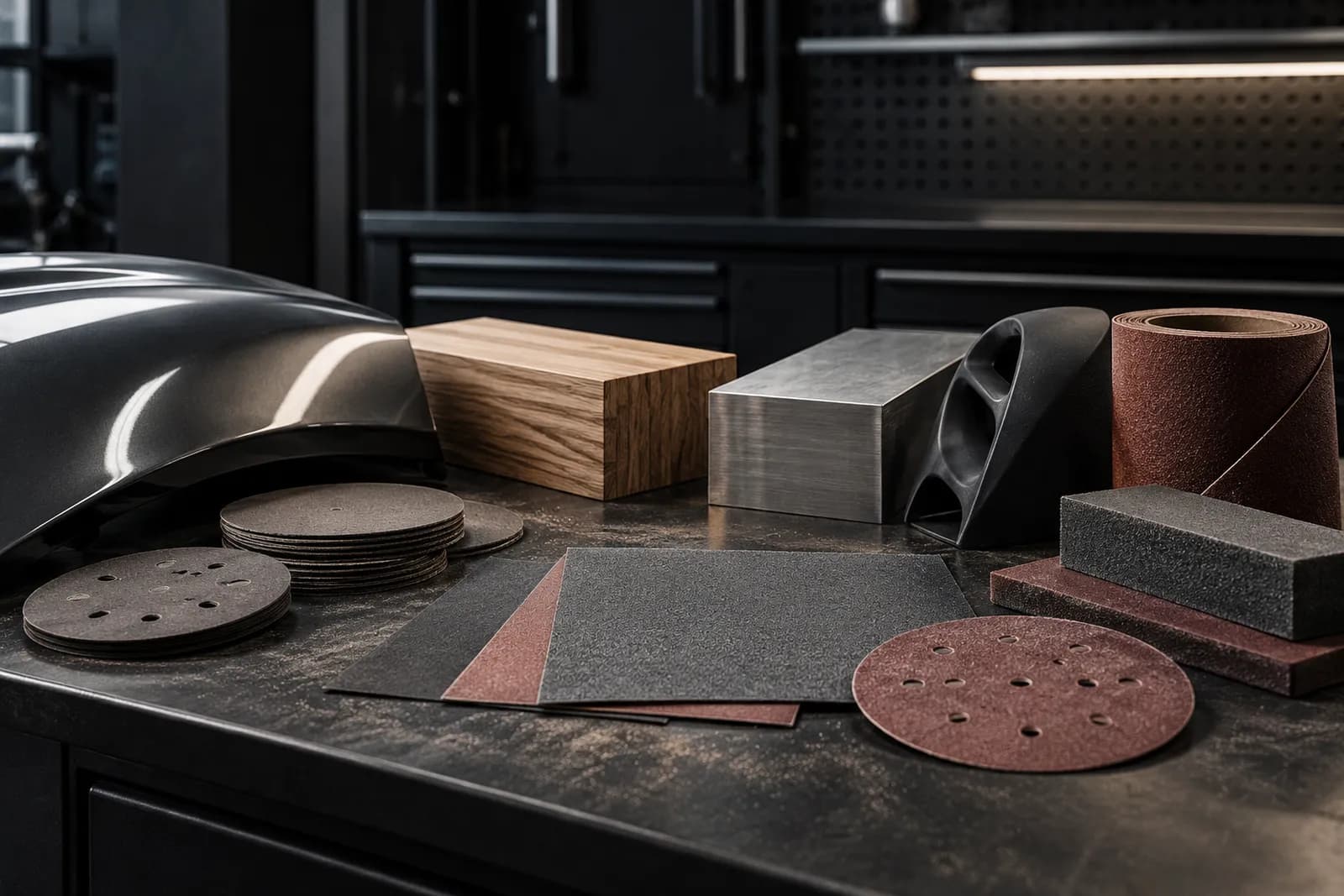
Mesh sanding discs vs. regular sandpaper
Mesh extracts dust across its whole surface and does not clog; paper is cheaper and cuts harder. When to use which.
Read · 2 min
Sandpaper for random orbital sanders
Diameter, hook-and-loop, hole pattern: what has to match – and which grits belong in the workshop.
P80 → P120 → P180 → P240 → P320 → P400
Read · 2 min
When is a sanding disc worn out?
It stops biting, gets hot, leaves scratches: four signs the disc has to come off – and how to make it last longer.
Read · 1 min
Sanders & technique 13 articles
Which sander, which orbit, how to guide it, edges by hand, dust and masks.
Random orbital, orbital, belt sander, angle grinder or by hand after all – what each machine does well and what it is not meant for.
Read · 3 minSanding dust: extraction and masks
Dust should be extracted before it ever reaches the air – and whatever still rises is caught by an FFP2 mask. Why this also makes your discs last longer.
Read · 2 minHand sanding: with a block, in strokes, criss-cross
Why the sanding block matters more than the grit, when to sand criss-cross and where the machine cannot reach.
Read · 2 min
Your question isn’t here?
Tell us what you’re working on – we’ll answer from the workshop, and the best questions become the next article.
Subscribe to new articles: RSS feed (in German) – every new guide appears there as soon as it’s published.