Car & paint · 1 min read
Sanding primer surfacer: wet or dry?
Dry with mesh and dust extraction is faster and cleaner; wet is fine and dust-free. P320 to P400 for the surface, P600 before clear coat or light colours.
Last updated:
Dry: the workshop rule
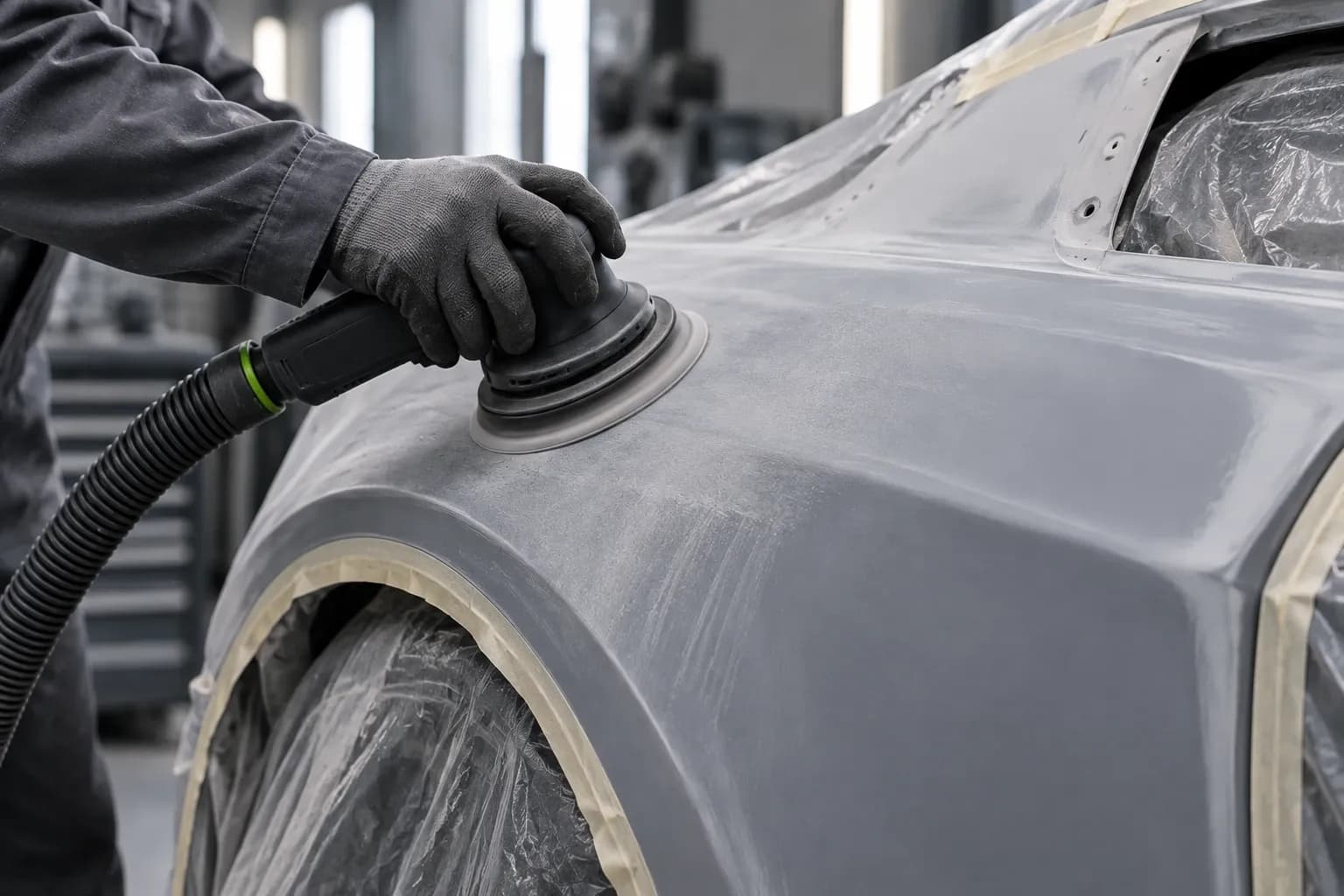
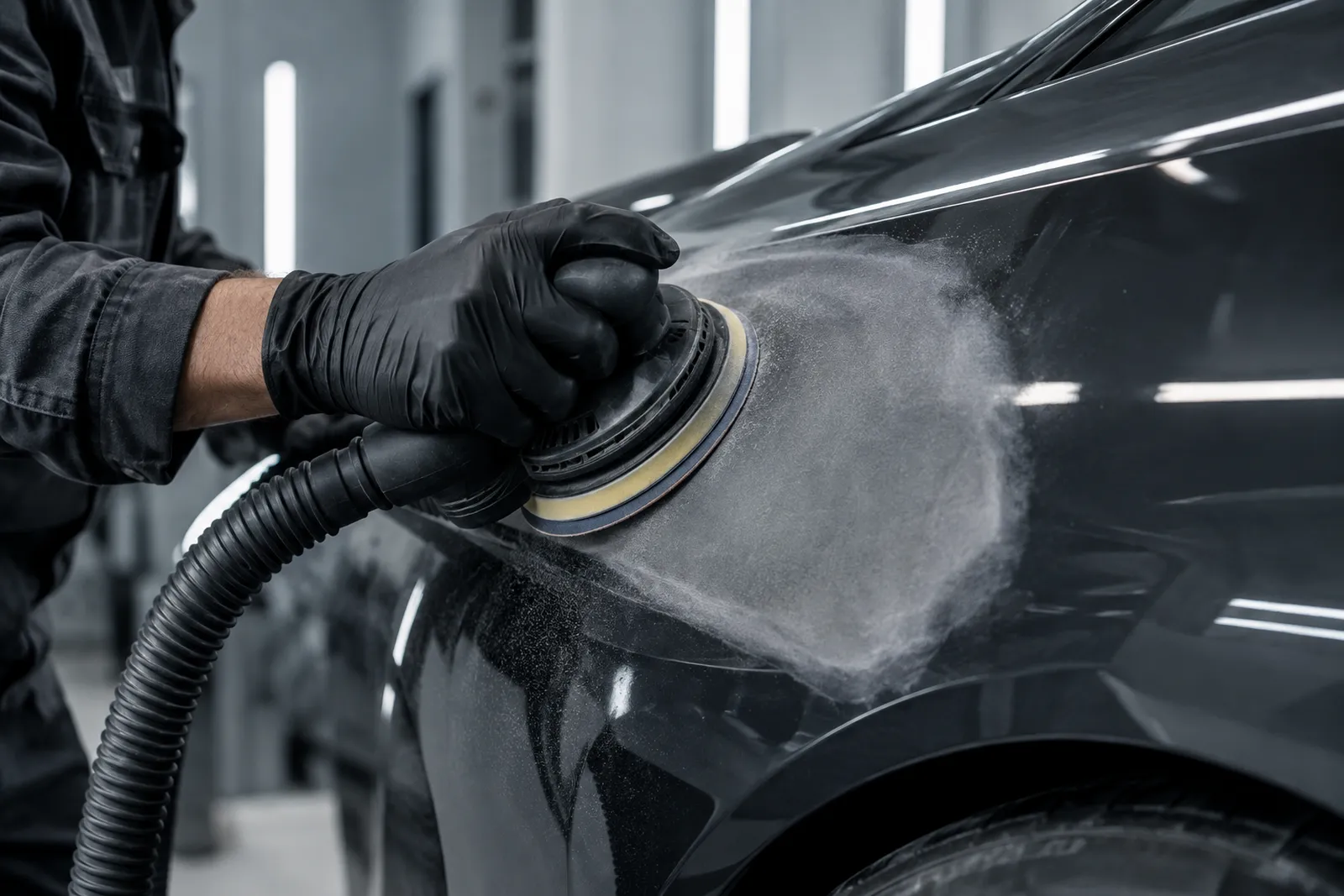
Dry-sanding primer surfacer with a random orbital sander, abrasive mesh and dust extraction is standard today: you can see at any moment how far you’ve got, and the primer doesn’t absorb any water. P320 to P400 for the main sanding, a soft interface pad on curves.
Wet: fine and dust-free
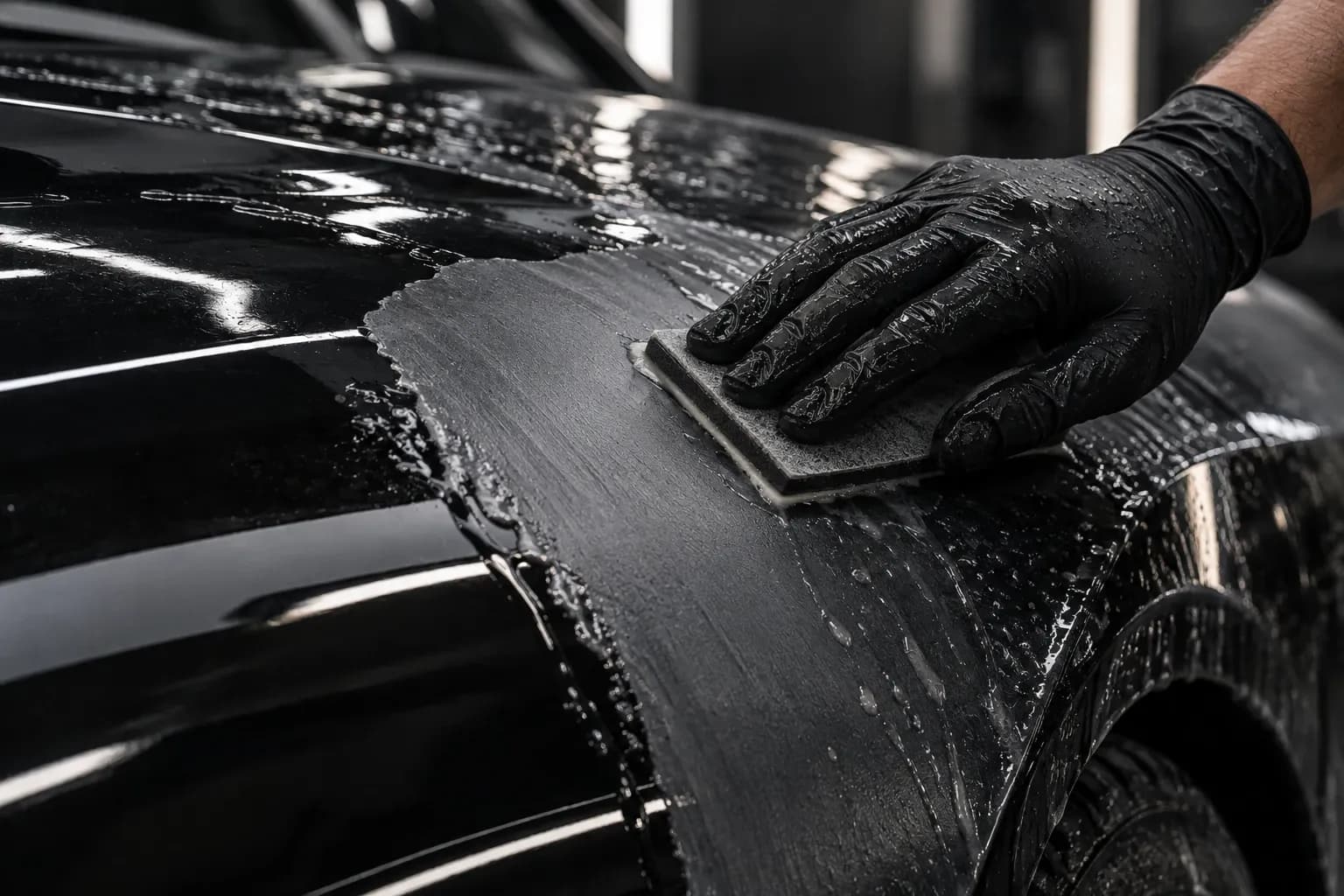
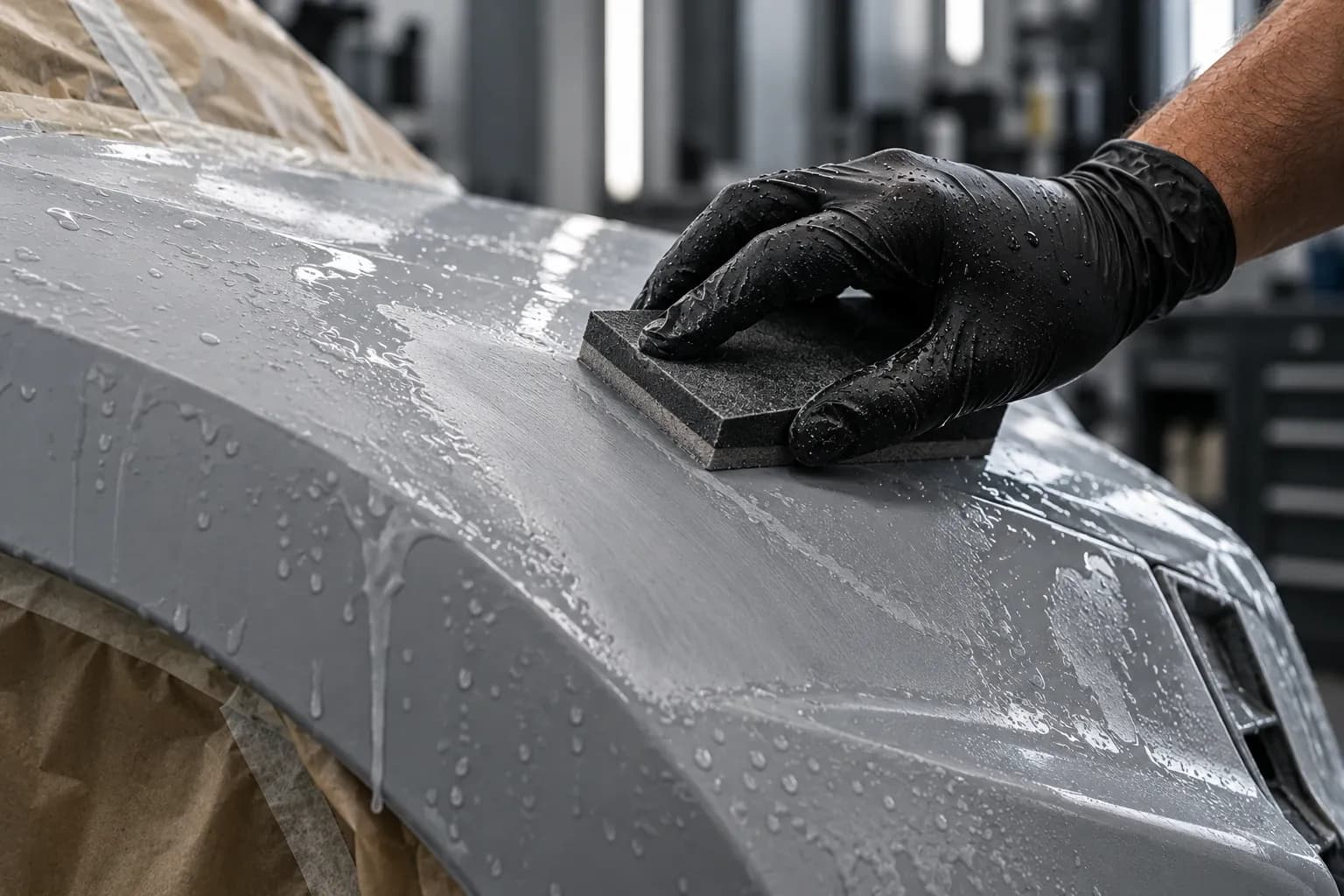
Painters wet-sand with a sheet and block on edges, in swage lines and where there’s no dust extraction. The water binds the dust and the scratch pattern comes out finer. Afterwards the primer surfacer must dry completely before painting – trapped moisture causes blisters.
How fine before which paint
Under opaque solid colours, P400 is enough. Under metallics and light colours, and under clear coat, it’s better to finish with P600, otherwise scratches show through. Before the last pass, guide coat shows whether the surface is completely level.
FAQ
How can I tell the primer surfacer is fully sanded?
When the guide coat has gone everywhere and the surface is evenly matt, with no shiny hollows. Then go over the whole surface once more with the final grit.
Terms in this article
All terms in the sanding glossary →The whole sequence at once
3 grits, 1 × smallest pack each: PRO NET 150 (10 pcs) P320 · P400, PRO FILM 150 (10 pcs) P600.
Or as a set: Car paint starter set (P120–P600) for €69.90 →
incl. VAT, plus shipping