Car & paint · 1 min read
How to avoid pigtails and sanding scratches
Pigtails and scratches under the paint almost always have the same causes: a skipped grit, too much pressure, a clogged disc. How to keep the surface clean.
Last updated: · published
Where pigtails come from
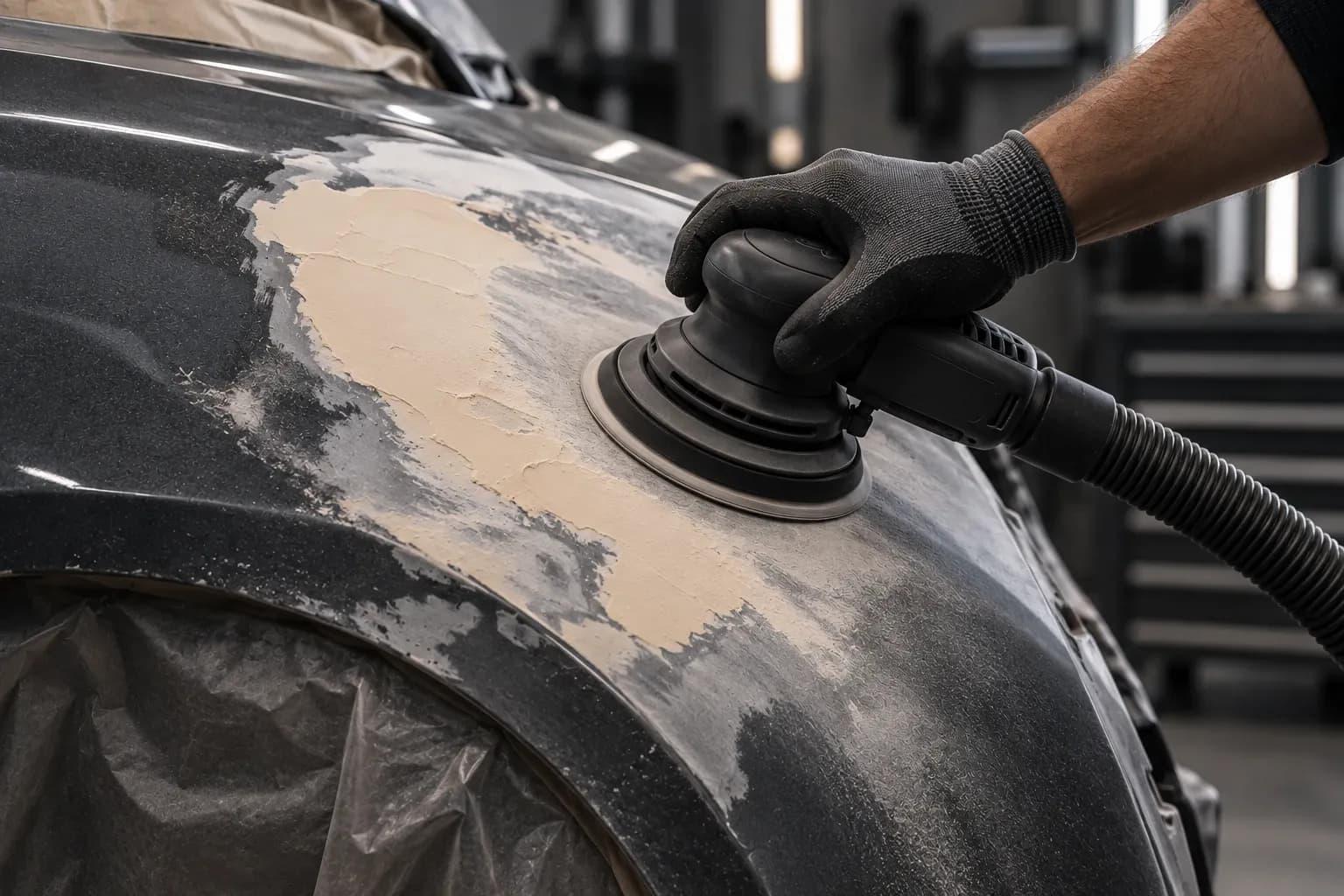
A random orbital sander always leaves a pattern of small arcs. It only becomes visible when the next grit does not remove it completely – usually because a step was skipped. Go straight from P120 to P320 and the deep scratches remain, showing through primer surfacer and paint later.
The rule of thumb: the next grit is at most twice as fine as the previous one. P120 → P180 → P240 → P320 takes a few minutes longer and saves you a second paint job.
Pressure, speed, technique
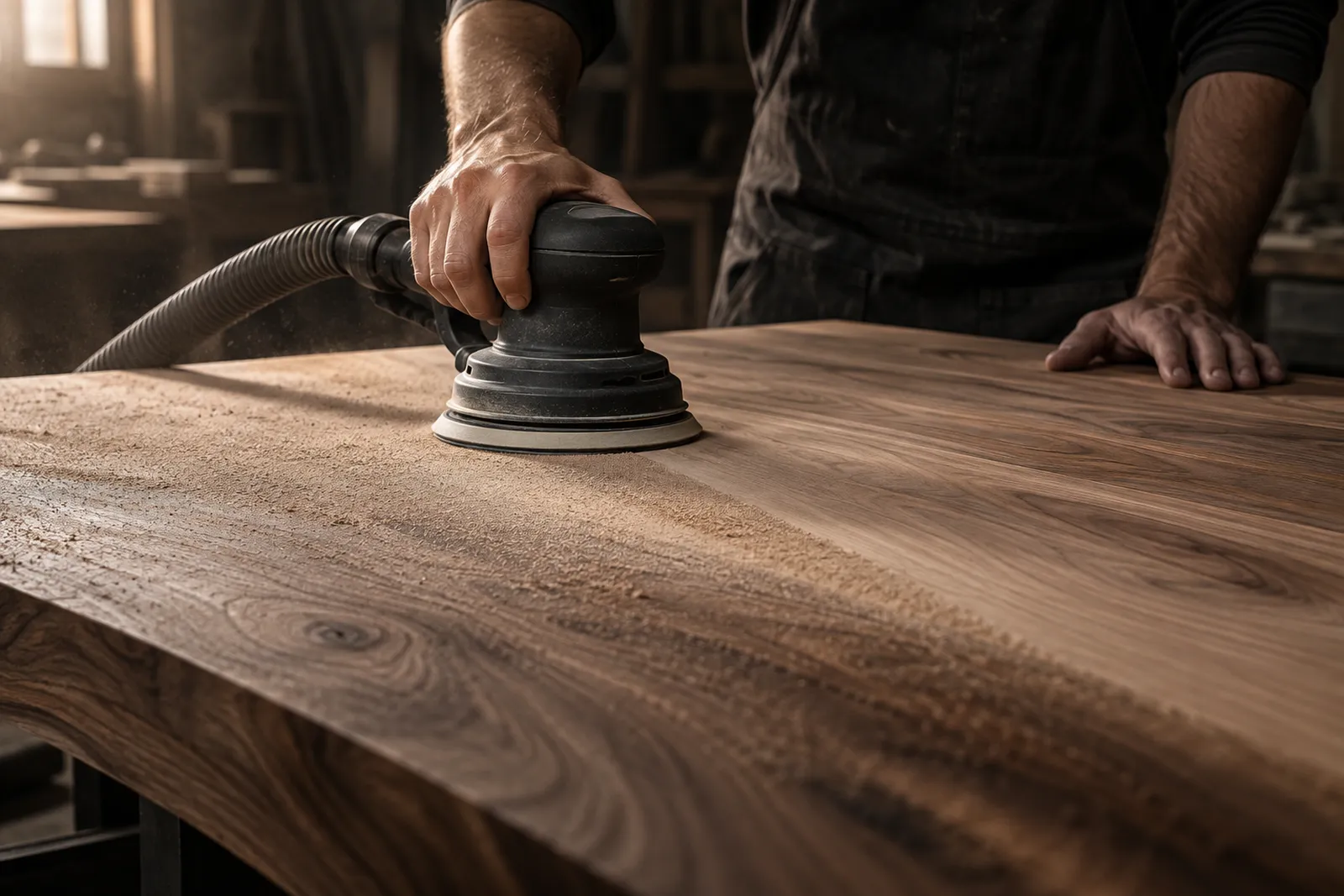
The sander works under its own weight with a light guiding hand. Press down and you slow the random orbit – the disc then rotates rather than oscillates, and cuts pigtails instead of an even surface. Always keep the backing pad flat, don’t tilt it, and only switch on once it is on the surface.
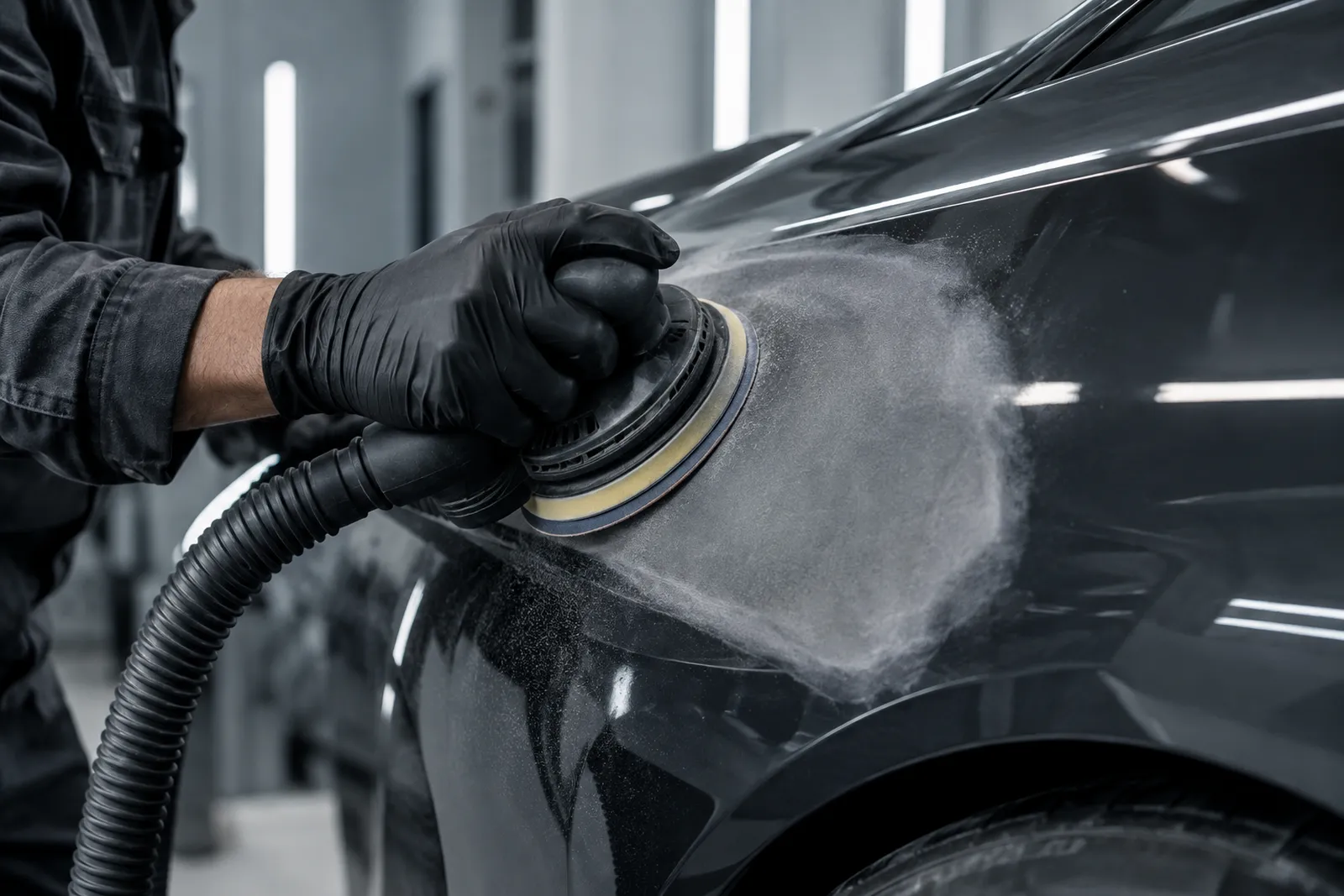
A clogged disc no longer sands, it rubs: it gets hot, smears and drags scratches. Connect dust extraction and change the disc as soon as it stops biting.
Seeing what is still missing
Apply a thin layer of guide coat before starting the next grit: it stays in scratches and low spots and disappears where the surface is flat. Only when no guide coat is visible do you move on to the next grit – and apply guide coat again there.
FAQ
Can you see pigtails before painting?
Often only under raking light or with guide coat. The guide coat stays in the pigtails and shows them before primer surfacer or paint makes them visible.
Terms in this article
- Random orbital sander
- Deep scratches
- Primer surfacer
- Swirl marks
- Dust extraction
- Guide coat (control powder)
The whole sequence at once
4 grits, 1 × smallest pack each: PRO CUT 150 (10 pcs) P120 · P180 · P240 · P320.
Or as a set: Car paint starter set (P120–P600) for €69.90 →
incl. VAT, plus shipping