Accessories for Primer Everything that goes with sanding.
Backing pads, interface pads, hand blocks, masking tape, guide coat and dust masks – everything for the job, not just the abrasive.
Accessories – results
1 product
Related guides
Read first, then sand
Why the disc no longer grips the backing pad, how sandpaper stays dry and flat, and how to keep edges straight with a hand block – explained in brief.
Car & paint
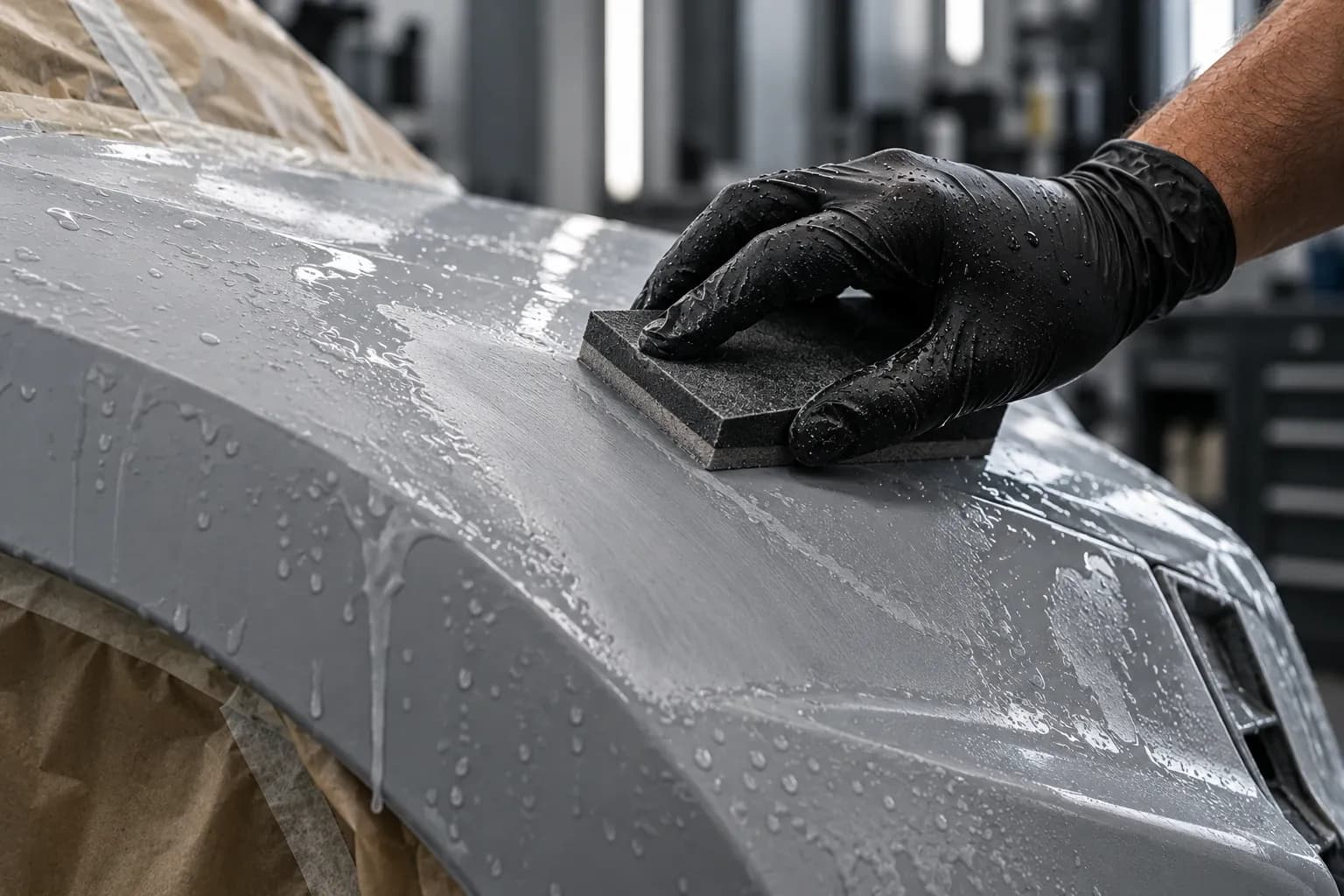
Sanding primer surfacer: wet or dry?
Dry with mesh and dust extraction is faster and cleaner; wet is fine and dust-free. P320 to P400 for the surface, P600 before clear coat or light colours.
P320 → P400 → P600
Read · 1 min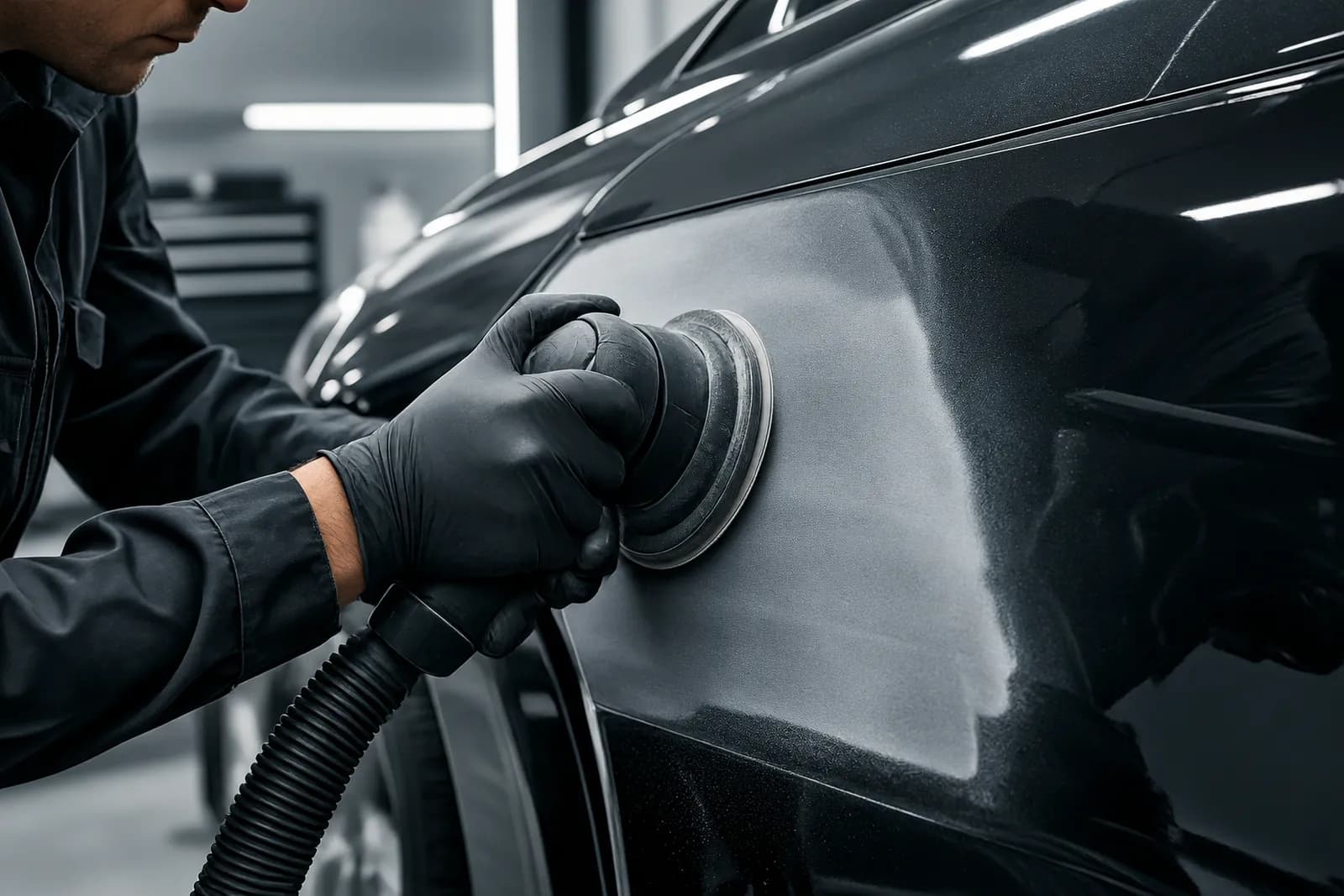
Sanders & technique
Sanding disc no longer sticks to the pad
Usually the hook-and-loop on the backing pad is worn or clogged – rarely the disc. How to tell, how to look after the pad and when an interface pad helps.
Read · 1 min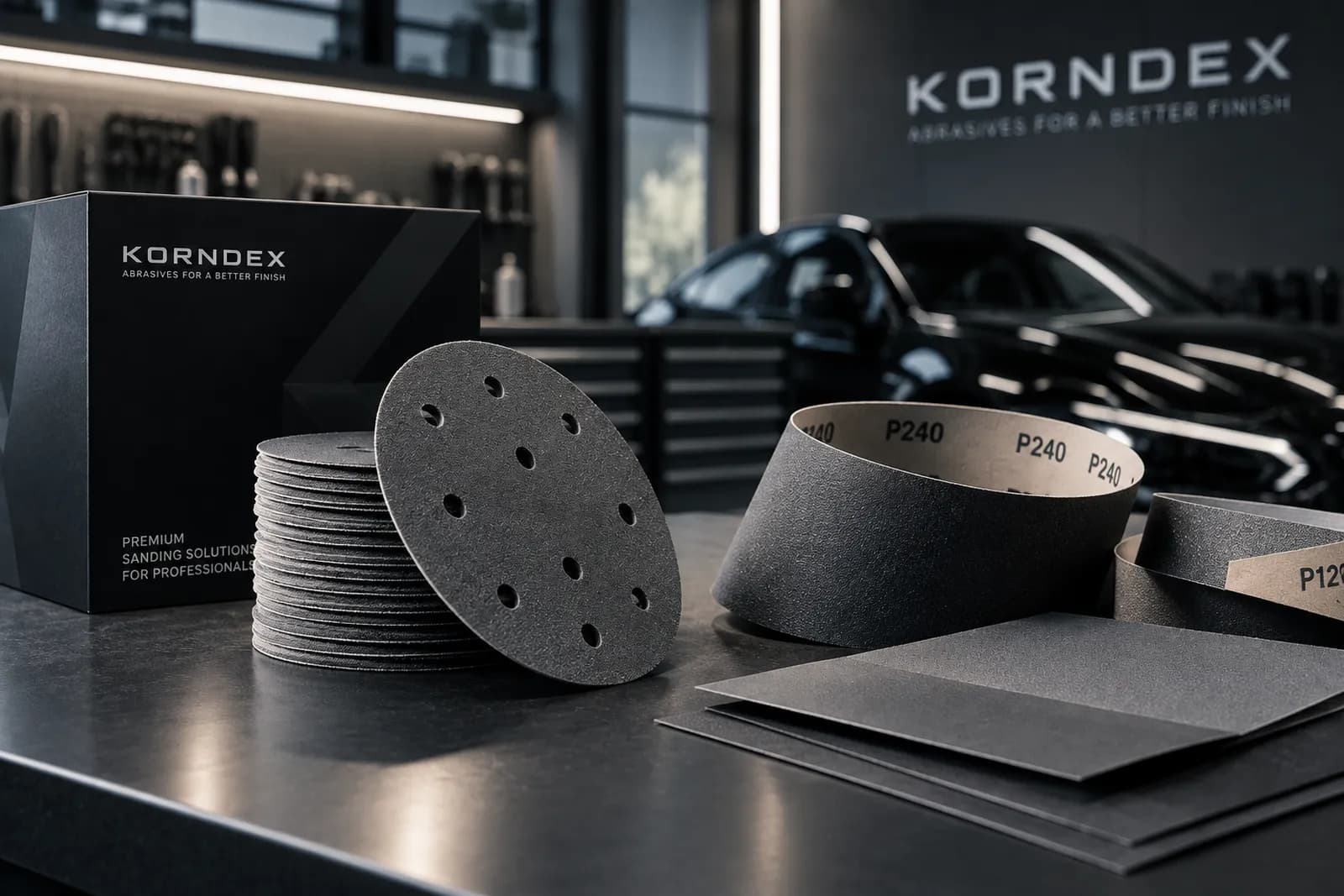
Abrasives
How to store sandpaper properly
Moisture and heat make sandpaper curl and age the bond. Keep it dry, flat and in its packaging – and here’s why curled paper sands worse.
Read · 1 min
FAQ
Questions about accessories
Which backing pad fits my machine?
Three things have to match: the diameter (125 or 150 mm – the same as the discs), the mount – a 5/16" thread on most random orbital sanders, M8 on some – and the hole pattern for dust extraction. The KORNDEX pad has a 5/16" thread and multihole pattern, so it fits Festool, Mirka, Bosch Professional, Makita, Rupes and others with this mount. Your machine’s manual tells you which mount it has.
Do I need an interface pad?
For paint, curves and edges, yes: the soft layer between backing pad and disc gives a little, follows contours and protects edges. On flat surfaces and for heavy stock removal you can do without.
The sanding disc no longer sticks to the pad – why?
Usually it’s the backing pad, rarely the disc: its hook-and-loop wears out or gets clogged with dust. Clean clogged hook-and-loop with a soft brush or compressed air; if the hooks are flattened or discoloured, you need a new pad. To make it last: only switch the machine on once it’s on the surface and off before lifting it – an interface pad wears out instead of the backing pad.
Guide: when the hook-and-loop won’t hold →Hook-and-loop backing pad →
What is guide coat powder for?
It shows where you haven’t sanded yet: applied thinly to body filler or primer surfacer, the black powder stays in pores, scratches and low spots and disappears wherever the surface is flat. Reapply after every grit change – only move on to the next grit once no powder is left.
How do I protect myself from sanding dust?
Extract first, right at the machine – with a perforated backing pad and perforated or mesh discs. Whatever still rises is caught by a tight-fitting FFP2 dust mask. Oak and beech dust is classed as carcinogenic, and paint and filler dust has no place in your lungs either.
How should I store sandpaper?
Dry, at room temperature, flat in the original packaging – not in a damp cellar, not next to a radiator. Moisture makes paper curl; curled discs don’t sit flat and come off the hook-and-loop more easily. Lay slightly curled sheets flat under a weight for a day.
On shipping, invoices and returns: general shopping questions →