Accessories
Everything that goes with sanding.
Backing pads, interface pads, hand blocks, masking tape, guide coat and dust masks – everything for the job, not just the abrasive.
Accessories – results
Filter by
Product type
+More filtersMachine
Machine
6 products
The film
Everything that goes with sanding
Backing pads, hand blocks, guide coat and dust masks – clean and safe.
Related guides
Read first, then sand
Why the disc no longer grips the backing pad, how sandpaper stays dry and flat, and how to keep edges straight with a hand block – explained in brief.
Sanders & technique
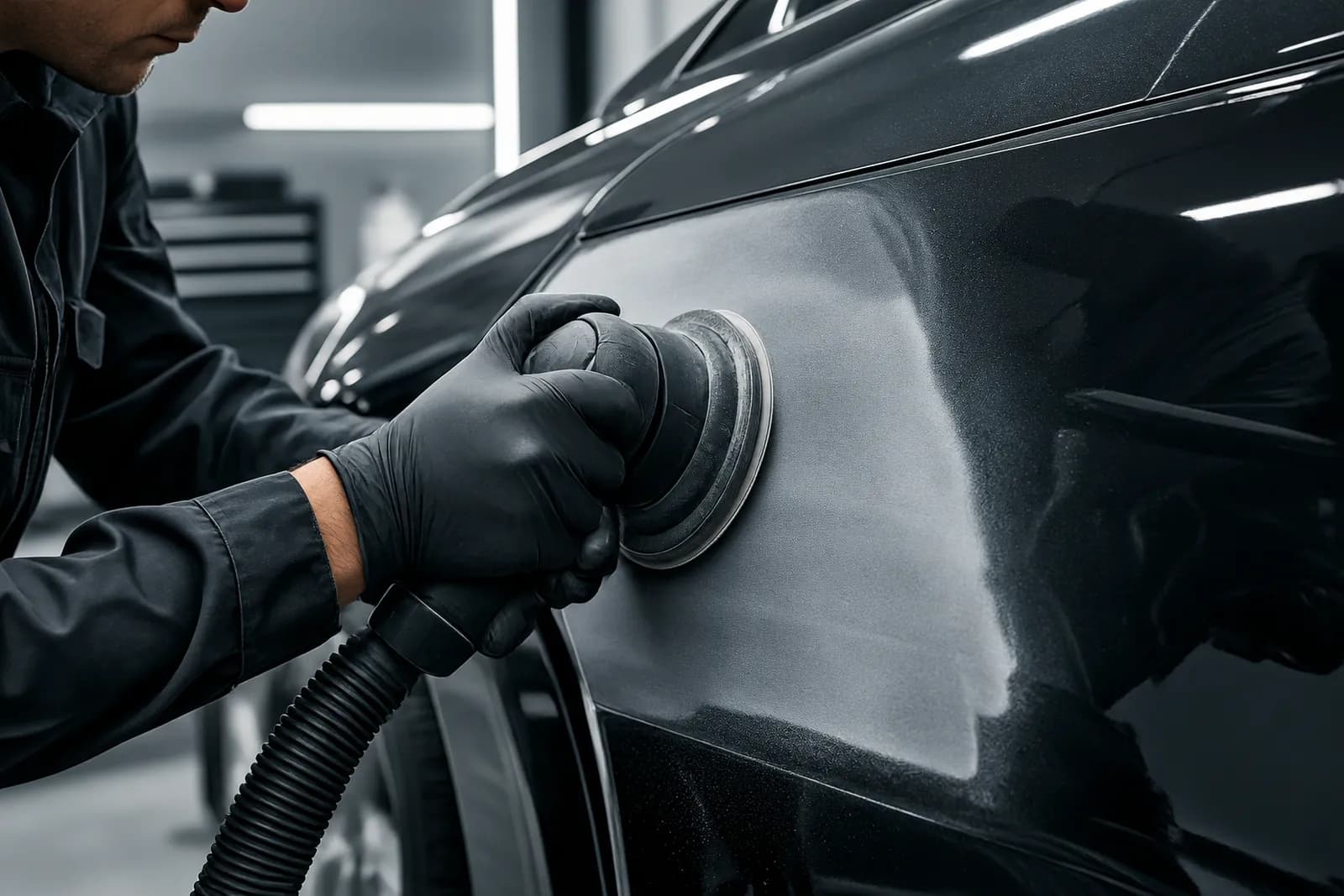
Sanding disc no longer sticks to the pad
Usually the hook-and-loop on the backing pad is worn or clogged – rarely the disc. How to tell, how to look after the pad and when an interface pad helps.
Read · 1 min
Abrasives
How to store sandpaper properly
Moisture and heat make sandpaper curl and age the bond. Keep it dry, flat and in its packaging – and here’s why curled paper sands worse.
Read · 1 min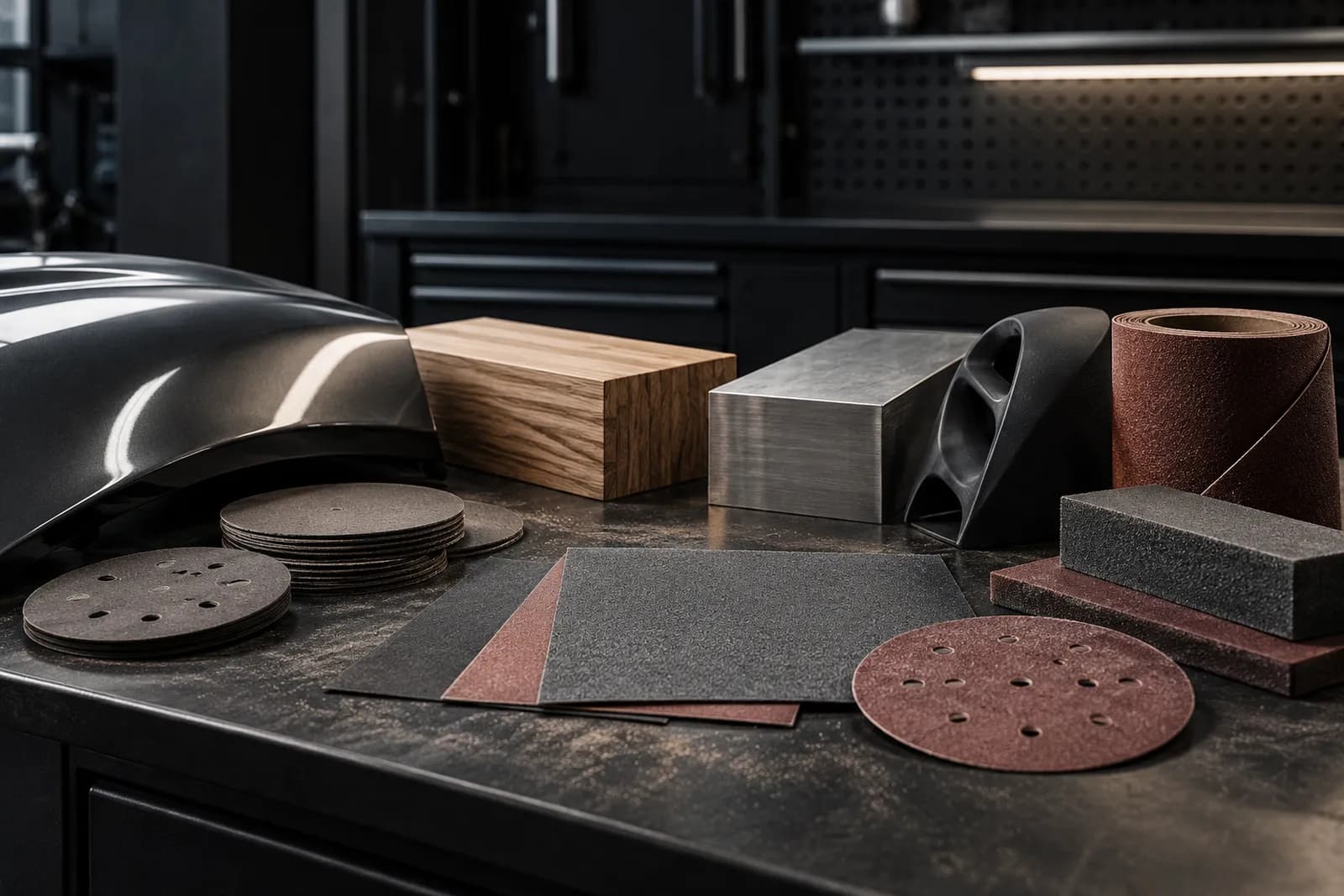
Sanders & technique
Sanding edges, profiles and curves
Where the random orbital sander can’t reach: hand block, sanding strips and non-woven abrasive – with a shaped block for profiles and without rounding over the edges.
Read · 1 min
FAQ
Questions about accessories
Which backing pad fits my machine?
Three things have to match: the diameter (125 or 150 mm – the same as the discs), the mount – a 5/16" thread on most random orbital sanders, M8 on some – and the hole pattern for dust extraction. The KORNDEX pad has a 5/16" thread and multihole pattern, so it fits Festool, Mirka, Bosch Professional, Makita, Rupes and others with this mount. Your machine’s manual tells you which mount it has.
Do I need an interface pad?
For paint, curves and edges, yes: the soft layer between backing pad and disc gives a little, follows contours and protects edges. On flat surfaces and for heavy stock removal you can do without.
The sanding disc no longer sticks to the pad – why?
Usually it’s the backing pad, rarely the disc: its hook-and-loop wears out or gets clogged with dust. Clean clogged hook-and-loop with a soft brush or compressed air; if the hooks are flattened or discoloured, you need a new pad. To make it last: only switch the machine on once it’s on the surface and off before lifting it – an interface pad wears out instead of the backing pad.
What is guide coat powder for?
It shows where you haven’t sanded yet: applied thinly to body filler or primer surfacer, the black powder stays in pores, scratches and low spots and disappears wherever the surface is flat. Reapply after every grit change – only move on to the next grit once no powder is left.
How do I protect myself from sanding dust?
Extract first, right at the machine – with a perforated backing pad and perforated or mesh discs. Whatever still rises is caught by a tight-fitting FFP2 dust mask. Oak and beech dust is classed as carcinogenic, and paint and filler dust has no place in your lungs either.
How should I store sandpaper?
Dry, at room temperature, flat in the original packaging – not in a damp cellar, not next to a radiator. Moisture makes paper curl; curled discs don’t sit flat and come off the hook-and-loop more easily. Lay slightly curled sheets flat under a weight for a day.
On shipping, invoices and returns: general shopping questions →