Sanders & technique · 1 min read
Random orbital, sheet or detail sander: the comparison
Random orbital for surfaces, sheet sander for frames and edges, detail sander for pointed corners: movement, stock removal, plate and use of the three machines side by side.
Last updated:
KORNDEX sells abrasives – matching products are linked below the article.

The three machines in one paragraph
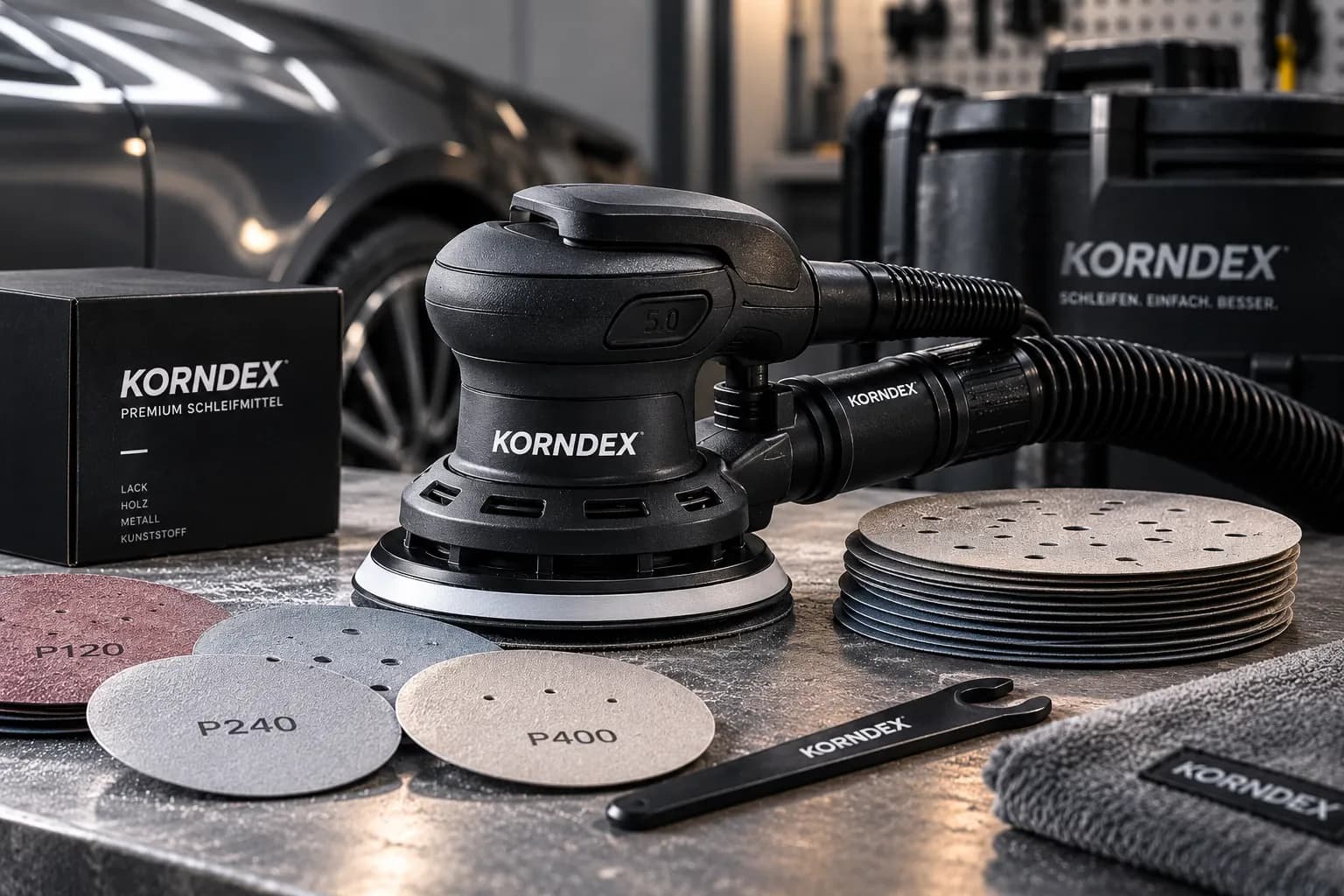
The random orbital sander has a round pad that rotates and at the same time swings on a small circular path: a lot of stock removal, an even scratch pattern without direction. The sheet sander has a rectangular plate that only swings: less stock removal, but it reaches into inside edges and frame corners. The detail sander has a triangular plate that also only swings: with it you reach pointed corners, rungs and the inside of furniture.
Stock removal and surface
The random orbital sander removes considerably more and is much faster on large surfaces. The sheet sander works more slowly and gently; it is too weak for stock removal but enough for smoothing and scuffing. The detail sander removes little, and the tip of its sheet wears out quickly.
Abrasives
A round hook-and-loop disc in pad size with a matching hole pattern belongs on the random orbital sander. The sheet sander takes rectangular cuts: strips or sheets with hook and loop, or paper from the roll under clamps. Which size is in the manual.
Compared briefly
Random orbital: rotates and swings, high stock removal, round hook-and-loop disc, large surfaces and paint. Sheet sander: swings only, low stock removal, sheet or strip, frames, edges and light scuffing. Detail: swings only, low stock removal, triangular sheet, pointed corners and rungs.
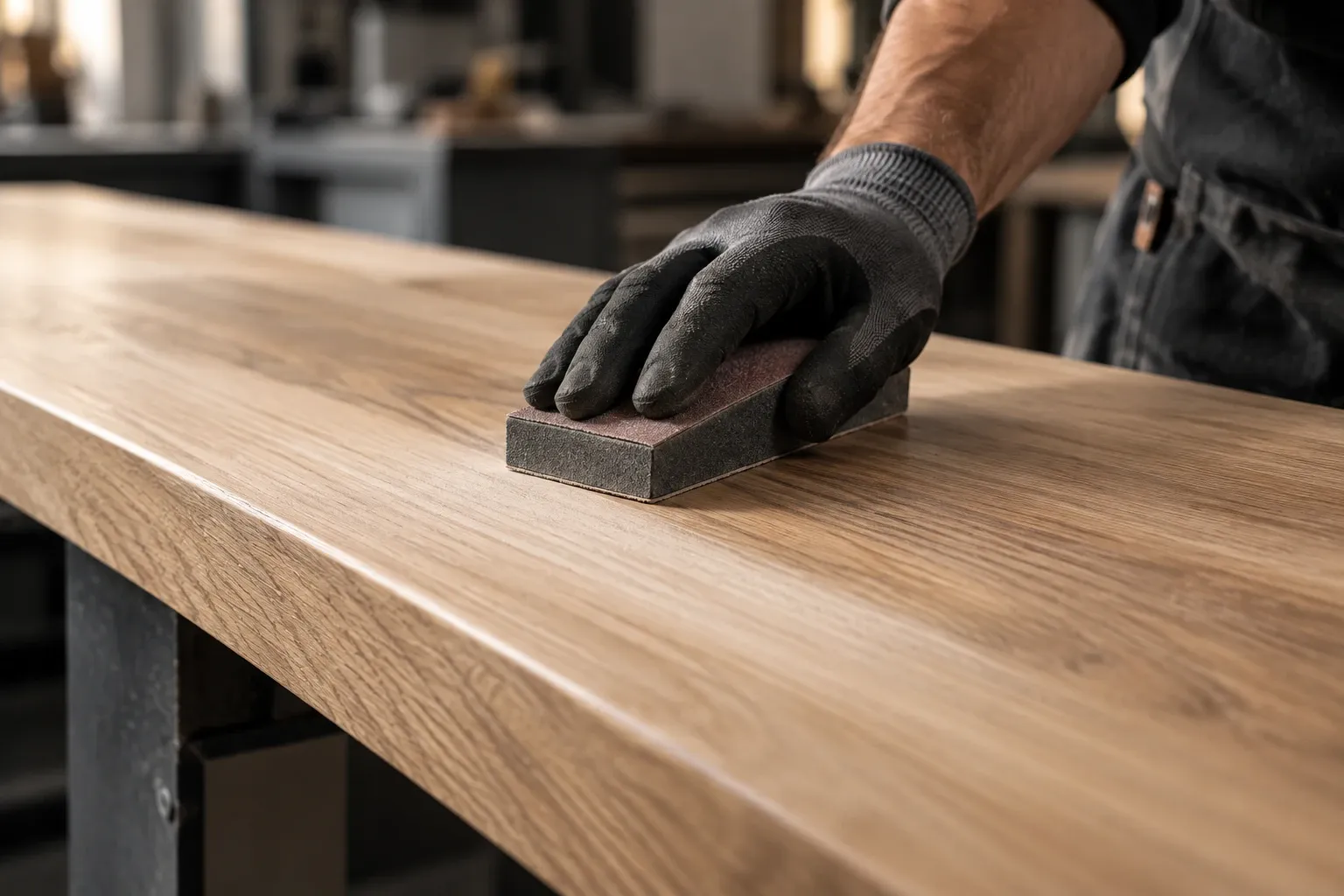
For the few corners on a door or a piece of furniture your hand is enough: an abrasive strip on the hand block for straight edges, sanding fleece for profiles and curves. If you buy only one machine, take the random orbital sander.
FAQ
What is better for wood?
For surfaces the random orbital sander: it is faster and leaves no directional scratch pattern. For frames, strips and inside corners the sheet sander or the hand block.
What is a detail sander good for?
For pointed corners, rungs and the inside of furniture, where neither the round pad nor the rectangular plate reaches. It removes little, though.
Terms in this article
- Random orbital sander
- Scratch pattern
- Sheet sander
- Detail sander
- Scuff sanding (keying)
- Hole pattern
- Abrasive fleece