Sanders & technique · 2 min read
Random orbital sander 125 mm or 150 mm – which pad?
125 mm is small, light and gets to detail; 150 mm covers more with every pass and keeps large surfaces flatter. When which pad fits.
Last updated:
KORNDEX sells abrasives – matching products are linked below the article.
The answer in one paragraph
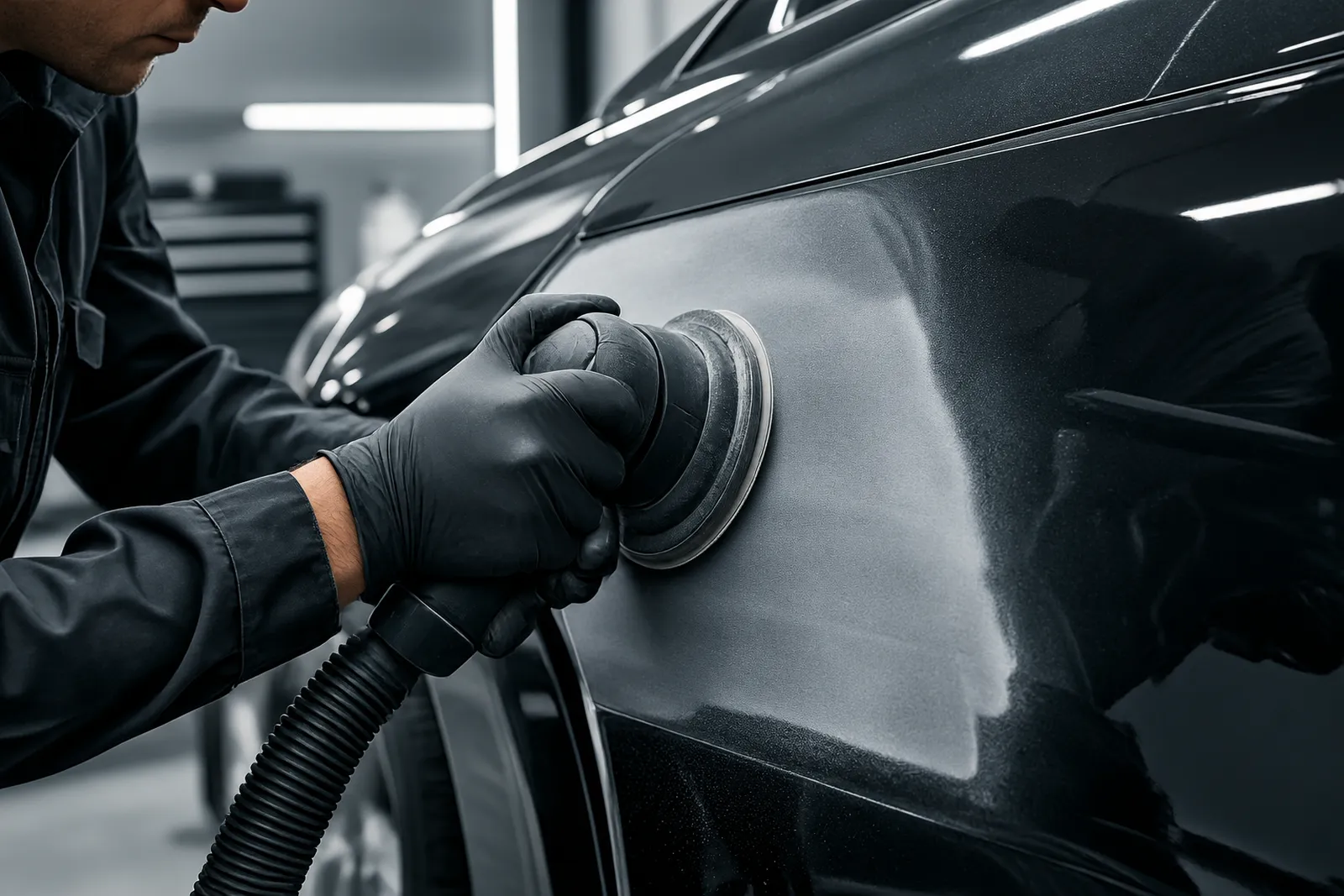
A lot of surface: 150 mm. A lot of detail: 125 mm. The 150 mm pad covers more with every pass, and the larger pad keeps the surface flatter. The 125 mm sander is smaller and lighter, gets closer to edges and inside corners and can be guided for a long time overhead or on vertical surfaces.
When 125 mm is the right size
Typical jobs for 125 mm are furniture, doors, window frames, small filler spots and car repairs where only part of the car is painted. If you have a lot of detail you will be done sooner with 125 mm.
When 150 mm is the right size
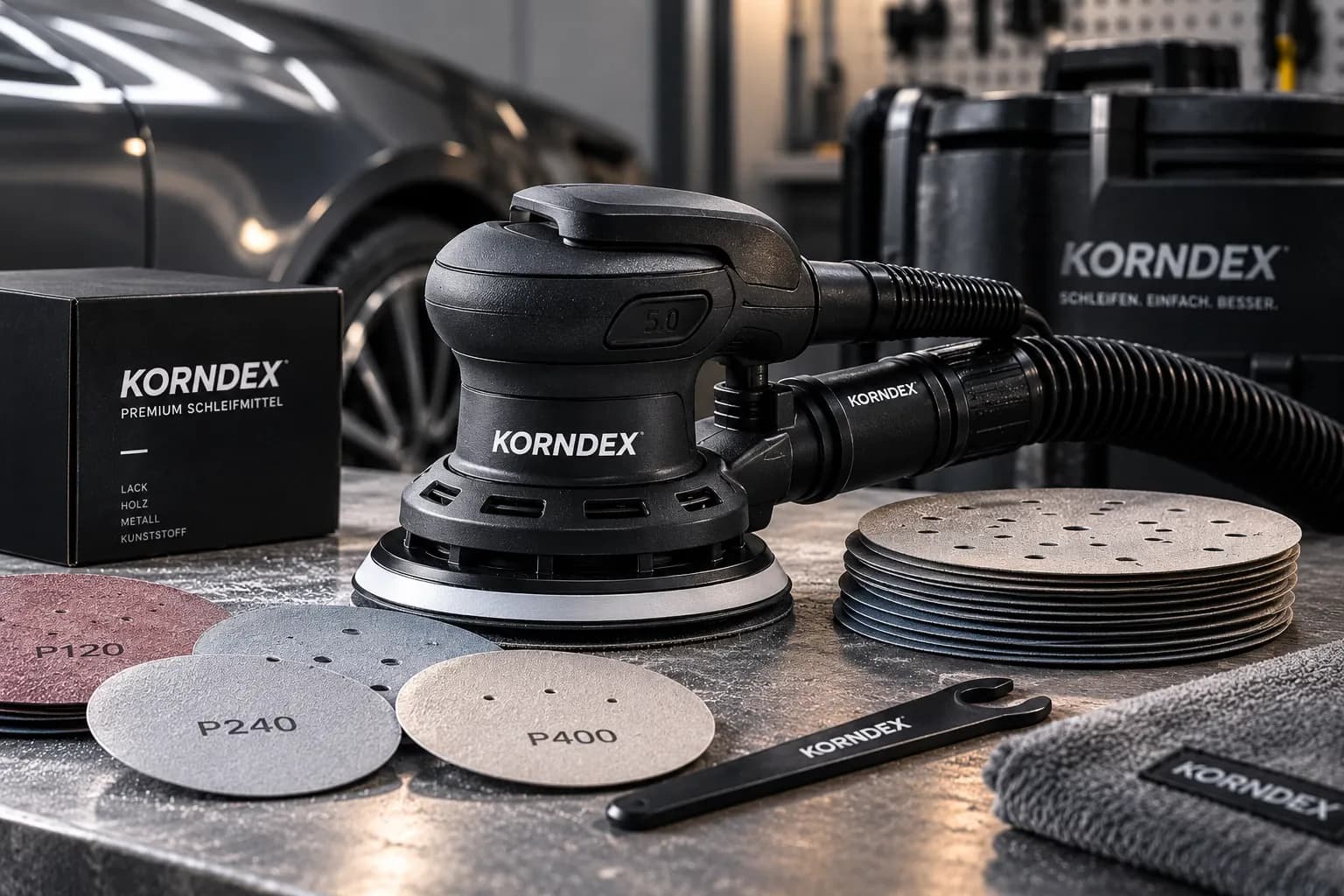
On large, flat surfaces the 150 mm disc is faster: table tops, door leaves, filler and paint surfaces on a vehicle. If you sand a lot of area, take 150 mm. The sander in the shop is the KORNDEX EX 150 with a 150 mm pad and 5 mm stroke.
The grit does not depend on the diameter
Disc and pad must be exactly the same size
The disc has to be exactly the size of the pad: one that is too large overhangs, flutters and tears at the edge; one that is too small leaves a ring of hook material exposed, which rubs along and drags scratches. The diameter is on the pad or in the machine’s manual. The hole pattern has to match the pad too – an 8-hole pattern is common on 125 mm, but other pads exist.
Compared briefly
125 mm: small and light, closer to edges and inside corners, good overhead and on vertical surfaces, for detail. 150 mm: covers more, keeps large surfaces flatter, for a lot of surface. If you buy only one machine and mostly sand surfaces, take 150 mm; do the corners by hand.
FAQ
Can I use 150 mm discs on a 125 mm machine?
No. The disc would overhang, flutter and tear at the edge. Disc and pad must have the same diameter.
Which grit do I use for 125 mm, which for 150 mm?
The same: the grit depends on the job, not on the diameter. Stock removal P60 to P80, smoothing P120 to P180, before paint P240.