Car & paint · 3 min read
Sanding out orange peel, runs and dust nibs in paint
Let it cure fully, then wet sand flat with P1000 or P1500, refine with P2000 and polish. What is different for orange peel, runs and dust nibs.
Last updated:
KORNDEX sells abrasives – matching products are linked below the article.
First: let it cure and check the thickness
Paint defects are sanded only once the paint has cured. How long that takes is in the technical data sheet of the paint – fresh paint gives way when sanded, smears and later shows scratches. Do not touch it until then.
Then decide: if the defect is only in the surface of the clear coat, it can be sanded out and polished. If the paint is too thin overall, or colour shows through after the first pass, only repainting helps. When in doubt, start in an inconspicuous spot and wipe dry and check after every pass.
Orange peel: sand the whole surface flat
Orange peel is fine waves and dimples in the paint surface. You only get rid of it by taking off the peaks down to the bottom of the dimples – so the whole surface evenly, not in spots.
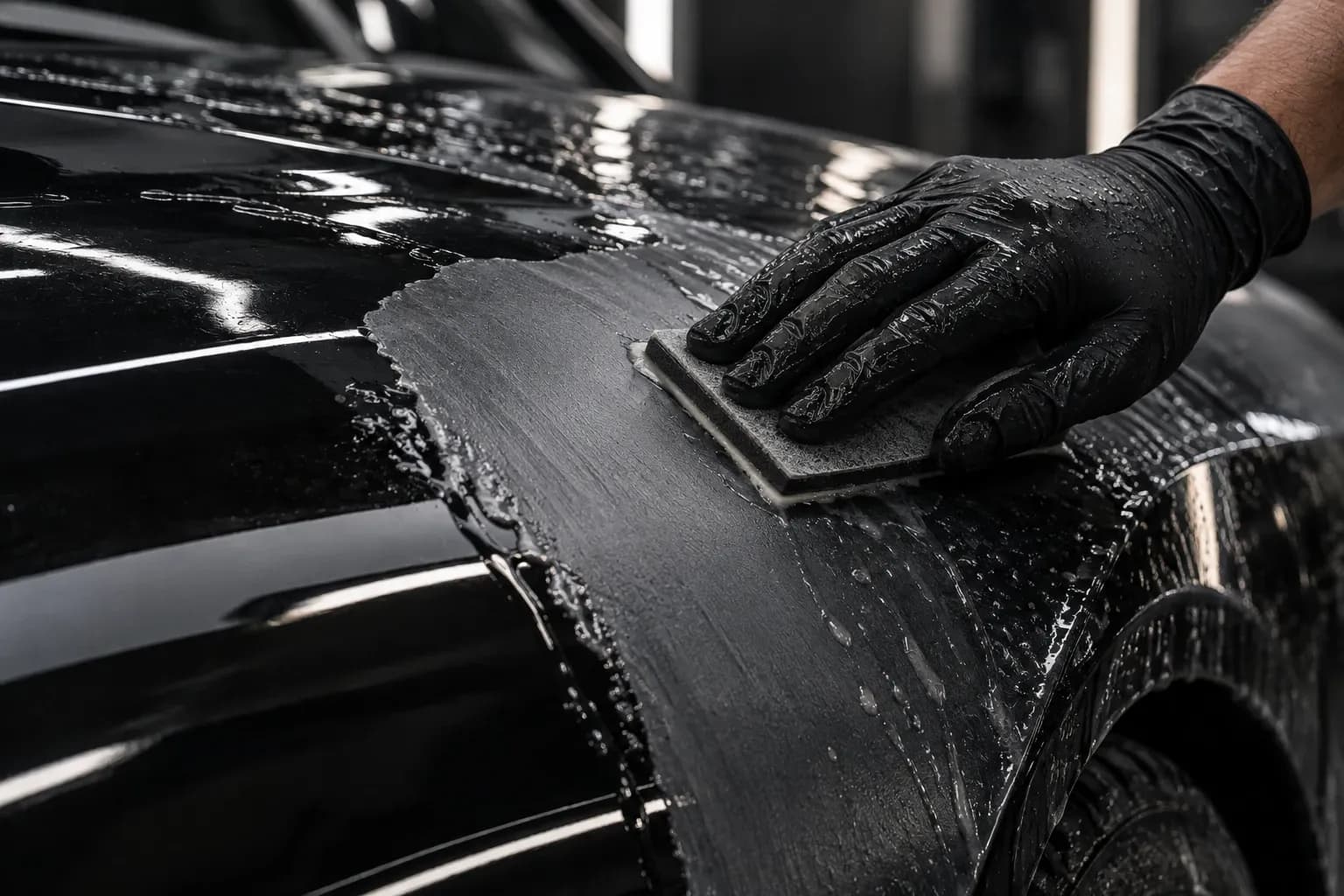
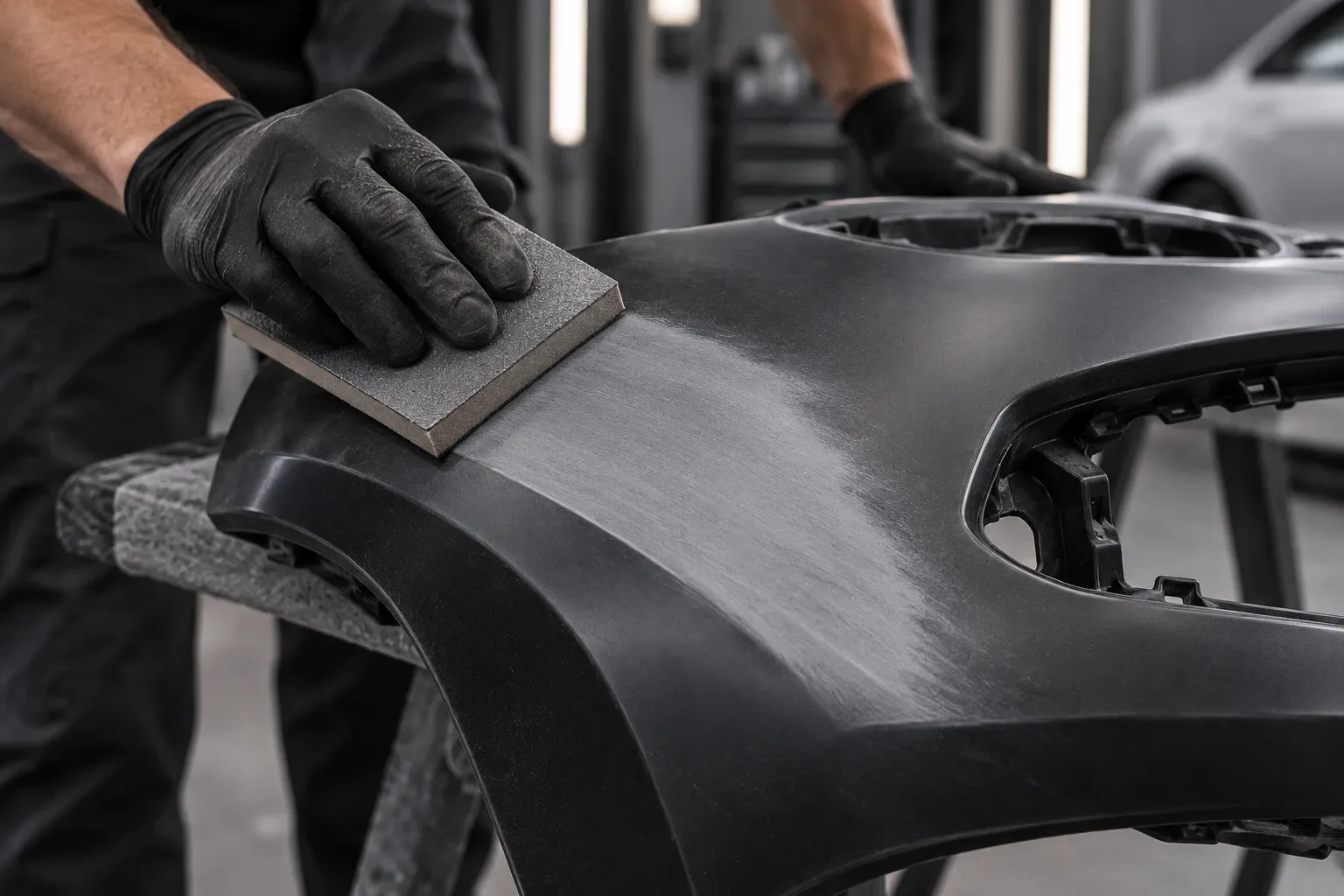
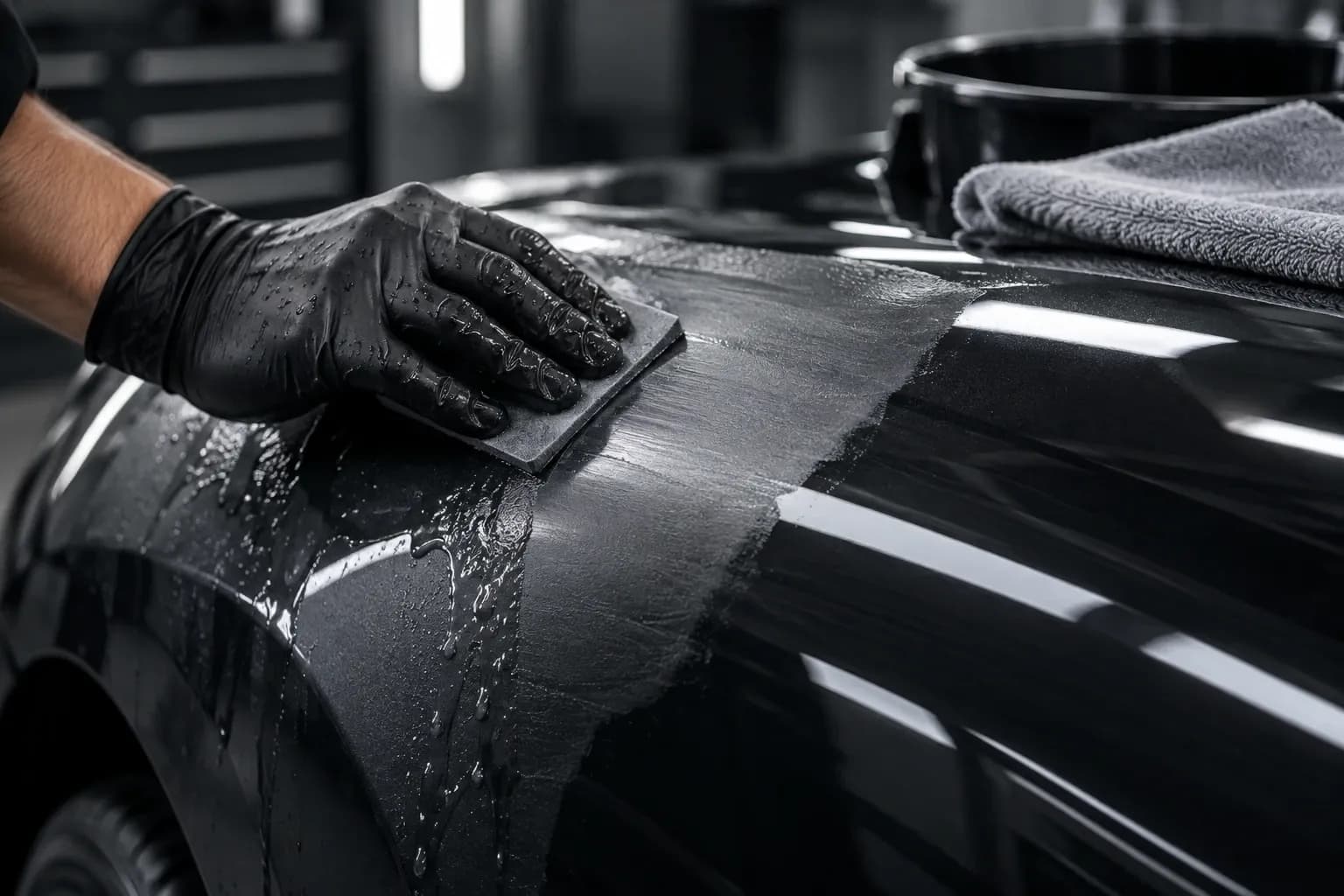
Work wet with P1000 or P1500 on a sanding block or soft interface pad until the surface is evenly matt everywhere and no glossy dimples remain. The block matters: by hand alone the paper follows the dimples and does not sand them out.
Then P2000 wet to even out the marks of the previous step, and polish. The coarser the first grit, the more clear coat is lost – so start with the finest grit that still levels the defect.
Runs and sags: remove first, then sand
A run is a spot with too much paint. Going at it with a sanding disc right away sands through the paint around it before the sag is gone.
Better: first take off only the raised part with a small block and P1000 wet until it is almost flush with the surroundings. Then blend the whole spot with P1500 and P2000 wet and polish. The run has to be fully cured for this – otherwise the core is still soft and smears.
Dust nibs: spot by spot, without sacrificing the surroundings
A speck of dust in the paint sits as a small bump. Take down exactly that spot with a small sanding block and P1500 wet until it is level, then P2000 and polish. Do not dig the speck out – just remove the bump.
If there are many nibs across the surface, it becomes the same job as orange peel: better to sand evenly flat than a hundred single spots.
Polishing and typical mistakes
After P2000 the surface is evenly matt. Bring it to gloss with cutting polish and a machine and finish with a fine polish. Mask edges and creases and work away from them – the paint is thinnest there.
Sanding dry: P1000 and finer clog immediately when dry. Always wet, with plenty of water and a drop of washing-up liquid.
Starting too early: paint that has not cured cannot be sanded cleanly.
By hand without a block: the paper follows the surface and leaves the dimples standing.
FAQ
Can you just sand a paint run away?
Yes, if the paint is fully cured: first remove only the raised part with a block and P1000 wet, then blend the whole spot with P1500 and P2000 and polish.
Which grit do you use against orange peel?
Usually P1000 or P1500 wet on a sanding block, then P2000 and polish. Whether the clear coat is thick enough for it is decided in an inconspicuous spot.
Terms in this article
All terms in the sanding glossary →The whole sequence at once
3 grits, 1 × smallest pack each: PRO SHEET 230 × 280 wet (25 pcs) P1000 · P1500 · P2000.
Or as a set: Finish set for high gloss (P1000–P2000) for €59.90 →
incl. VAT, plus shipping