Very fine · Keying paint
Sandpaper P1000 P1000 grit (FEPA)
Fine matting. Clear coat before recoating, fine sanding plastics.
Roughly equivalent to 500–600 Grit (US CAMI standard). Why the numbers differ
01 · Where it fits
Where P1000 sits in the sequence
Before
Pre-sand with P800 – the jump to P1000 is no more than double, so the scratches disappear.
Very fine range
P500–P1000: Matting top coat and clear coat, preparing plastics for painting, sanding between coats.
After
Carry on with P1500 until the surface is as fine as the next job needs.
P1000 in practice
- Used on
- Clear coat before recoating, yellowed plastic headlights, fine sanding of plastic.
- Tools
- Film-backed disc on a random orbital sander with interface pad, or a wet sheet by hand.
- Typical mistake
- Starting headlights too coarse: where P1000 is enough, starting with P400 costs four extra steps.
P1000 to P3000: the finishing sequence
From P1000 begins the part that prepares the gloss. The usual sequence, wet and with light pressure: P1000 or P1200, then P1500, P2000 and – if you have them – P2500 or P3000. Each step is at most twice as fine as the previous one. Then you polish; the finer the last sanding, the shorter the polishing.
Fine grits: P1500, P2000, P3000 →All grits in the Very fine range
In the KORNDEX system:Paint preparation · Key paint & plastic P400–P1000
What P1000 is used for
Car & paint
Keying paint
Plastic
Fine sanding without paint
02 · Buy
Products in P1000
- Bestseller
- P240–P1500
- Grit
- 150 mm
- Diameter
- 10 pcs
- Contents
€1.59 / pc · incl. VAT, plus shipping
- Bestseller
- P400–P2000
- Grit
- 150 mm
- Diameter
- 10 pcs
- Contents
€1.49 / pc · incl. VAT, plus shipping
- P400–P2000
- Grit
- 230 × 280 mm
- Dimensions
- 25 pcs
- Contents
€0.80 / pc · incl. VAT, plus shipping
Sets with P1000
03 · Know-how
FAQs about P1000
What is P1000 sandpaper used for?
Fine matting: Clear coat before recoating, fine sanding plastics. Typical for Car & paint, Plastic.
Is P1000 coarse or fine?
P1000 belongs to the very fine range (P500 to P1000): keying paint. The higher the number, the finer the grit.
Which grit comes after P1000?
After P1000 comes P1200 or – from our range – P1500. Never more than double the number per step – that way the finer grit removes the scratches of the coarser one.
Should P1000 be used wet or dry?
On paint usually wet: from P800 the water cools, flushes away the swarf and makes the scratch pattern finer and more even. Use waterproof sheets or film discs for this – paper goes soft. P1000 also works dry with dust extraction, but clogs faster.
Which grit comes before P1000?
Before P1000, sand with P800 (or finer). Jump straight to P1000 from too coarse a grit and you won't get the scratches out.
What do you sand P1000 with?
Film-backed disc on a random orbital sander with interface pad, or a wet sheet by hand. Typical for: Clear coat before recoating, yellowed plastic headlights, fine sanding of plastic.
What is the most common mistake with P1000?
Starting headlights too coarse: where P1000 is enough, starting with P400 costs four extra steps. Sand headlights wet with P1000, P1500, P2000 and P3000, then polish and seal – otherwise they yellow again quickly.
Related guides
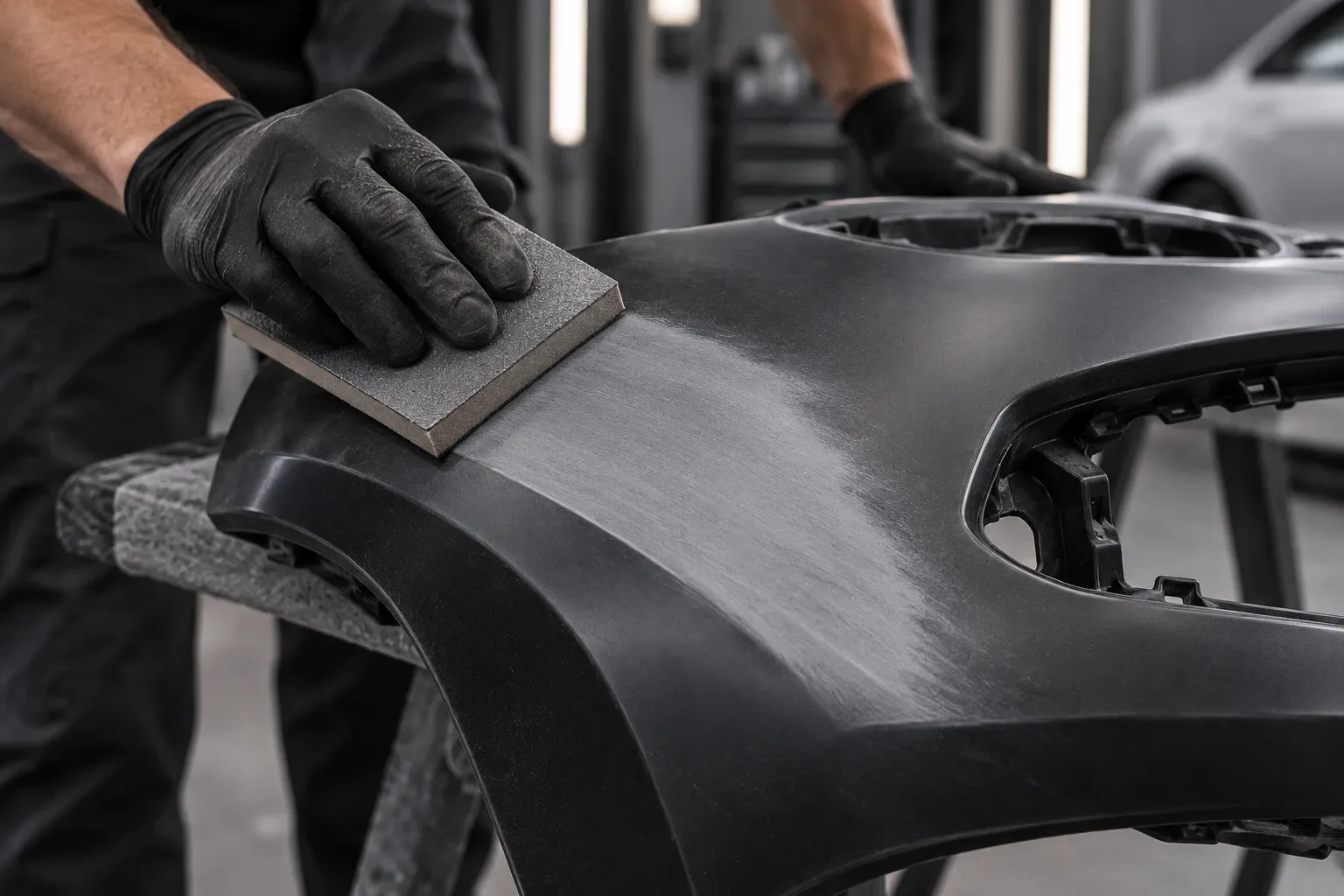
Plastic & resin
Restoring headlights: which grit?
Wet sand from P800 to P2000, then polish – and seal afterwards, or the lens will be cloudy again after one summer.
P800 → P1000 → P1500 → P2000
Read · 1 min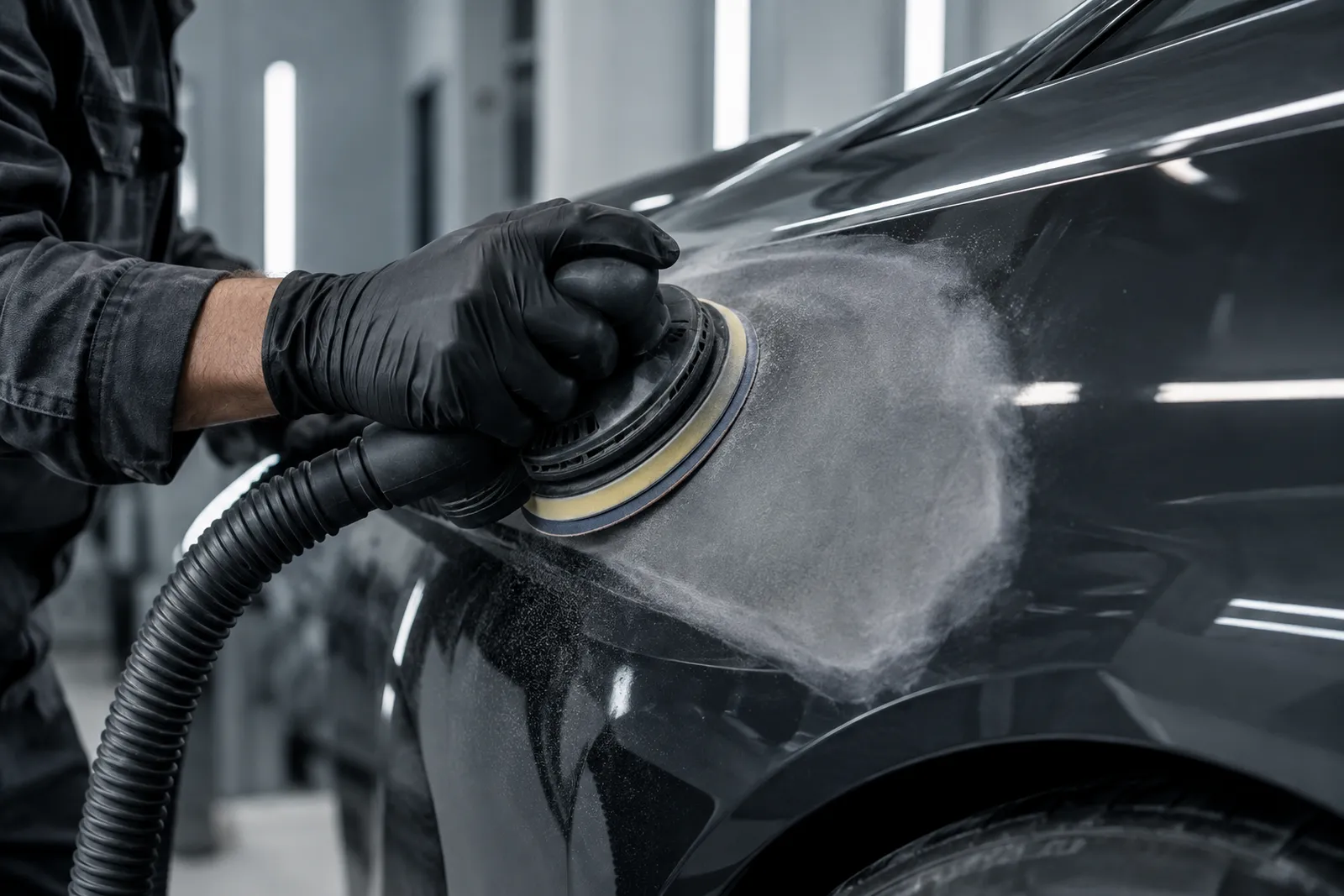
Plastic & resin
Sanding and polishing epoxy resin
River tables and castings: level coarse, then wet sand up to P2000 or P3000 and polish. Why the resin must be fully cured first.
P120 → P180 → P240 → P320 → P400 → P600 → P800 → P1000 → P1500 → P2000
Read · 1 min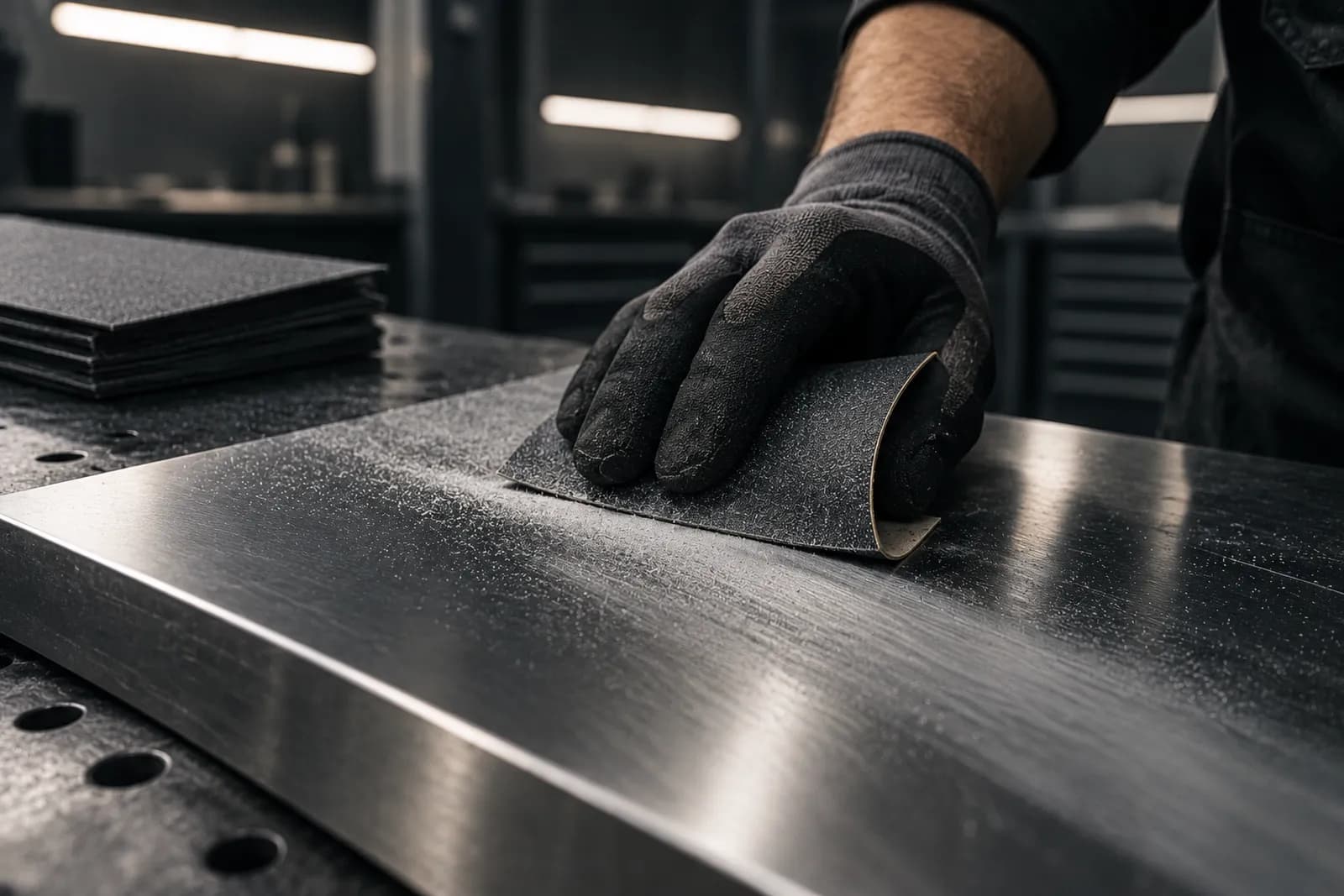
Metal
Sanding and polishing brass and copper
Soft non-ferrous metals: patina with non-woven abrasive, scratches off with P240, then wet up to P2000 and polish – and why you seal it afterwards.
P240 → P400 → P600 → P1000 → P1500 → P2000
Read · 1 min
Not sure P1000 is right?
The finder asks about material, machine and goal – and tells you the grit and product.
Start the abrasive finder →