Abrasives · 3 min read
Types of sandpaper: paper, mesh, film, foam, non-woven
Paper, mesh, film, foam and non-woven – what each type can do, what it is made for, and what emery paper, glasspaper and sanding screen have to do with it.
Last updated:
KORNDEX sells abrasives – matching products are linked below the article.
Sandpaper, emery paper, glasspaper, sanding screen – what is the difference?
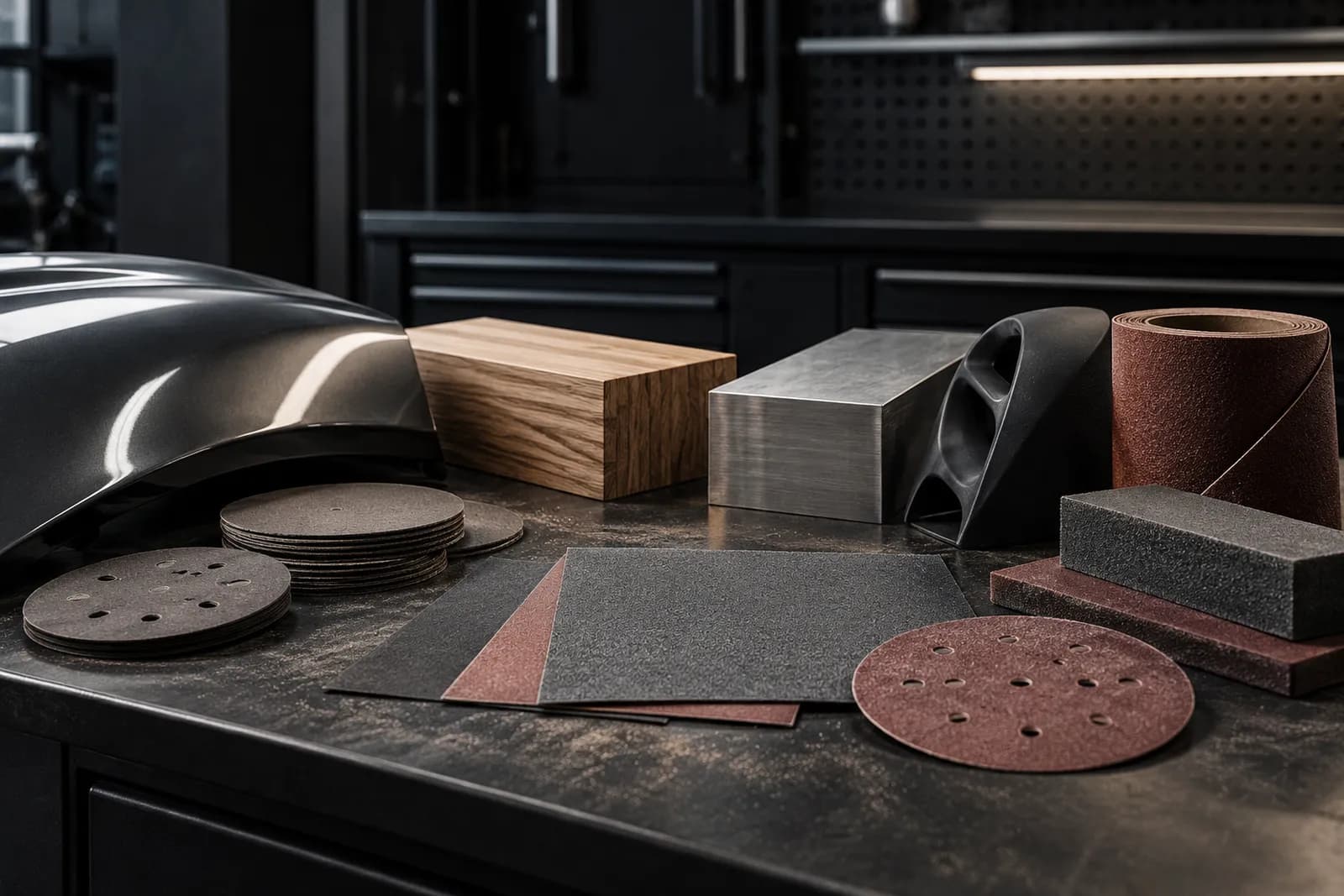
In everyday use all four words often mean the same thing. Emery paper comes from emery, a natural corundum rock that was used for sanding in the past. Glasspaper and the word sandpaper itself date from the time when sand or glass splinters were glued onto paper. Today almost every sandpaper carries synthetic grain such as aluminium oxide or silicon carbide.
Sanding screen is the name for the open mesh the dust passes through – common in drywall work, and known in the workshop as the mesh disc. What really sets the types apart is the backing the grain sits on.
Paper: the classic for removal and the middle grits
Paper is inexpensive, cuts well and comes from very coarse to fine. For the random orbital sander as a hook-and-loop disc with holes, for the orbital sander as a sheet or strip, by hand as a roll to cut to size. Weaknesses: it can clog with fine dust, and ordinary paper softens when wet.
Mesh: extracts everywhere
The mesh disc (PRO NET) is an open fabric with grain. The dust passes through everywhere, not just at the holes – it does not clog and stays sharp for a long time. Its strength is the middle range on primer surfacer, body filler and primer, but only with dust extraction.
Film-backed disc or paper – when is film worth it?
The film-backed disc (PRO FILM) has a plastic backing instead of paper. It is perfectly flat and tear-resistant and tolerates water. The grain sits at an even height, so there are no deep individual scratches – the scratch pattern is finer than on paper at the same grit.
Film is worth it from about P600 on top coat, clear coat and plastic when you polish afterwards, and wherever you sand wet. For coarse and medium sanding on wood, body filler and metal, paper is cheaper and removes just as well.
Foam and non-woven: for shapes and the finish
The foam pad (SOFT FINISH) is grain on soft foam. It follows curves and gives a soft, even pattern in the fine grits before polishing. For hand use, foam comes as a sanding sponge for profiles and curves.
The abrasive non-woven pad (PRO FLEECE) is synthetic fleece with embedded grain. It barely removes material but mattes evenly without scratches – for keying in swage lines, on edges and on metal.
Cloth, roll, strip: formats rather than types
Abrasive cloth has a fabric backing and is particularly tear-resistant, which is why it is used in belts and, for metal, in rolls. Roll, strip and sheet, on the other hand, are not types of their own but formats: rolls to cut to size for hand blocks and clamp pads, hook-and-loop strips for the hand block, sheets for wet sanding.
FAQ
Is emery paper the same as sandpaper?
In everyday language, yes. The name comes from emery, a natural corundum. Today’s sandpaper mostly carries synthetic aluminium oxide or silicon carbide.
Which type of sandpaper do I need to start with?
For wood and paint, paper discs in P80 to P240 are enough, plus a non-woven pad for edges. Add mesh if you sand a lot of primer surfacer or filler with extraction, and film for the finish.
Terms in this article
- Emery paper
- Aluminium oxide (corundum)
- Silicon carbide
- Mesh abrasive
- Sheet sander
- Clogging (loading)
- Primer surfacer
- Primer coat
- Dust extraction
- Scratch pattern
- Film backing
- Clear coat
- Sanding sponge
- Abrasive fleece
- Deep scratches
- Scuff sanding (keying)
- Cloth-backed abrasive
- Wet sanding