Abrasives · 2 min read
Sanding sponge or sandpaper – which, when?
Paper levels, a sponge follows the shape, a non-woven pad mattes. When each abrasive is the right one – and how to use a sanding sponge.
Last updated:
KORNDEX sells abrasives – matching products are linked below the article.
What makes a sanding sponge
A sanding sponge is foam with grain on one or more sides. It gives and wraps around curves, profiles and edges – it sands evenly there, whereas paper on a hard block only touches the high points and sands through on the edge. It also sits well in the hand and can be used wet or dry.
When sandpaper is better
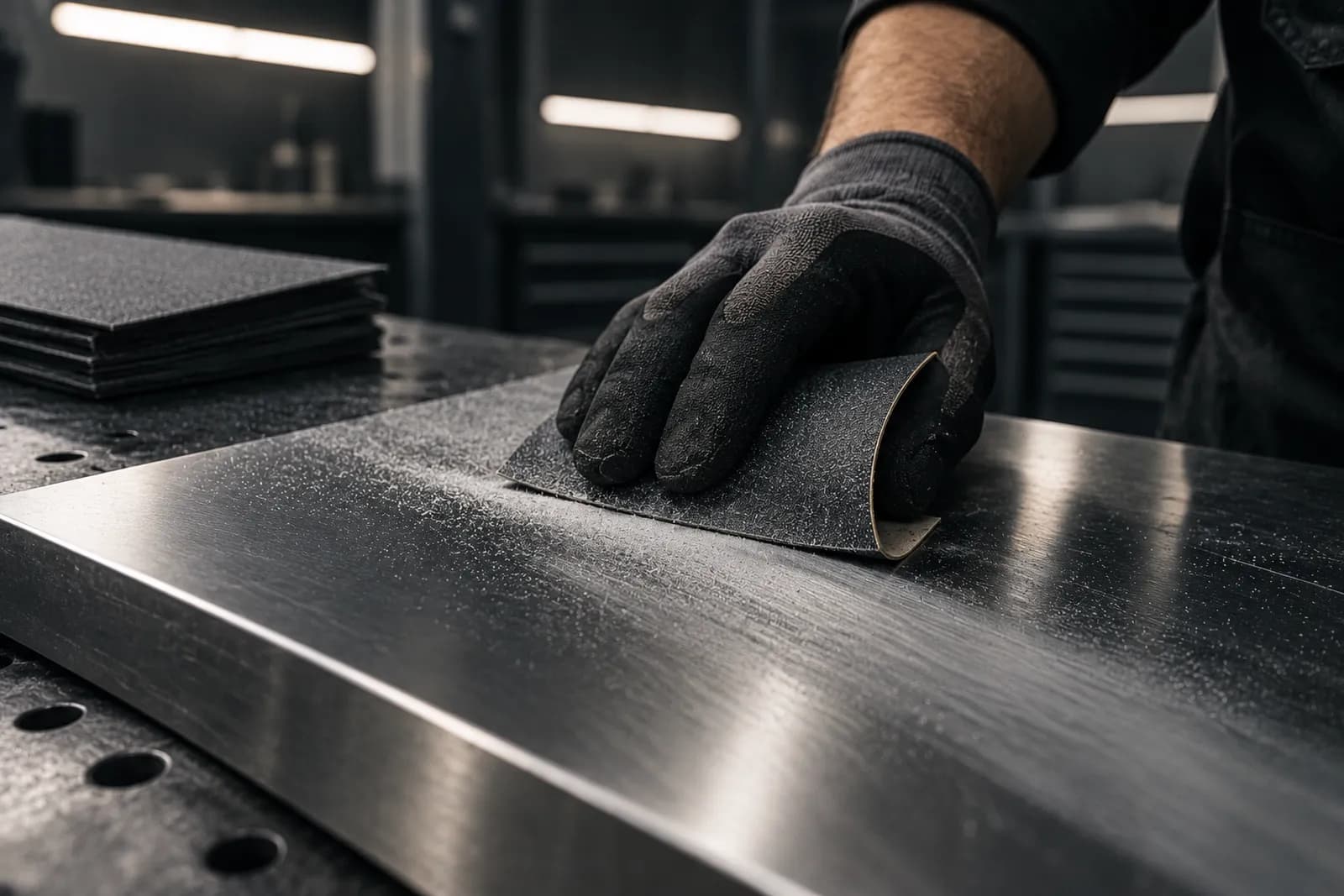
Because the sponge gives, it does not level. A filler spot, a wavy surface or saw marks are sanded with paper on a firm block or pad: the hard backing takes off the peaks and leaves the valleys until the surface is flat. A sponge would follow every wave.
Paper also removes more material and comes in coarser grits. For coarse sanding and anything that has to end up flat, it remains the first choice.
Paper, non-woven pad or sponge compared
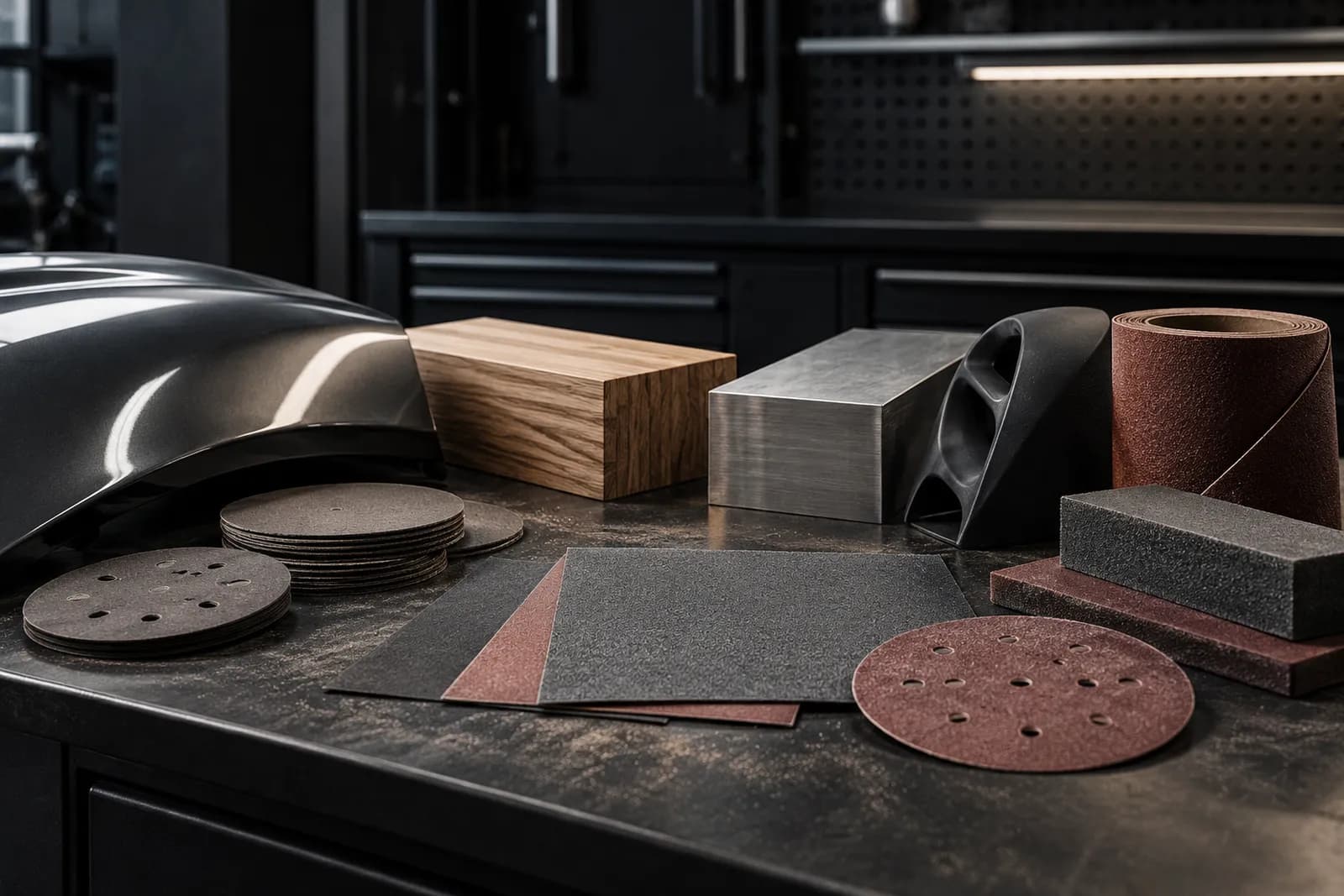
Sandpaper: firm backing, removes and levels, from the coarsest to the finest grits – for surfaces, body filler, wood, paint. Abrasive non-woven pad: synthetic fibres with grain, barely removes anything and mattes without scratches – for keying before painting in swage lines and corners, and for metal. Sanding sponge: foam with grain, follows the shape and sands lightly – for profiles, curves, edges and sanding between coats.
Non-woven pad or sanding sponge?
Both follow the shape. The non-woven pad is thinner and gets into tight swage lines, joints and edges; it mattes rather than sands. The sponge has more grip and more cut: it smooths raised wood fibres and runs on profiles noticeably faster, but it is too thick for narrow joints.
Before painting edges and corners, take the non-woven pad; for sanding between coats on window profiles, turned parts and curves, the sponge.
Foam pad instead of a sponge on the sander
For the machine, foam comes as a round hook-and-loop disc – the foam pad (SOFT FINISH). On the random orbital sander it conforms to curves and gives a soft, even scratch pattern on paint and plastic, above all in the fine grits before polishing. By hand, wrap a sheet around the hand block or use a non-woven pad.
FAQ
How do you use a sanding sponge?
Guide it with a flat hand, light pressure, along the grain or in even strokes. On curves use the soft side, on edges the edge of the sponge. Knock it out or wash it now and then, and remove the dust before the next coat.
What grit does a sanding sponge have?
Sponges are often sold by fineness rather than by P-number. For sanding between coats of varnish take a fine one; for keying old paint on profiles, a medium one.
Terms in this article
- Sanding sponge
- Rough sanding
- Abrasive fleece
- Deep scratches
- Scuff sanding (keying)
- Intermediate sanding
- Scratch pattern