Abrasives · 1 min read
Mesh sanding discs vs. regular sandpaper
Mesh extracts dust across its whole surface and does not clog; paper is cheaper and cuts harder. When to use which.
Last updated: · published
What mesh does well
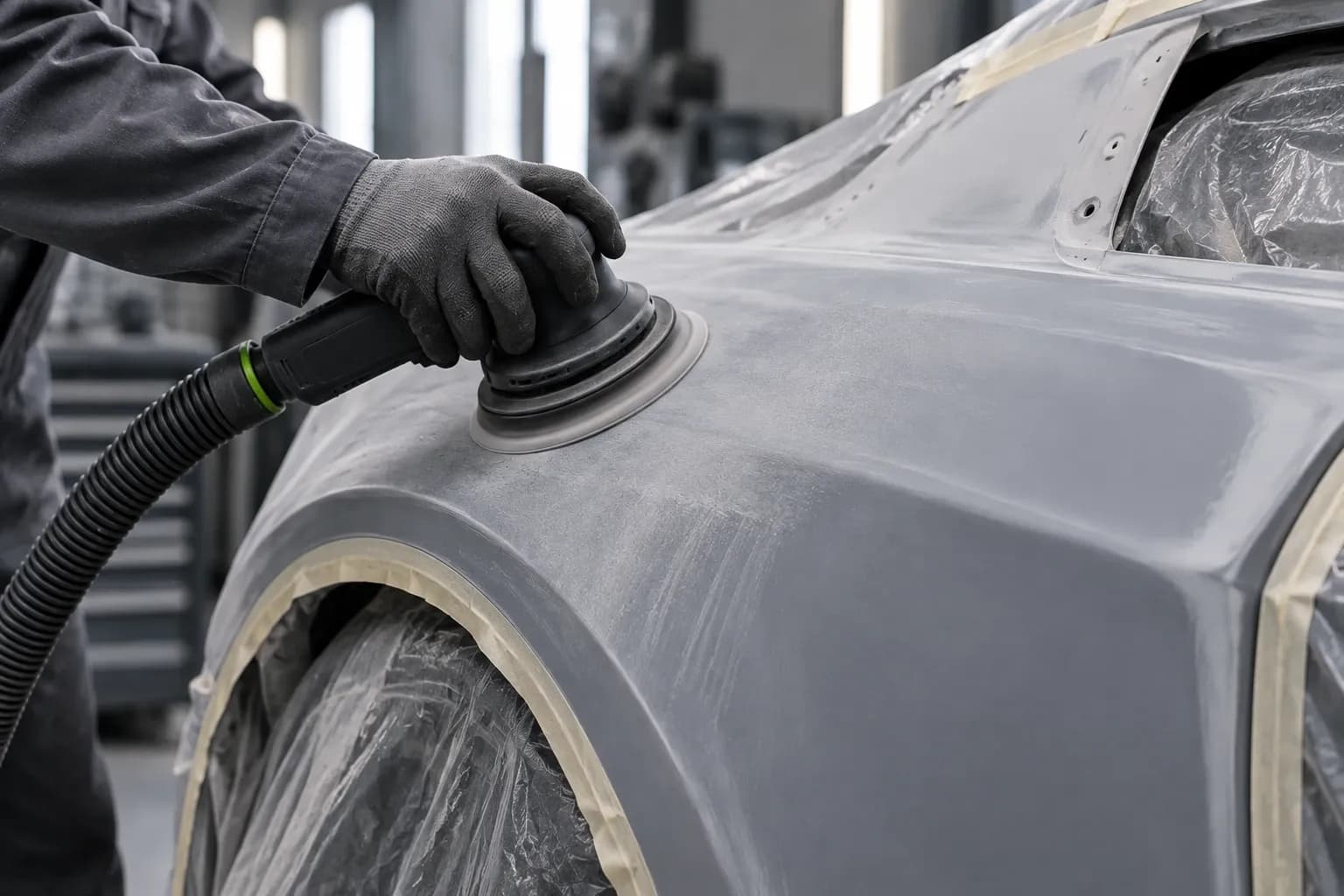
A mesh disc is an open woven grid coated with grain. Dust passes through everywhere, not just through the holes – the disc does not clog, stays sharp for longer, and the workshop stays cleaner. On primer surfacer, body filler and primer, where a lot of fine dust is produced, it is clearly superior.
Where paper wins
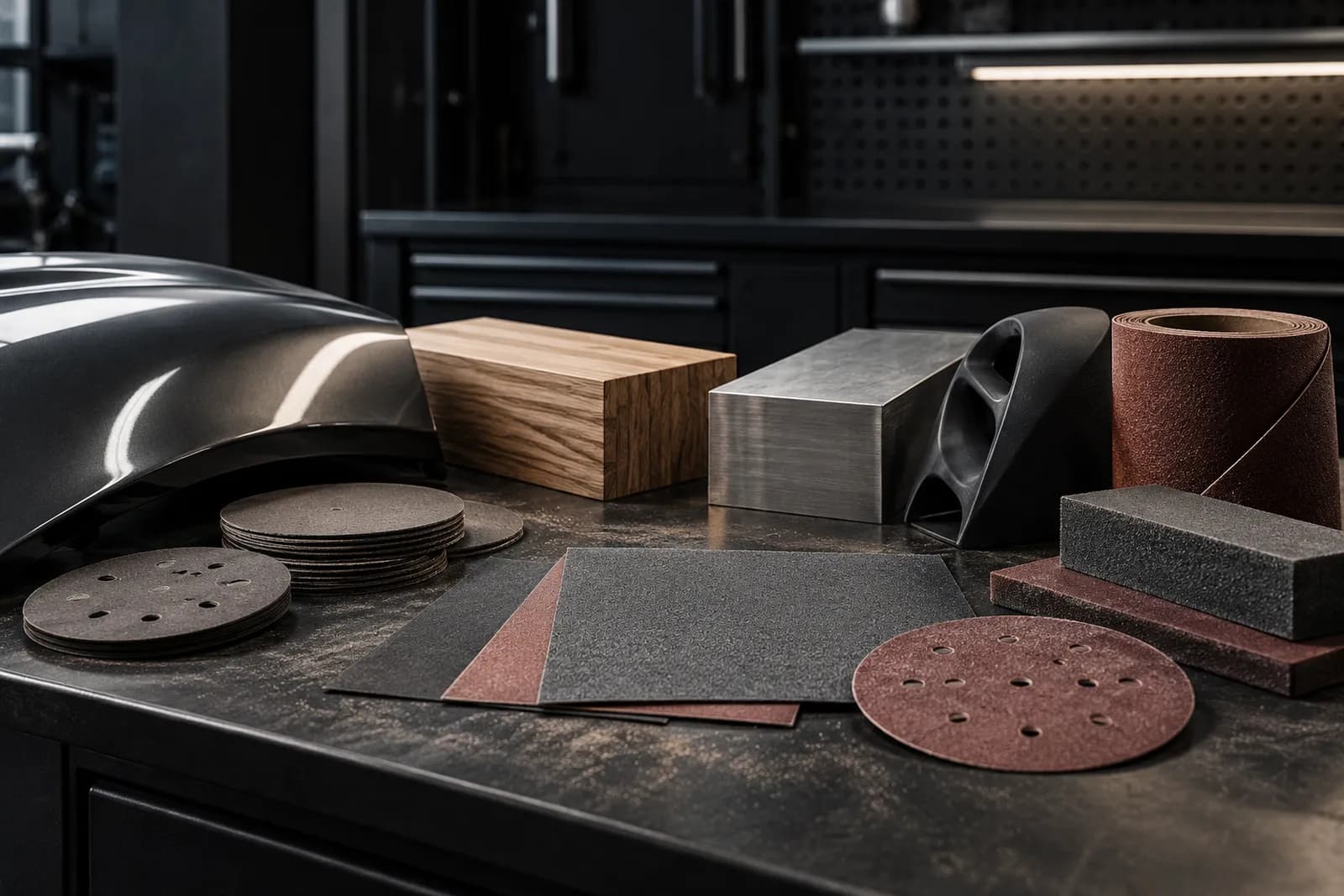
For heavy stock removal (P40 to P80) on wood and metal, the paper disc removes more and costs less. For finishing grits from P800 up, the film-backed disc is the better choice: flat backing, more even scratch pattern.
Our advice: paper for coarse, mesh for the middle grits, film and foam for fine. A backing pad with multi-hole pattern fits all three.
No extraction, no advantage
Mesh only shows its strength with dust extraction. Without it, the dust stays on the surface and a paper disc sands just as well – for less money. With an extractor or dust bag, on the other hand, mesh stays open for a long time even on primer surfacer and body filler.
Calculate per area, not per disc
A mesh disc costs more than a paper disc. On dusty substrates such as primer surfacer or body filler, however, it lasts much longer because it does not clog – you change discs less often and sand without pigtails. On wood or for heavy stock removal on metal, paper is usually the cheaper choice.
FAQ
Do mesh discs need a special backing pad?
No, any hook-and-loop backing pad fits. An interface pad in between spreads the extraction across the whole surface and protects the hook-and-loop.
Can I use mesh discs without dust extraction?
Yes, but then they lose their advantage. Without extraction, a paper disc sands just as well and is cheaper.