Abrasives · 2 min read
Abrasive fleece or sandpaper?
Fleece mattifies, paper removes. Where fleece does the better job – corners, edges, mouldings, keying before paint – and where it falls short.
Last updated: · published
KORNDEX sells abrasives – matching products are linked below the article.
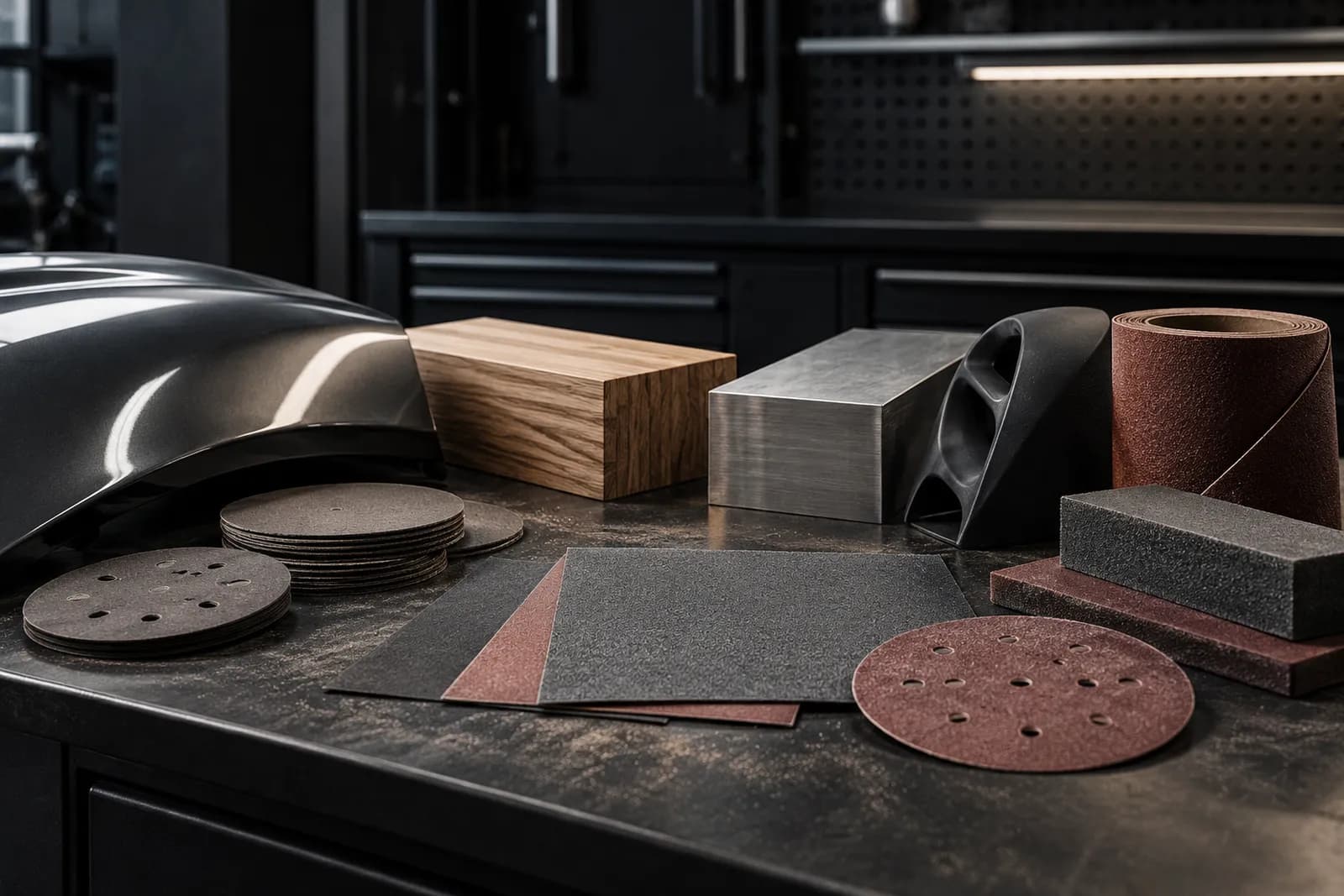
What fleece can do
Abrasive fleece (non-woven abrasive) is a synthetic web with abrasive grain embedded in it. It adapts to any shape and sands evenly without deep scratches. Ideal for keying paint in swage lines, corners and on edges, where paper would sand through, and for matting metal.
Fleece hardly clogs and can be rinsed out – wet or dry.
Where paper wins
Stock removal, body filler, levelling: for that you need an abrasive on a firm backing plus a block or backing pad. Fleece follows every unevenness instead of sanding it away.
Fleece and grit
Fleece is usually sold by colour or fineness rather than by P number. Roughly speaking: a fine fleece for keying before paint corresponds to about P320 to P400 on paper, a very fine one more like P600 to P800 – but it leaves a softer scratch pattern.
Abrasive fleece or steel wool?
Both matt, but steel wool leaves fine steel fibres behind. Under water-based varnish, stain or on oak they rust as grey or black dots, on stainless steel and aluminium as contamination rust. Steel wool crumbles, and the fibres lodge in pores and cracks.
Abrasive fleece does not rust, hardly sheds, can be rinsed out and comes in more consistent finenesses. For paint, wood before water-based varnish, stainless steel and aluminium, fleece is the better choice; steel wool remains something for waxing and polishing wood with oils and waxes.
Abrasive fleece wet or dry?
Both. Dry, you matt paint before painting and metal; wet, you bind the dust – with old paint of unknown origin, or when working with a matting paste. Wet, the fleece clogs even less. After wet sanding, let the surface dry thoroughly, including seams, before painting – on bare steel only dry.
FAQ
Can I use abrasive fleece on a random orbital sander?
There are hook-and-loop fleece discs for random orbital sanders. Fleece sheets, though, are used by hand or on a block – that is where they play to their strengths on edges and in swage lines.
Which fleece colour means which fineness?
It is not standardised and varies from one manufacturer to the next. So go by the fineness stated on the pack, not by colour alone.
Terms in this article
- Abrasive fleece
- Deep scratches
- Scuff sanding (keying)
- Sand-through
- Matting
- Scratch pattern
- Polishing
- Wet sanding