Abrasives · 2 min read
Wet sanding paper: grit, use, how to wet sand properly
What waterproof sandpaper does differently, which grit for primer surfacer, paint and clear coat – and how to wet sand step by step.
Last updated:
KORNDEX sells abrasives – matching products are linked below the article.
What wet sanding paper is
Wet sanding paper has a waterproof backing and a synthetic resin bond that does not soften in water. Ordinary sandpaper falls apart when wet: the paper goes soft and the grain breaks out. Wet sanding paper is usually coated with silicon carbide – the grain is sharp, fractures and leaves a very fine, even scratch pattern.
How wet sanding works
The water binds the sanding dust and flushes it out of the grain. The paper hardly clogs, stays cool and keeps cutting evenly. On paint this gives finer, shallower scratches than dry sanding at the same grit – exactly what the polish needs afterwards.
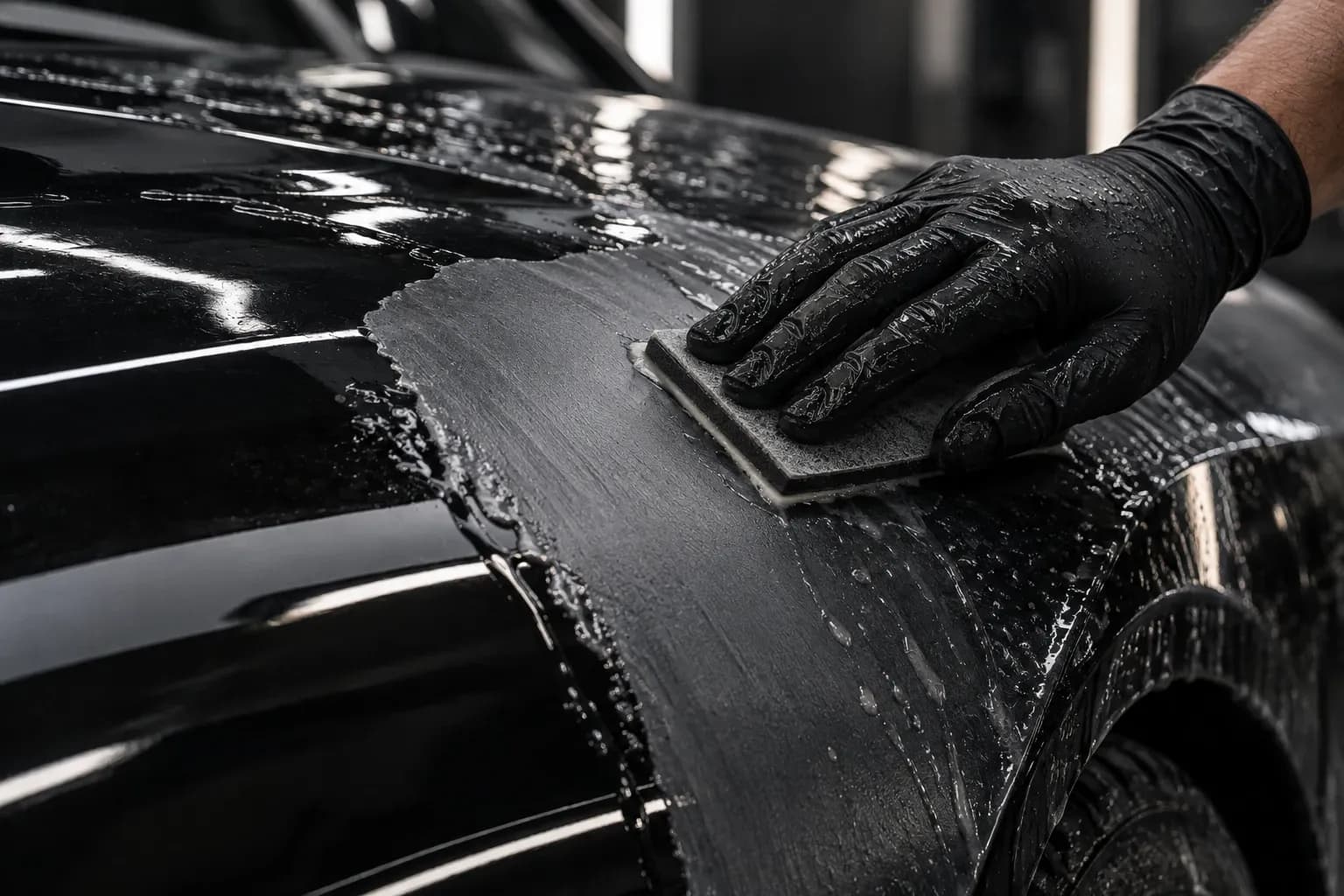
On top of that, there is no dust in the air. Instead you get sanding slurry on the surface, which you wipe off regularly to see how far you have got.
Which grit for what
P400 to P600: smoothing primer surfacer wet and preparing old paint for the top coat. P800 to P1000: matting old paint when new paint or clear coat goes on top, and blend zones when spot repairing. P1500 to P2000: dust nibs, runs and orange peel in the clear coat, right before polishing. If you have P3000, it shortens polishing further.
Same as dry: get finer step by step and never skip a step that is more than double the grit.
Wet sanding step by step
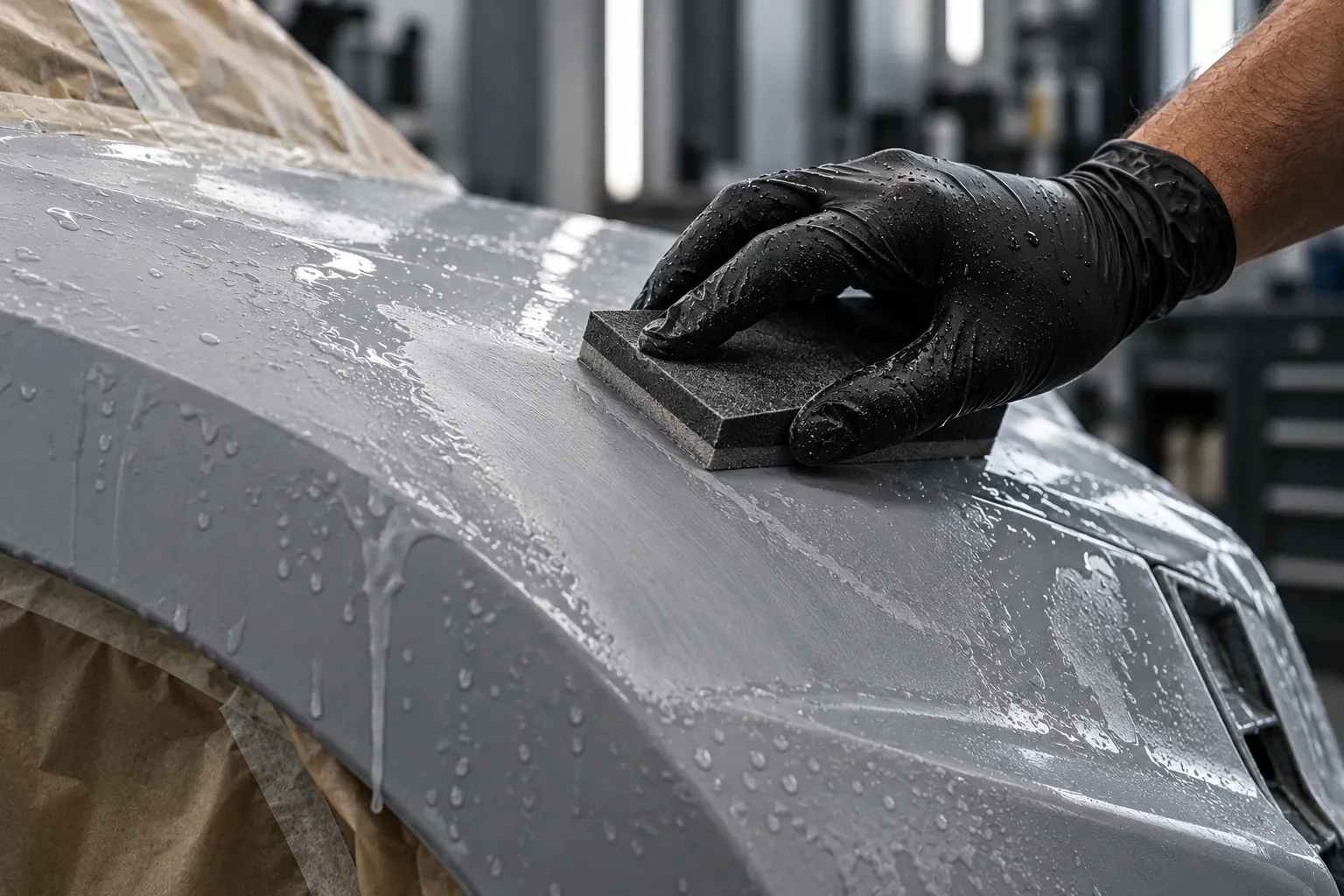
Soak the sheet in water for a few minutes beforehand so it becomes supple. Add one drop of washing-up liquid to the water – no more, or it foams. Wrap the sheet around a hand block or a foam pad; sanded freehand with your fingers, it presses grooves into the paint.
Keep surface and sheet wet, sand with light pressure in straight, overlapping strokes, and change direction with each grit. Now and then wipe off the slurry with a rubber squeegee or a cloth: shiny spots show where low points remain. Rinse before every finer grit so no coarse grain travels along.
Where wet sanding paper does not belong
Not on bare steel – it flash-rusts within minutes. Not on polyester body filler: it soaks up water that later comes out as blisters in the paint. Not on wood, MDF or plaster, which swell. And not with an ordinary electric random orbital sander: wet sand by hand, or only with machines the manufacturer approves for it.
After wet sanding, everything must be completely dry, including seams and swage lines, before you paint.
FAQ
Can wet sanding paper be used dry?
Yes, it sands dry as well. It then clogs faster, though, especially in fine grits on paint. Its advantage only really shows with water.
Is there wet sanding paper as a kit?
The Finish Set bundles the finish before polishing: film, foam and wet sheet in fine grits. For primer surfacer and old paint, add the coarser sheets individually.
How long does wet sanding paper need to soak?
A few minutes are enough for the sheet to soften and wrap around the block. Soaking it overnight brings nothing and harms some backings.
Terms in this article
- Silicon carbide
- Scratch pattern
- Sanding dust
- Deep scratches
- Primer surfacer
- Matting
- Clear coat
- Blending in
- Paint run (sag)
- Orange peel
- Flash rust
- Wet sanding
The whole sequence at once
6 grits, 1 × smallest pack each: PRO SHEET 230 × 280 wet (25 pcs) P400 · P600 · P800 · P1000 · P1500 · P2000.
Or as a set: Finish set for high gloss (P1000–P2000) for €59.90 →
incl. VAT, plus shipping