Sanders & technique · 1 min read
Hand sanding: with a block, in strokes, criss-cross
Why the sanding block matters more than the grit, when to sand criss-cross and where the machine cannot reach.
Last updated: · published
Never with your bare hand
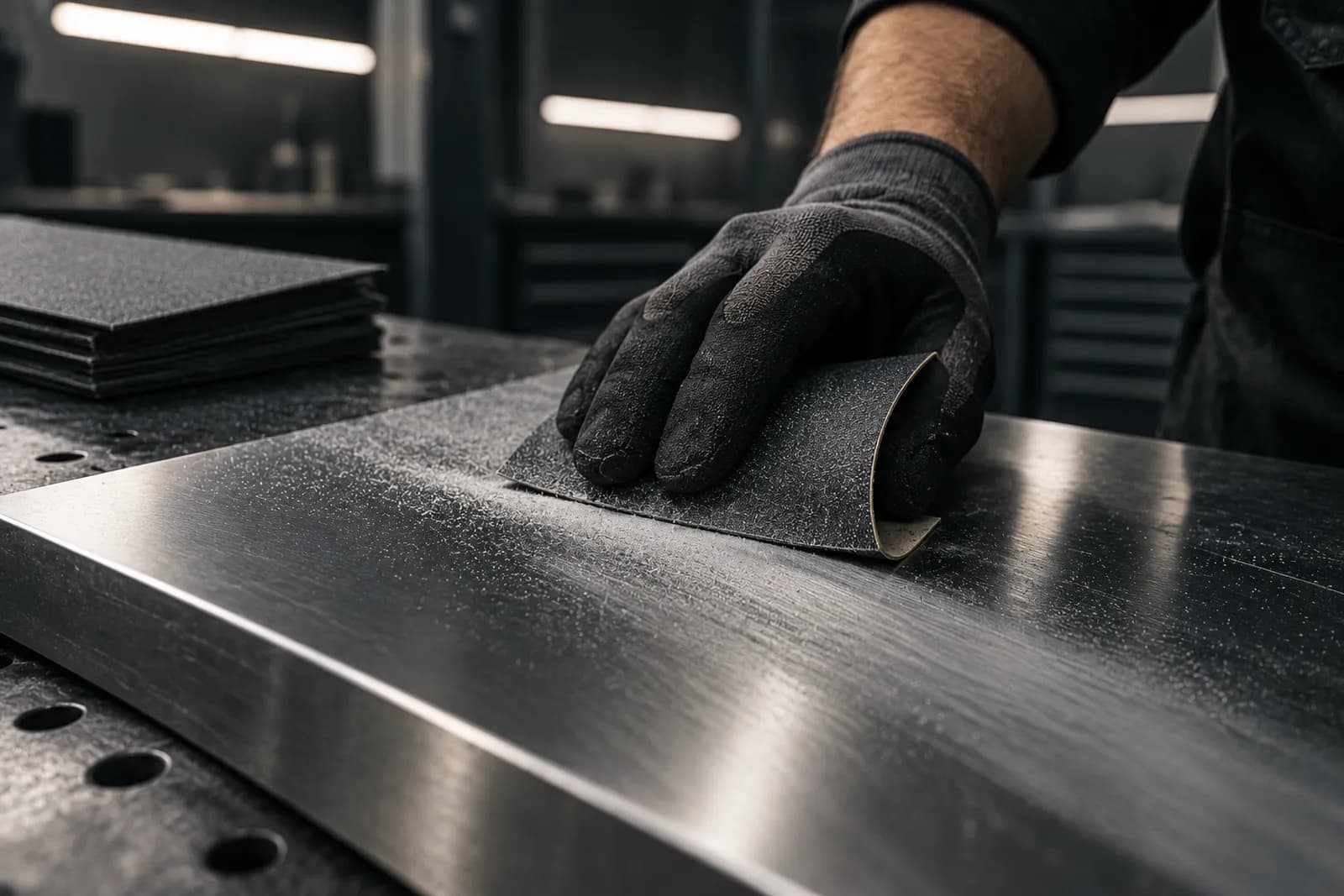
Fingers press unevenly – every fingertip sands a dip that only shows once the paint is on. A sanding block spreads the pressure across the whole surface and keeps it flat. Use a soft block or a foam sanding pad for curves and swage lines, a firm block for flat surfaces and a long one for long panels.
In strokes, then criss-cross
On body filler and primer surfacer, sand in straight strokes and turn the direction by about 45 degrees with each pass – criss-cross. That way high spots and waves show up and get levelled instead of being followed. Wood, on the other hand, is always sanded with the grain: scratches across the grain stay visible under oil and varnish.
Guide coat shows where the block has not reached yet: as long as black spots remain, the surface is not flat.
When by hand, when by machine
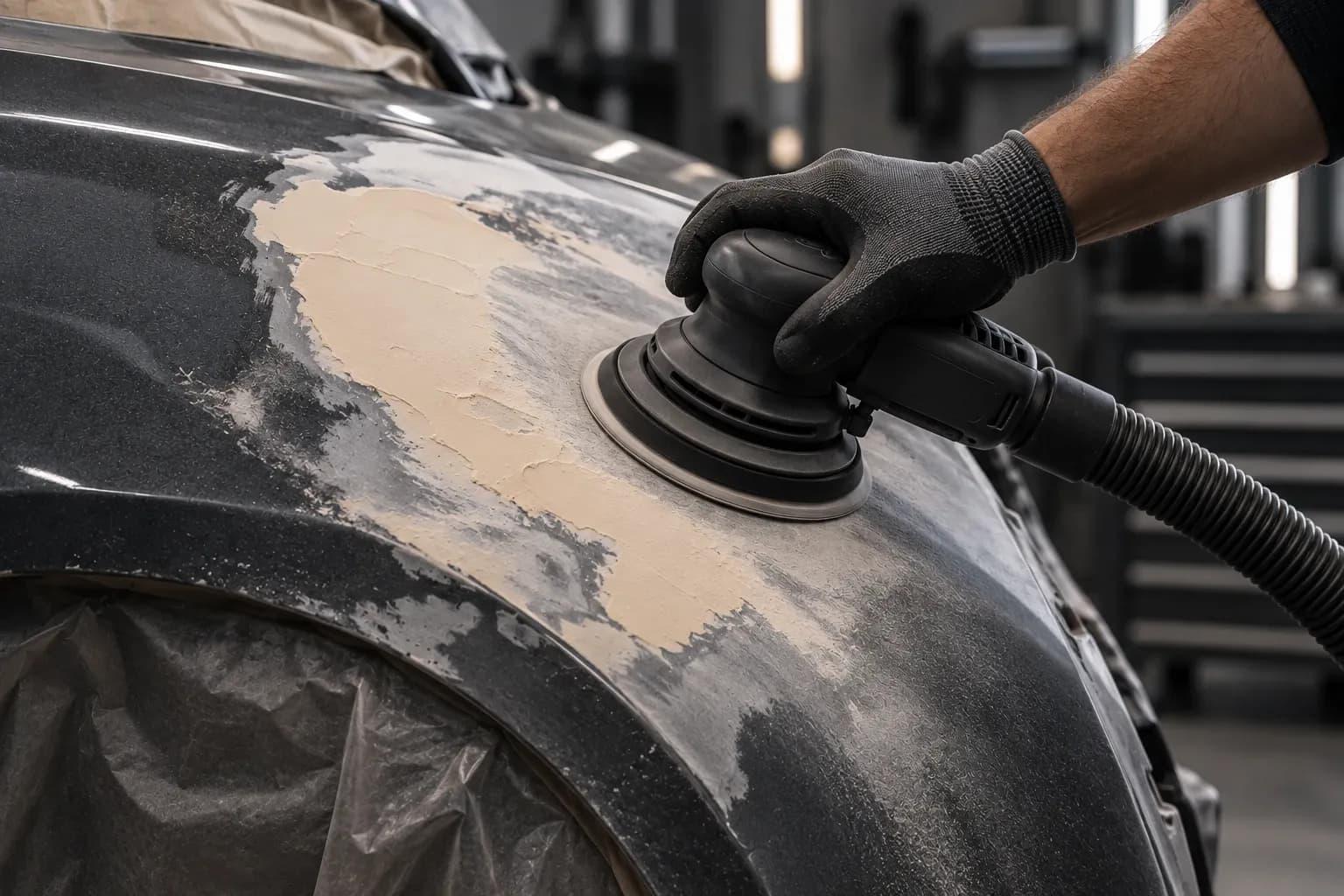
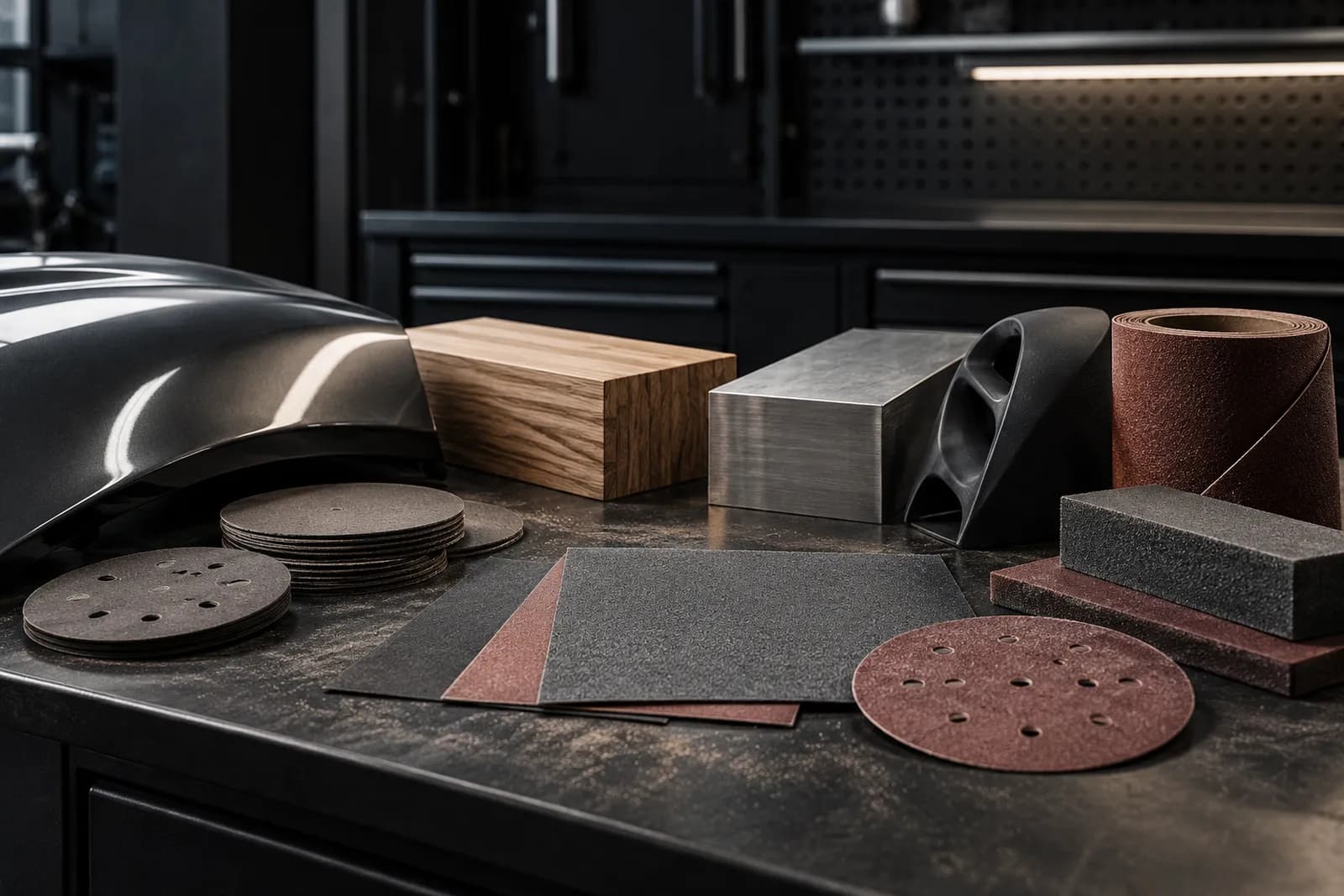
The machine is faster on large, open surfaces. Hand sanding wins on edges, rebates, mouldings and anywhere the backing pad cannot sit flat – and for wet sanding with fine sheets, where feel counts for more than speed. Hook-and-loop strips and rolls fit the block and can be used in the same grit sequence as the discs.
FAQ
Which grit should I use by hand if I normally sand by machine?
The same one. By hand it just removes material more slowly – so do not go coarser, sand for longer instead. Otherwise the scratches will not match the next grade.