Sanding discs in P800 Discs, strips, rolls, sheets, mesh – in every grit.
The heart of KORNDEX: abrasives for machine and hand sanding, for car & paint, wood, metal and plastics. Every product in clearly marked grits, in pack sizes for DIYers and workshops.
P800 – Matting top coat, sanding between clear coats. All about P800 →
Abrasives – results
1 product
- Bestseller
- P240–P1500
- Grit
- 150 mm
- Diameter
- 10 pcs
- Contents
€1.59 / pc · incl. VAT, plus shipping
Related guides
Read first, then sand
Which grit, which sequence, which machine – explained in brief for the products above.
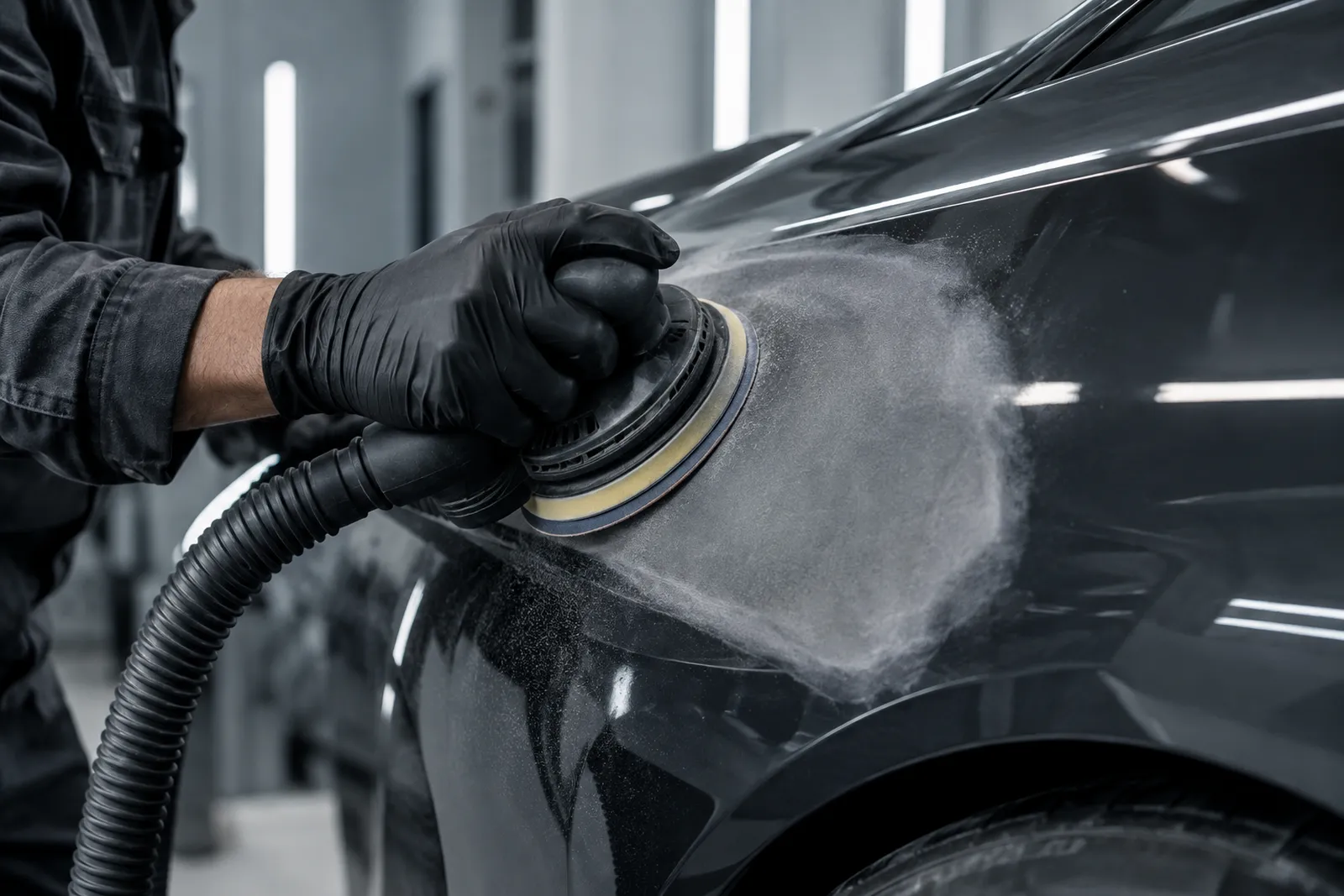
Plastic & resin
Sanding and polishing epoxy resin
River tables and castings: level coarse, then wet sand up to P2000 or P3000 and polish. Why the resin must be fully cured first.
P120 → P180 → P240 → P320 → P400 → P600 → P800 → P1000 → P1500 → P2000
Read · 1 min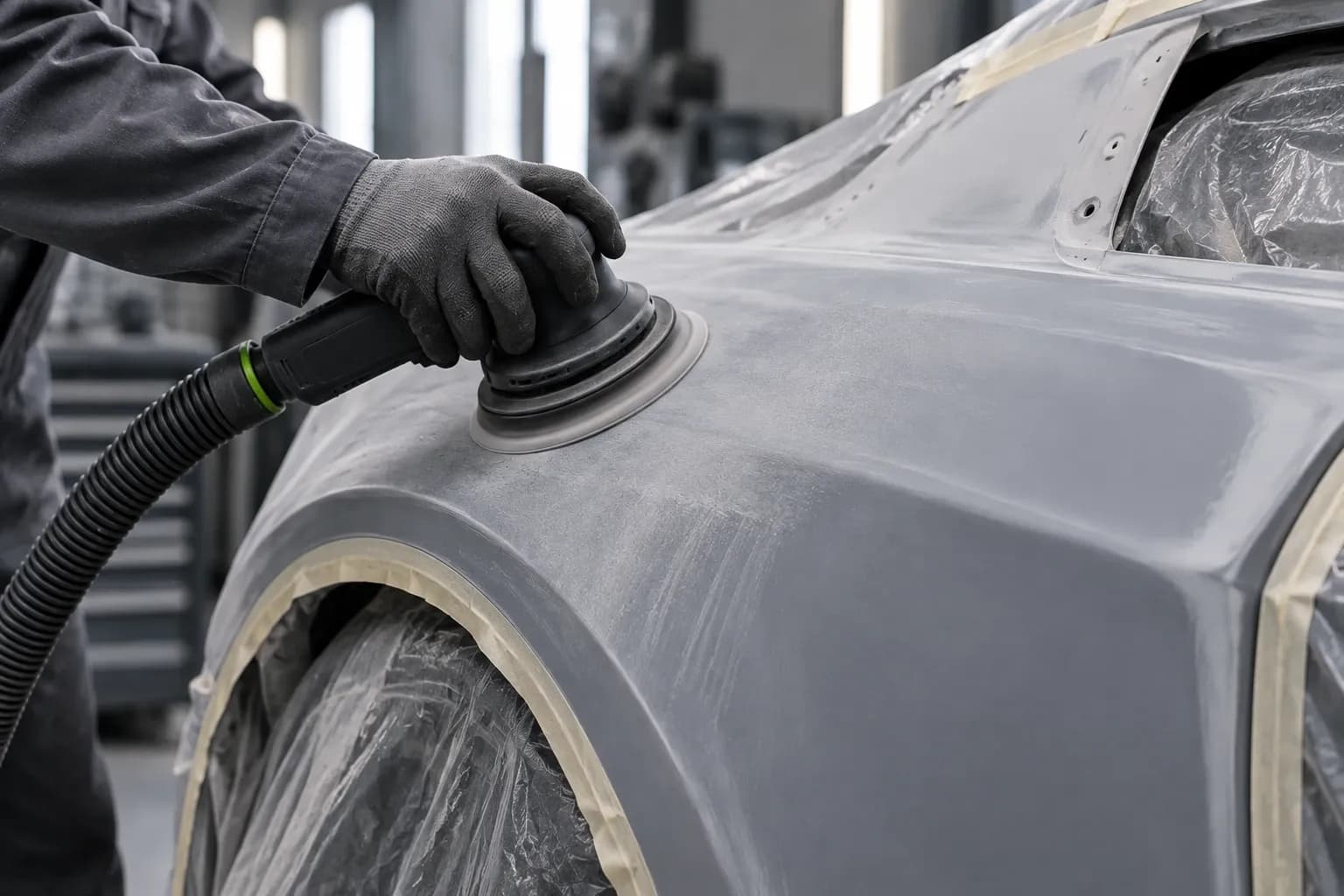
Car & paint
Preparing a motorcycle tank for painting
Fill the dents, shape with P180 to P240, sand the primer surfacer with P400, key the old paint with P600 to P800. What to watch out for on a curved tank.
P180 → P240 → P400 → P600 → P800
Read · 2 min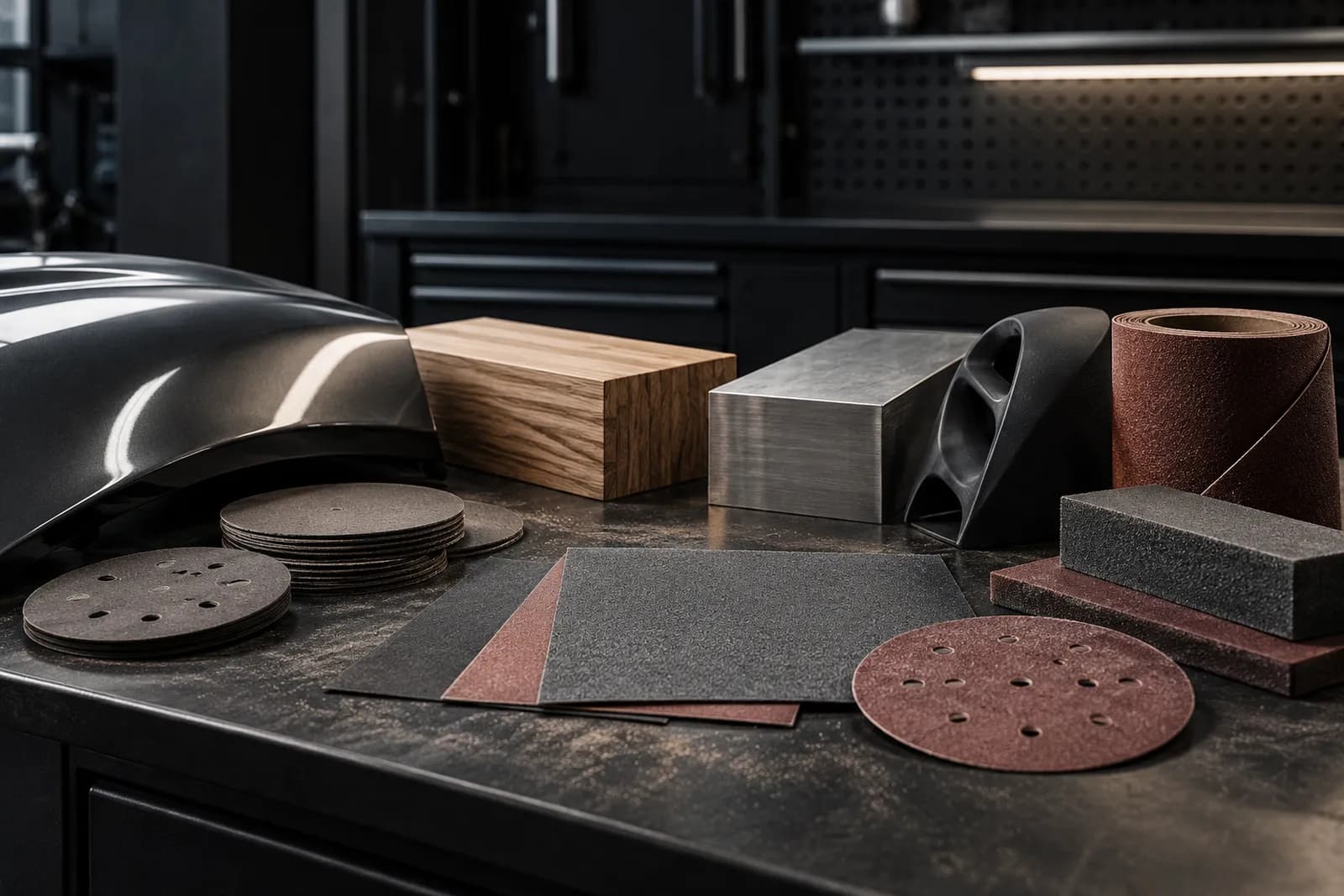
Plastic & resin
Sanding 3D printed parts: getting rid of layer lines
Layer lines on PLA, PETG and resin: coarse with P120 to P180, then up to P400 – and wet from P600 so the plastic doesn’t melt.
P120 → P180 → P240 → P320 → P400 → P600 → P800
Read · 1 min
FAQ
Questions about abrasives
Which grit do I need?
Coarse (P24–P80) removes material, medium (P100–P180) shapes and levels, fine (P220–P400) smooths and prepares, very fine (P500–P1000) mattes paint, and ultra-fine (P1200 and up) is the finish before polishing. The grit guide explains every step; the abrasive finder tells you the grit for your project.
Can I skip grits?
Never more than double the grit number: after P80 comes P120 or P150, not P240. Otherwise the scratches from the coarse grit stay visible – even more so under paint and oil.
Paper, mesh, film, foam or fleece – which do I need?
Paper is the all-rounder for wood, body filler and metal. Mesh extracts dust across the whole surface and hardly clogs – ideal for body filler and primer surfacer. Film sands particularly evenly and copes with water, made for paint from P240. Foam hugs curves and does the finish up to P2000. Fleece mattes and cleans without scratches, even in corners and profiles.
Will the discs fit my random orbital sander?
Yes, if the diameter (125 or 150 mm) and the hook-and-loop attachment match. The 150 mm discs with multihole pattern fit any hole pattern, the 125 mm discs have the usual 8-hole pattern; the mesh disc extracts across the whole surface anyway. Every product page shows under “Technical details” which machines the product is designed for.
Wet or dry sanding?
Dry with dust extraction up to about P600 – faster and no water on the metal. From P800 on paint, wet sanding pays off: water cools, rinses away the swarf and gives a finer scratch pattern. Use waterproof sheets or film discs for this; paper discs go soft.
When should I change the sanding disc?
When it cuts noticeably slower, the surface gets warm, there are shiny patches or clumps of dust on the disc, or single deep scratches appear. It lasts longer with dust extraction, light pressure and the backing pad kept flat.
On shipping, invoices and returns: general shopping questions →