Car & paint · 1 min read
Wet or dry sanding?
Dry with dust extraction up to P600, wet from P800 on paint – and what the water really does.
Last updated: · published
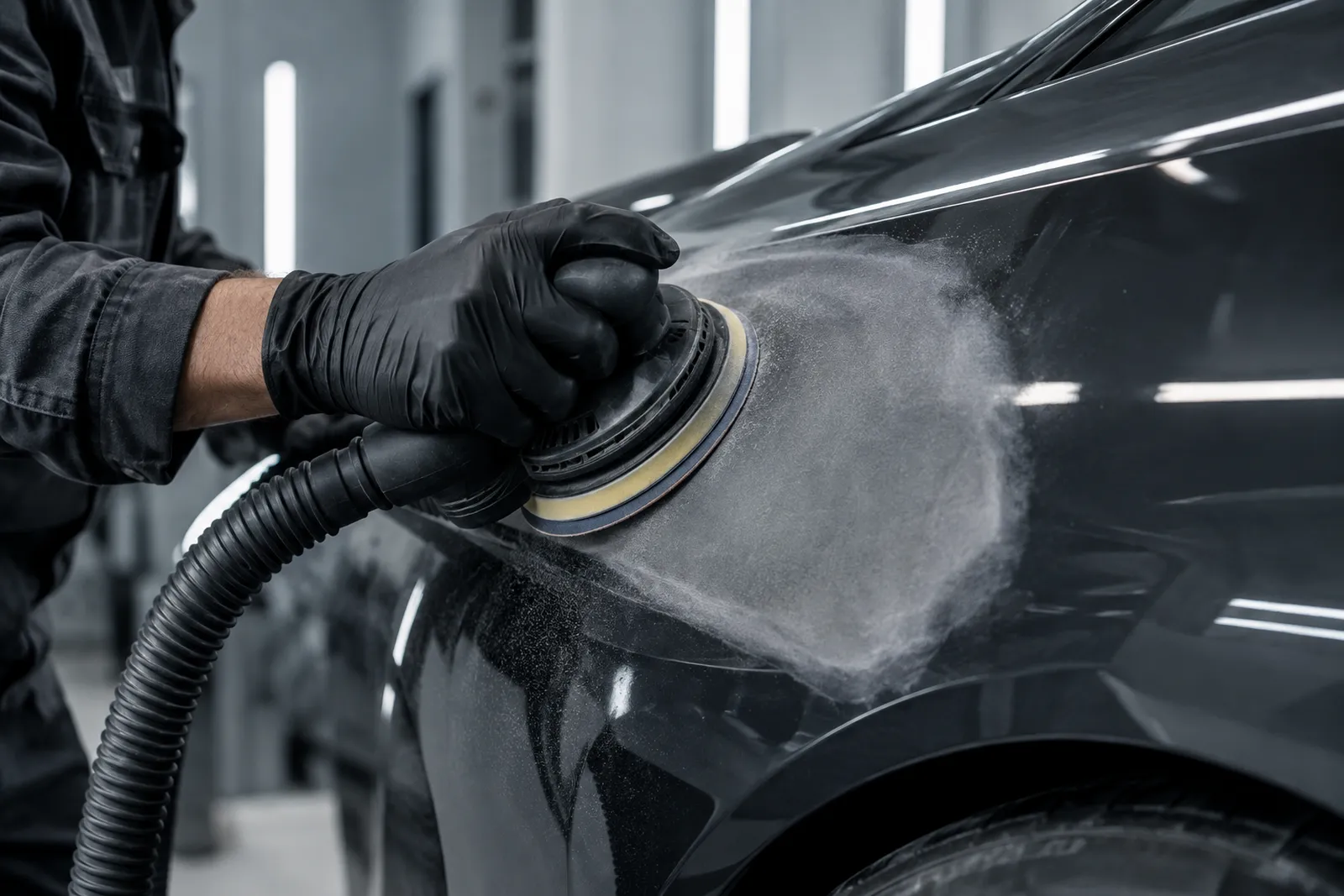
Dry: fast and clean
With dust extraction, dry sanding is now the standard up to around P600: faster, less hassle, no water on the metal. Mesh discs and multi-hole patterns make sure nothing clogs.
Wet: fine and cool
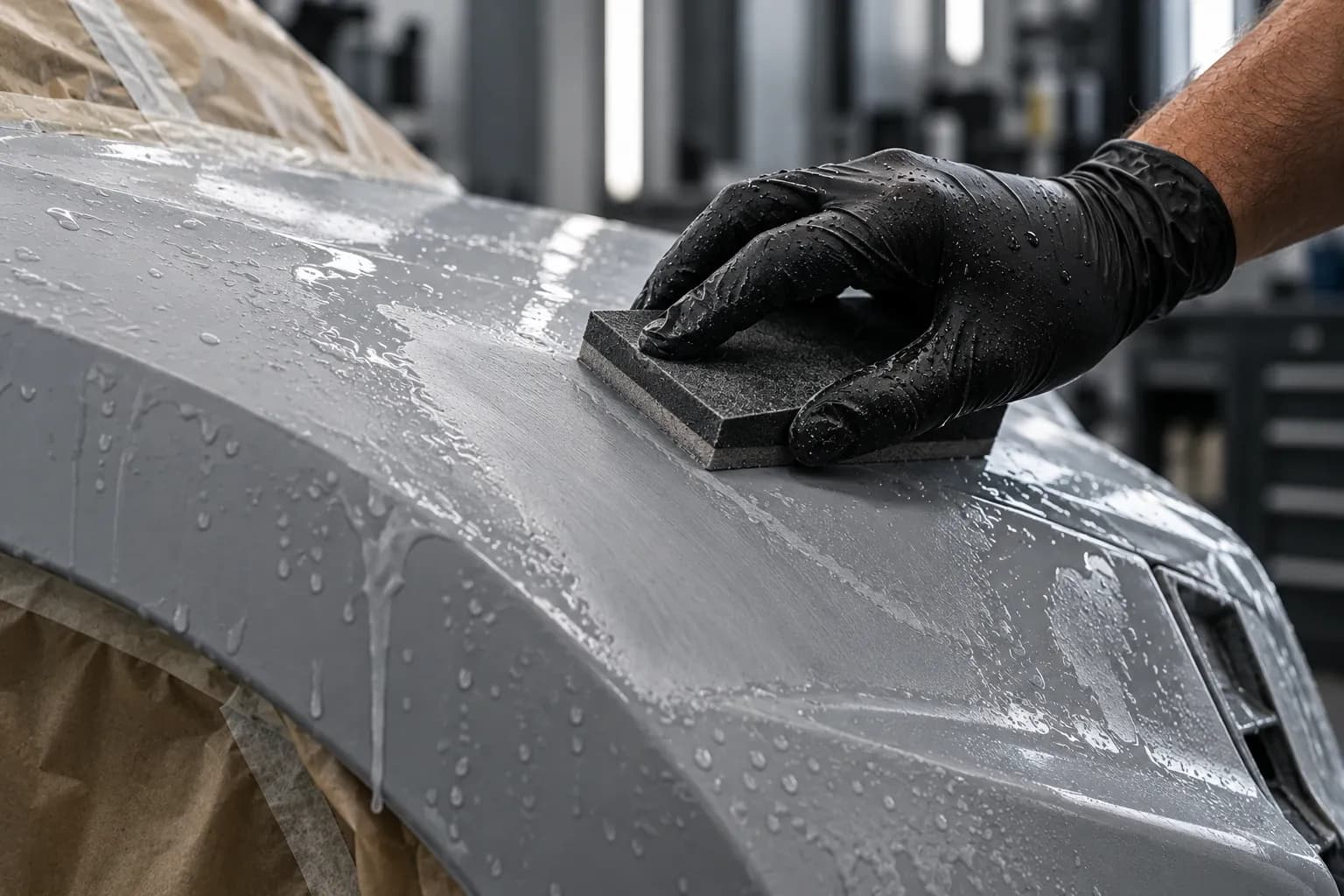
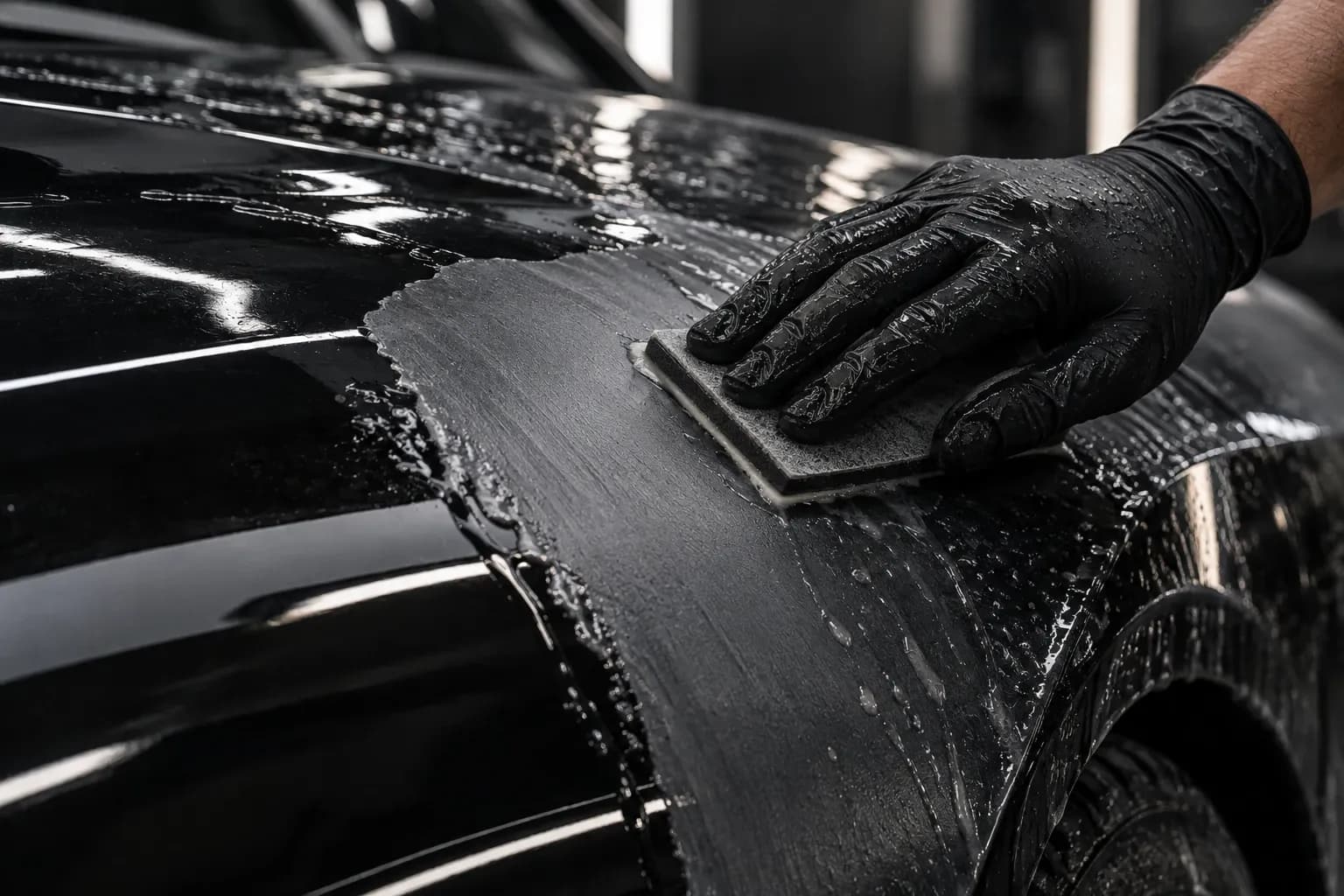
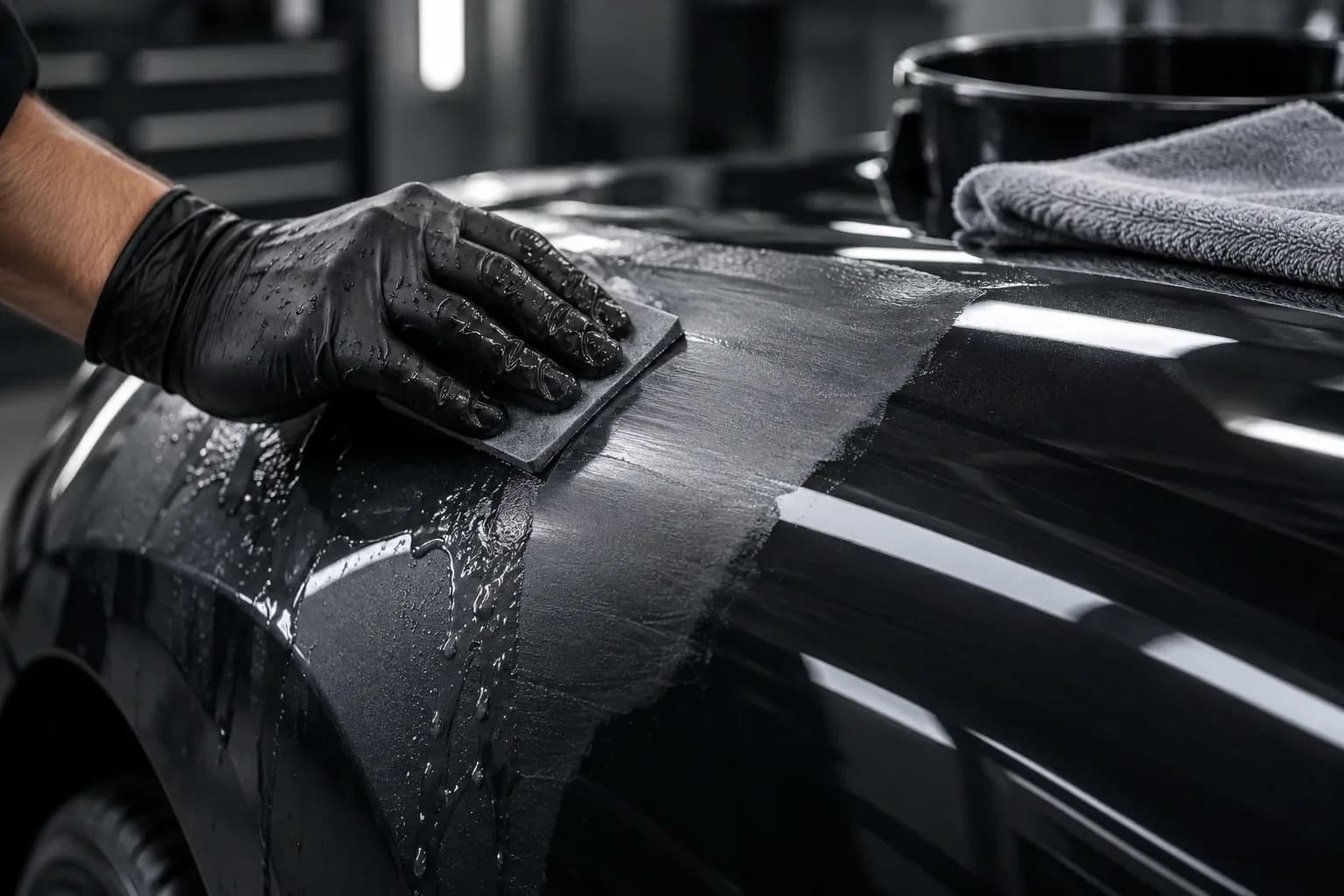
From P800 on paint, water pays off: it cools, flushes away the swarf and lets the grain cut freely – the scratch pattern becomes finer and more even. Waterproof sheets and film-backed discs are made for this; paper discs go soft. A drop of washing-up liquid in the water helps against clogging.
What you never sand wet
Polyester body filler is porous and absorbs water. Sanded wet, the water stays trapped and comes back out later as blisters in the paint – so always sand filler dry, with dust extraction. Primer surfacer may be sanded wet, but must then dry completely before painting.
Bare steel does not like water either: it flash-rusts within minutes. It is the finished paint that gets sanded wet, not the substrate.
Only with the right machine
A standard electric random orbital sander is not made for water. Only wet-sand by machine with pneumatic sanders or tools the manufacturer explicitly approves for it – otherwise do it by hand with a sanding block or foam pad and a spray bottle.
FAQ
Can any sandpaper be used wet?
No. Only waterproof paper with a resin bond and a latex or film backing – normal paper goes soft and the grain comes loose.
Do I need soap in the water for wet sanding?
A drop of washing-up liquid makes the water more slippery and stops the sheet from sticking by suction. No more than that, or it foams.