Sanders & technique · 2 min read
Buying a random orbital sander: what matters
Pad size, stroke, dust extraction, connection and weight: six criteria for choosing a random orbital sander – without test winners and brand lists.
Last updated:
KORNDEX sells abrasives – matching products are linked below the article.
The answer in one paragraph
A random orbital sander for paint, filler and wood should have a pad of 125 or 150 mm, a stroke of about 5 mm, a connection for dust extraction and enough weight to work under its own weight without pressure. If you mostly sand finish and clear coat, you also or instead need a small stroke of about 3 mm.
Pad size: 125 or 150 mm
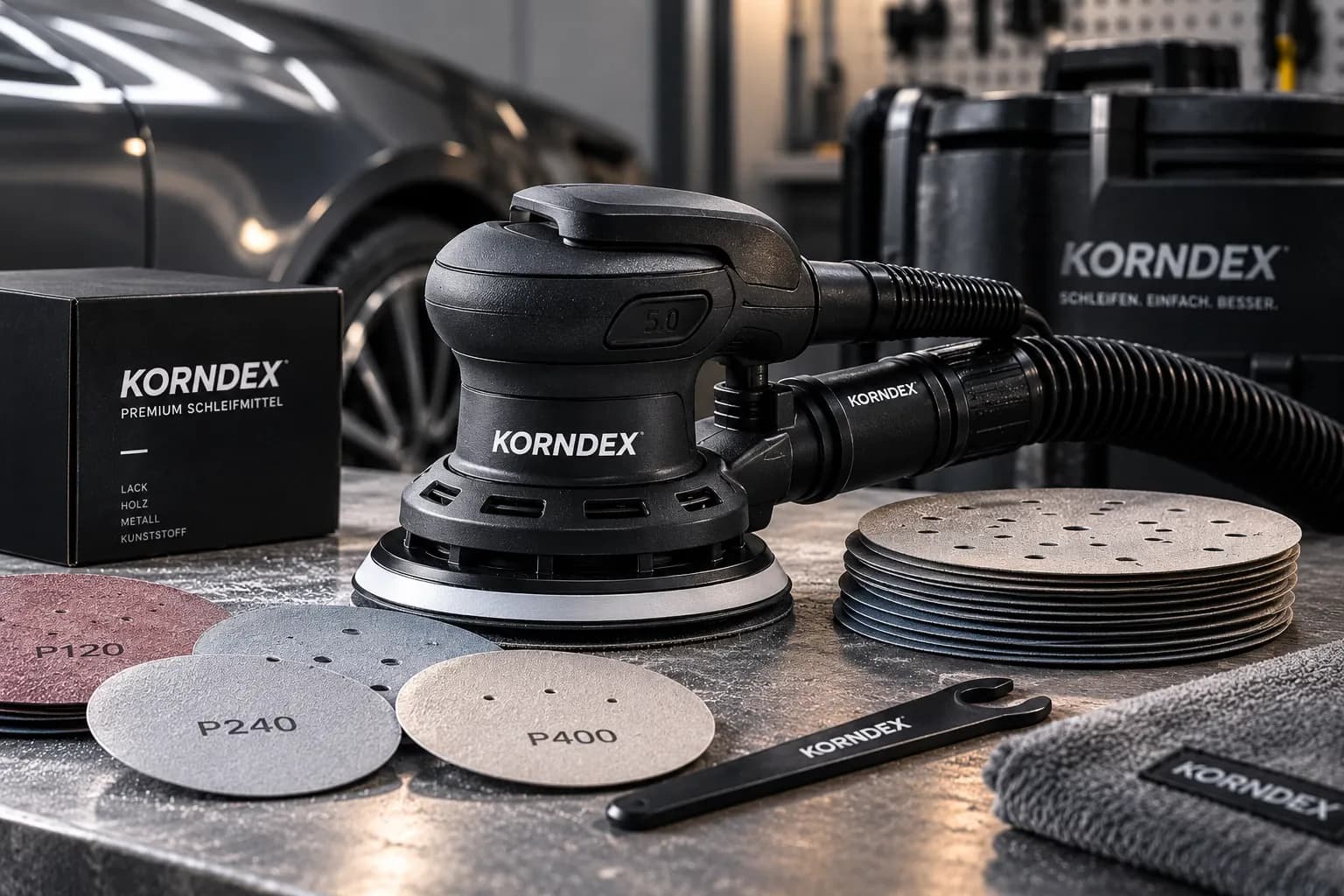
150 mm covers more area per pass and lies flatter on large surfaces such as bonnets and panels. 125 mm is lighter and gets into corners, along edges and overhead more easily. The pad size also decides which discs fit.
Stroke: removal or fineness
About 5 mm is the all-rounder for filler, wood, primer and paint preparation. A small stroke of about 3 mm is meant for clear coat and the finish before polishing. Details are in the guide on stroke.
Dust extraction
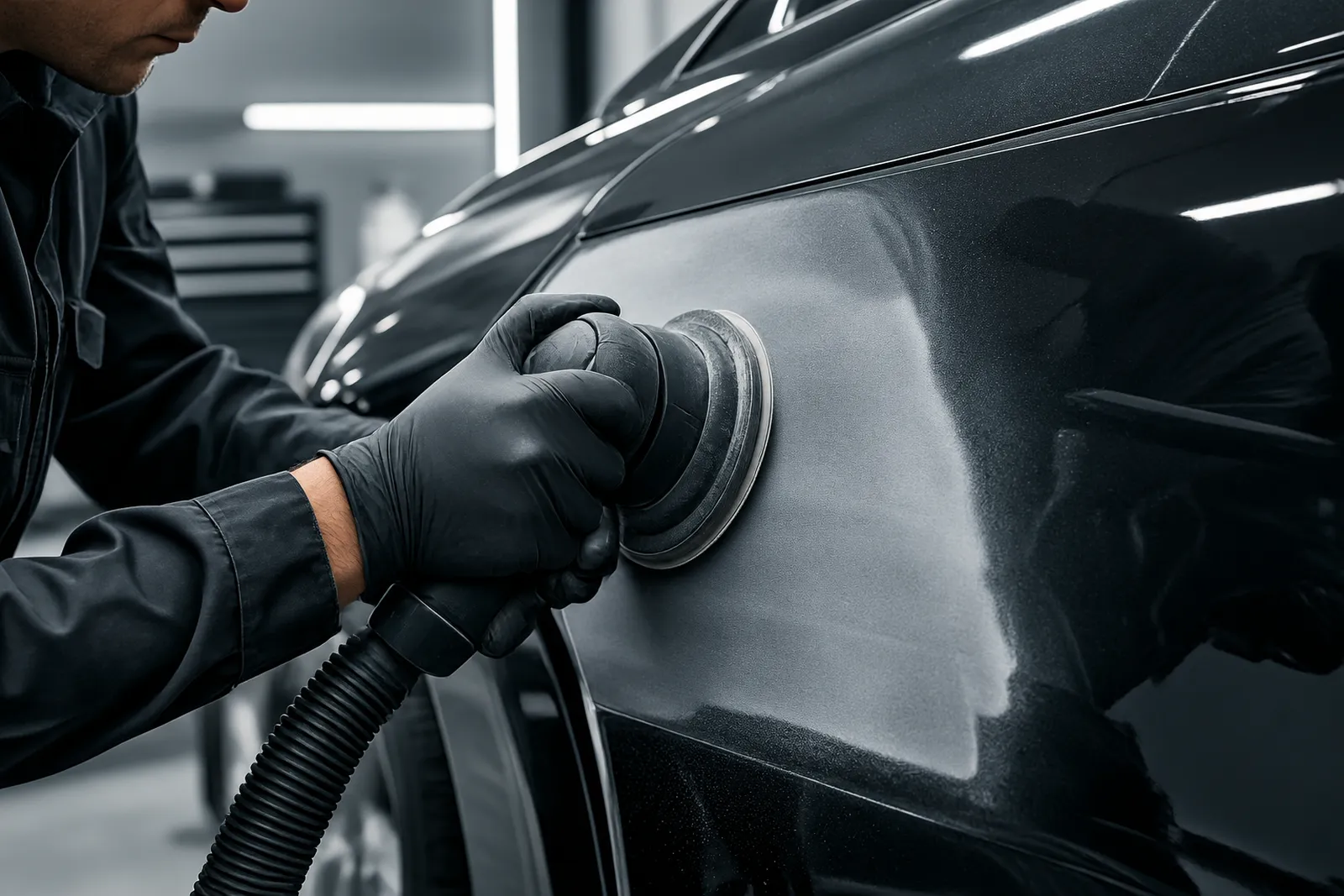
A connection for an extraction hose or dust bag is not a side issue when sanding filler and wood: dust under the disc causes swirl marks and makes the disc clog faster. What matters is that the holes in the pad match the holes in the disc.
Connection, pad and accessories
The discs hold to the pad by hook and loop. Whether the pad is soft or hard decides how well the disc follows curves; for paint and finish you add a soft interface pad. Check whether the pad can be exchanged so it can be replaced when worn.
Weight, grip, speed
A machine that is too light tempts you to press down – that brakes the orbital motion and causes swirl marks. Speed control helps you work slower for fine work and soft materials. More important than any figure is whether the machine sits well in the hand, because you work with it for hours.
FAQ
Is one random orbital sander enough for paint and wood?
Yes – with a 5 mm stroke and 150 mm pad it covers filler, wood, primer and paint preparation. For clear coat and finish a small stroke is better, or you soften the removal with a soft interface pad and low speed.
Do I need dust extraction on a random orbital sander?
For filler, wood and paint, yes: dust under the disc causes swirl marks and makes the disc clog. An extraction hose or dust bag is enough to start with.
Terms in this article
- Random orbital sander
- Orbit (stroke)
- Dust extraction
- Clear coat
- Primer surfacer
- Polishing
- Swirl marks
- Clogging (loading)
- Interface pad