Sanders & technique · 1 min read
Using a random orbital sander: pressure, speed, pace
Put it down flat, then switch on, and let the weight of the machine do the work: the rules for an even scratch pattern without pigtails or dents.
Last updated:
Putting it down and lifting it off
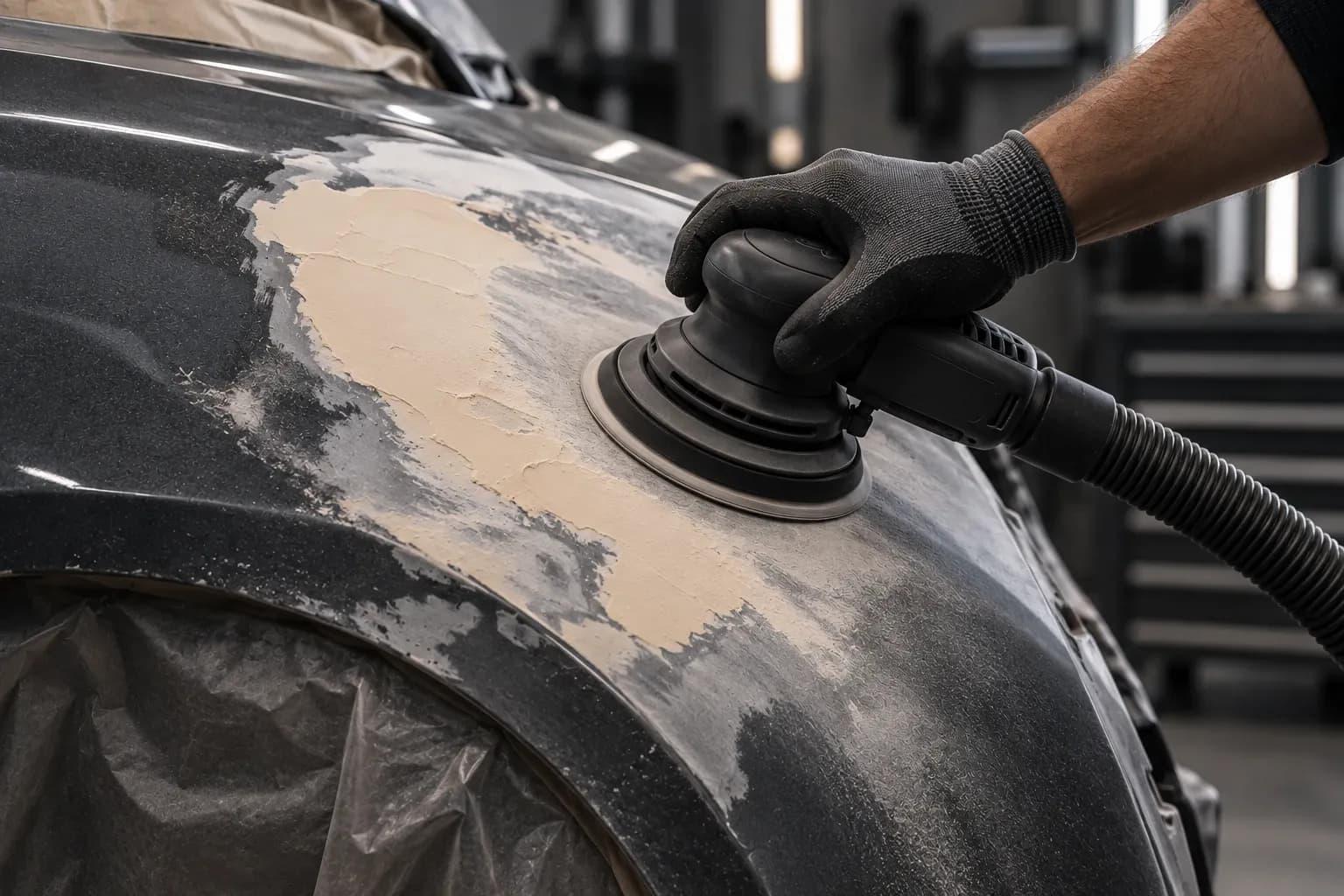
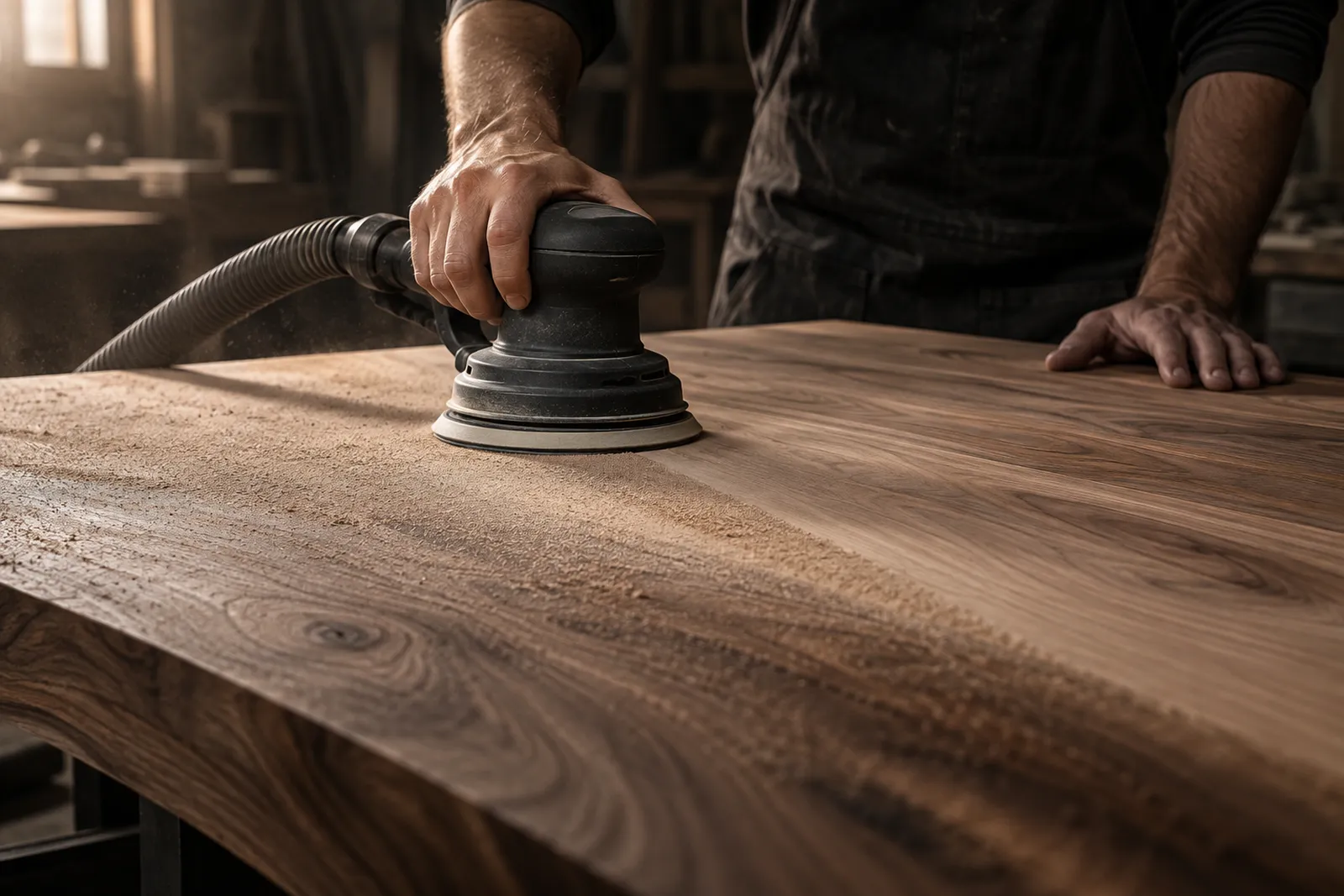
Place the sander flat on the surface and only then switch it on; at the end, switch off first, then lift. If you put it down or lift it off with the pad spinning, it tips onto its edge – that causes dents and, on paint, instant sand-through.
Pressure and pace
The weight of the machine plus one hand resting flat on top is enough. More pressure slows the rotation, so only the orbit is doing the work, and pigtails appear. Move slowly – about two to three centimetres per second – in overlapping passes, each one covering half of the previous pass.
The pad always stays flat. Don’t work edges and curves with a tilted pad – that’s what the hand block or an interface pad under the disc is for.
Speed and dust extraction
Coarse sanding at high speed; fine grits and sensitive surfaces (plastic, paint from P600) at medium speed. Dust extraction should always be connected: it keeps the disc clear – otherwise dust rolls around under the grit and cuts pigtails.
Wipe the surface and check it between grits. Guide coat shows where scratches from the previous step are still there.
FAQ
Why does the sander jump when I put it down?
Usually it’s put on the surface with the pad already spinning, or held at an angle. Place it down flat, then switch on – and for keying, turn the speed down a little.