Car & paint · 1 min read
What grit for clear coat?
Matting before a respray, removing dust nibs and runs, finishing before polishing – three jobs, three grit ranges.
Last updated: · published
Keying before a respray
If new paint is going over old clear coat, the surface must be evenly matt and keyed: P800 to P1000, dry on the random orbital sander with a film-backed disc, or by hand with non-woven abrasive in edges and folds. No shiny spots may remain – the new paint adheres poorly there.
Removing paint defects
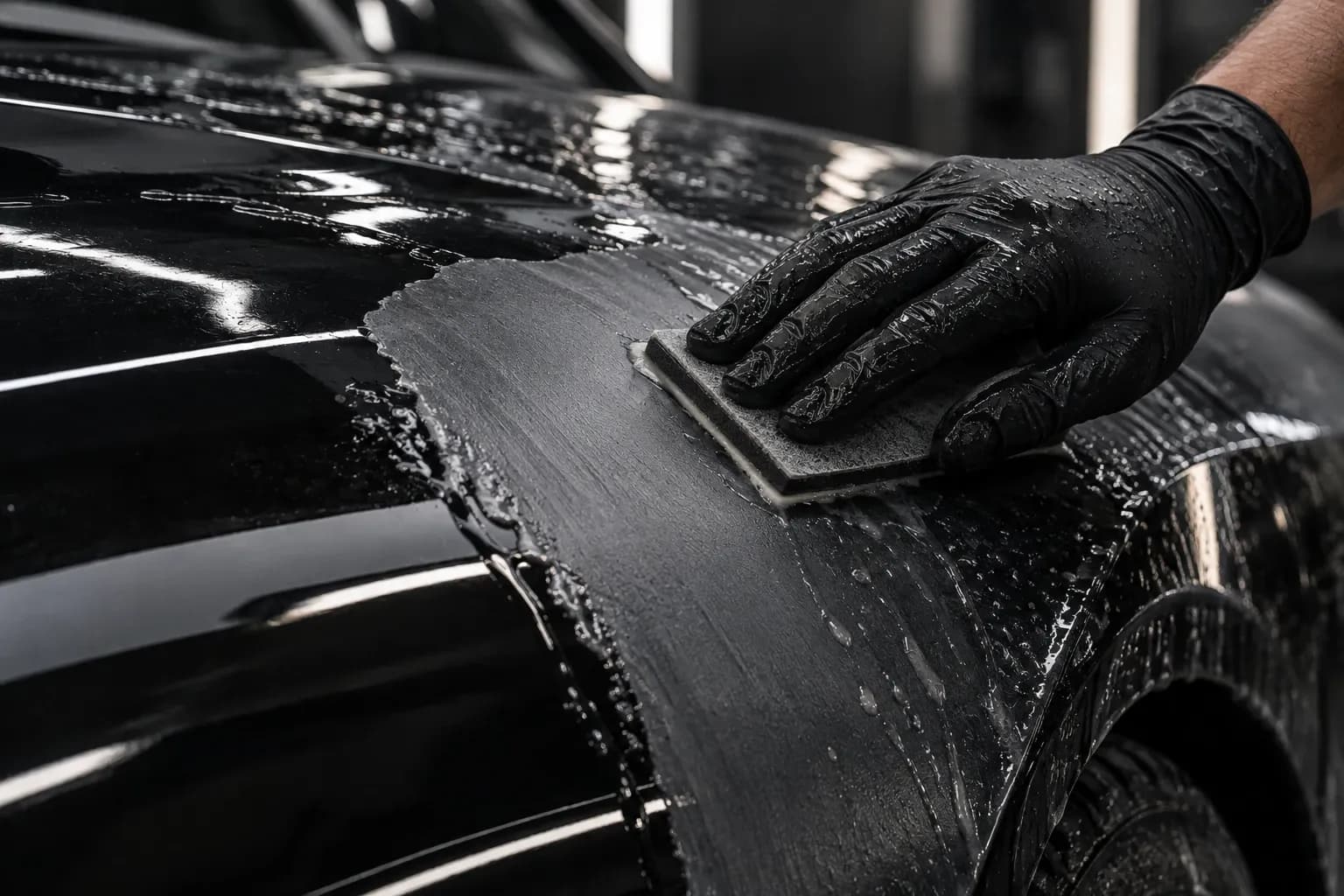
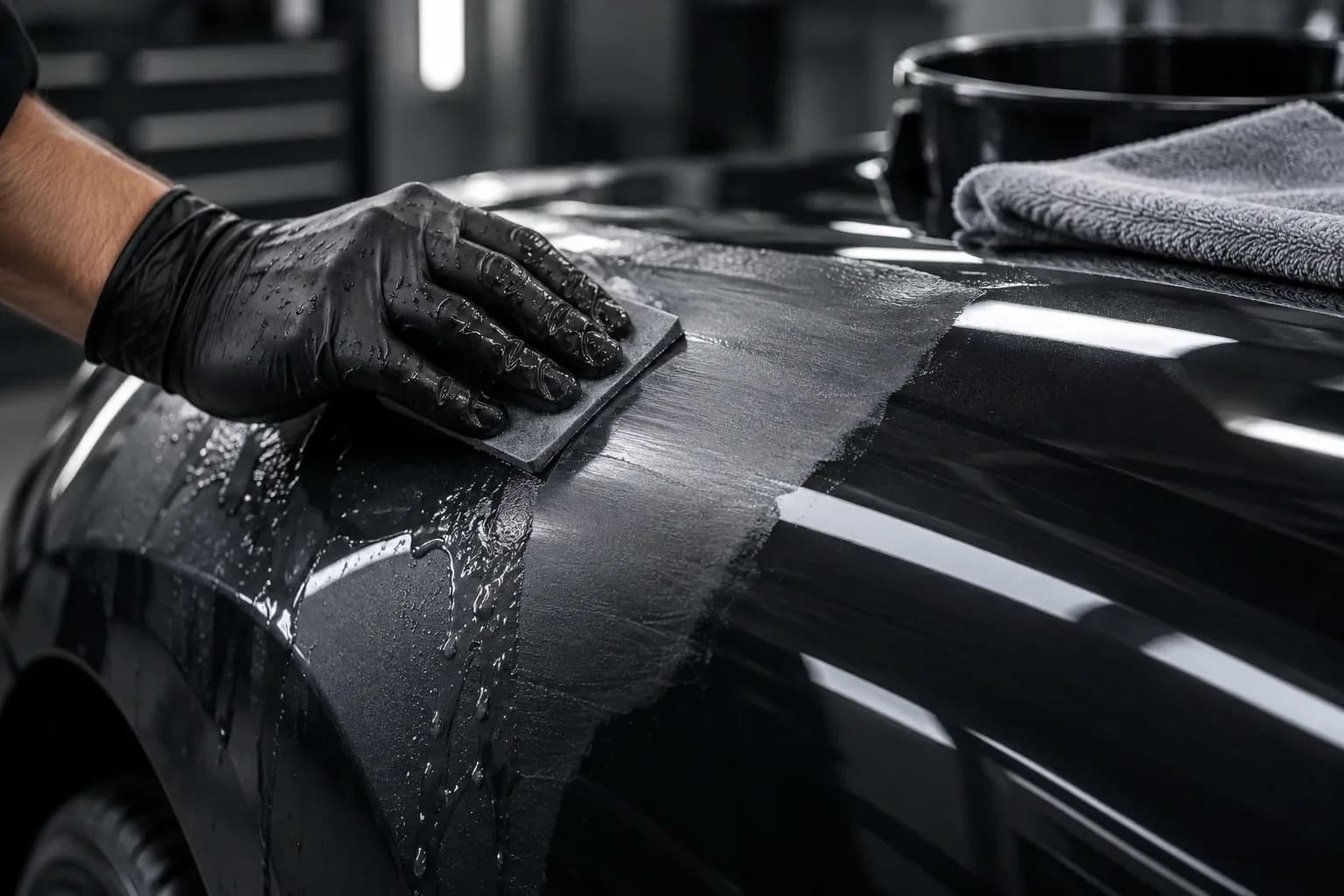
Dust nibs, runs and orange peel in fully cured clear coat: start with P1500 on the spot, wet and with light pressure, ideally on a small hard block so only the high point is removed. Then feather the area with P2000 until the P1500 scratches have gone.
Take care on edges and swage lines: that is where the clear coat is thinnest, and you are through faster than you think.
Finishing before polishing
Finally, level the whole area with P2000 on the soft foam pad – the finest grit in the KORNDEX range. The finer the scratch pattern, the shorter the polishing and the lower the risk of holograms. Some painters go on to P3000; that is not necessary if you then start with a cutting compound. After the last sanding step, no more abrasive – only polish.
FAQ
Can I just sand clear coat without polishing?
No. Even after P2000 the clear coat stays matt – only polishing brings back the gloss. Only sand without polishing if you are going to repaint afterwards.
How much clear coat can I sand away?
As little as possible: factory clear coat is usually only around 40 to 50 micrometres thick. Spot-sand and avoid edges.
Terms in this article
All terms in the sanding glossary →The whole sequence at once
2 grits, 1 × smallest pack each: PRO FILM 150 (10 pcs) P1500, SOFT FINISH (10 pcs) P2000.
Or as a set: Finish set for high gloss (P1000–P2000) for €59.90 →
incl. VAT, plus shipping