Car & paint · 2 min read
What grit before painting?
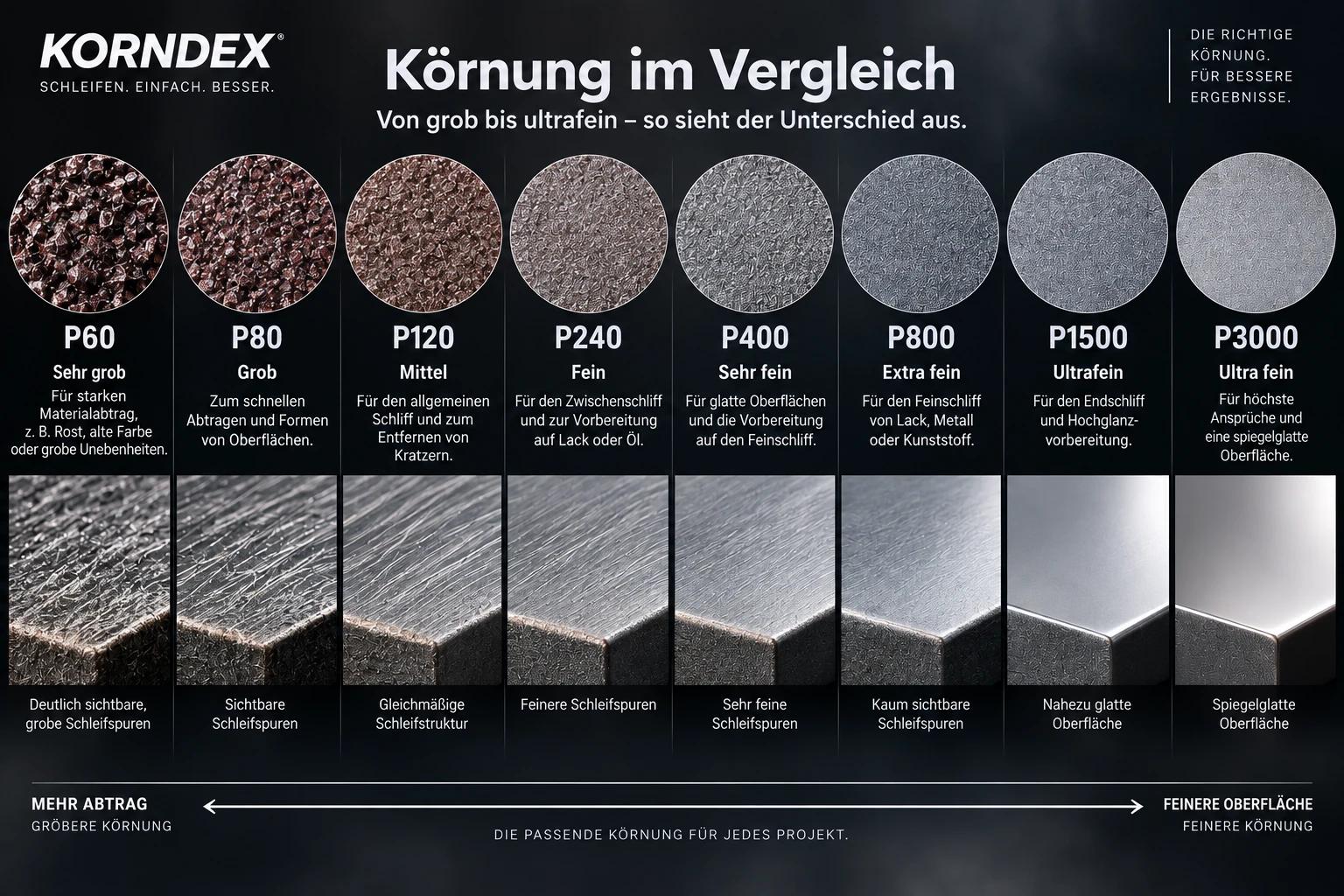
Primer surfacer with P320 to P400, old paint with P400 to P600, plastic with P320 to P400 – depending on substrate and paint.
Last updated: · published
KORNDEX sells abrasives – matching products are linked below the article.
On primer surfacer and primer
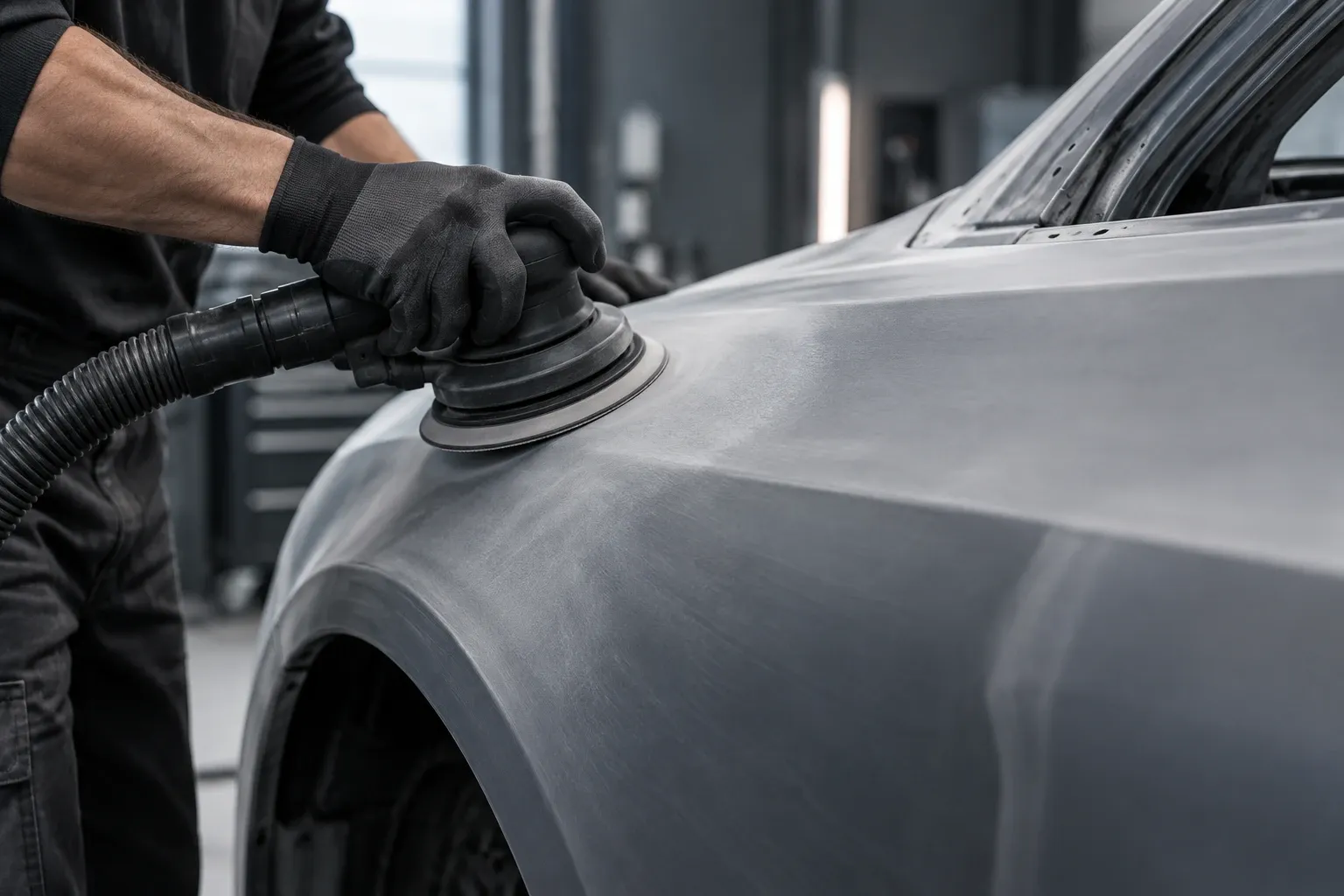
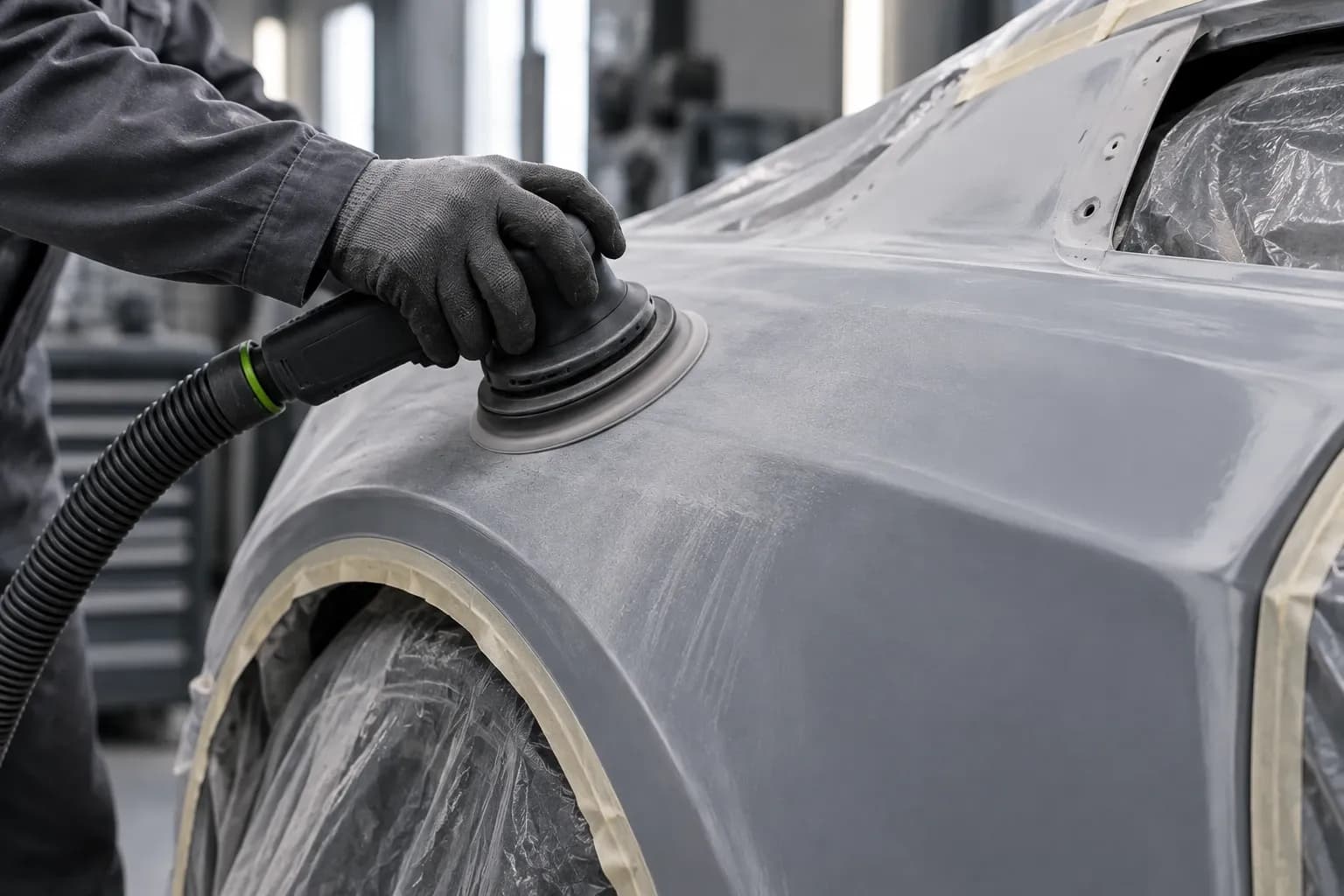
Primer surfacer is sanded dry with P320 to P400, with dust extraction – the mesh disc is the first choice here. What you want to see: matt, even, no shiny spots. Shiny spots are low areas that the paint will not level out.
Before top coat in light colours or metallic, finish finer at P500 to P600: otherwise coarse scratches show through the paint.
On old paint and plastic
Sound old paint only needs to be matted: P400 to P600 dry or P800 wet. On edges, swage lines and corners use the non-woven abrasive – it sands without scratches and gets in everywhere.
Scuff plastic parts with P320 to P400 and light pressure, otherwise the plastic heats up and smears. Then adhesion promoter, then paint.
After sanding: clean before painting
Vacuum or blow off the sanding dust, degrease with silicone remover and a clean cloth, then finish with a tack cloth. Do not touch the surface with bare hands after that – fingerprints show up in the paint as craters.
If you sanded wet, everything must be completely dry before painting, including folds and swage lines. Never wet-sand bare metal: it flash-rusts straight away.
How to tell it is too coarse
Scratches you can still see under raking light before painting will almost always show in the finished paint – most clearly with metallic and dark colours. In that case go back one step and re-sand the whole area evenly with the finer grit, rather than just working the visible spot.
Sanding between coats of paint: P240–P400
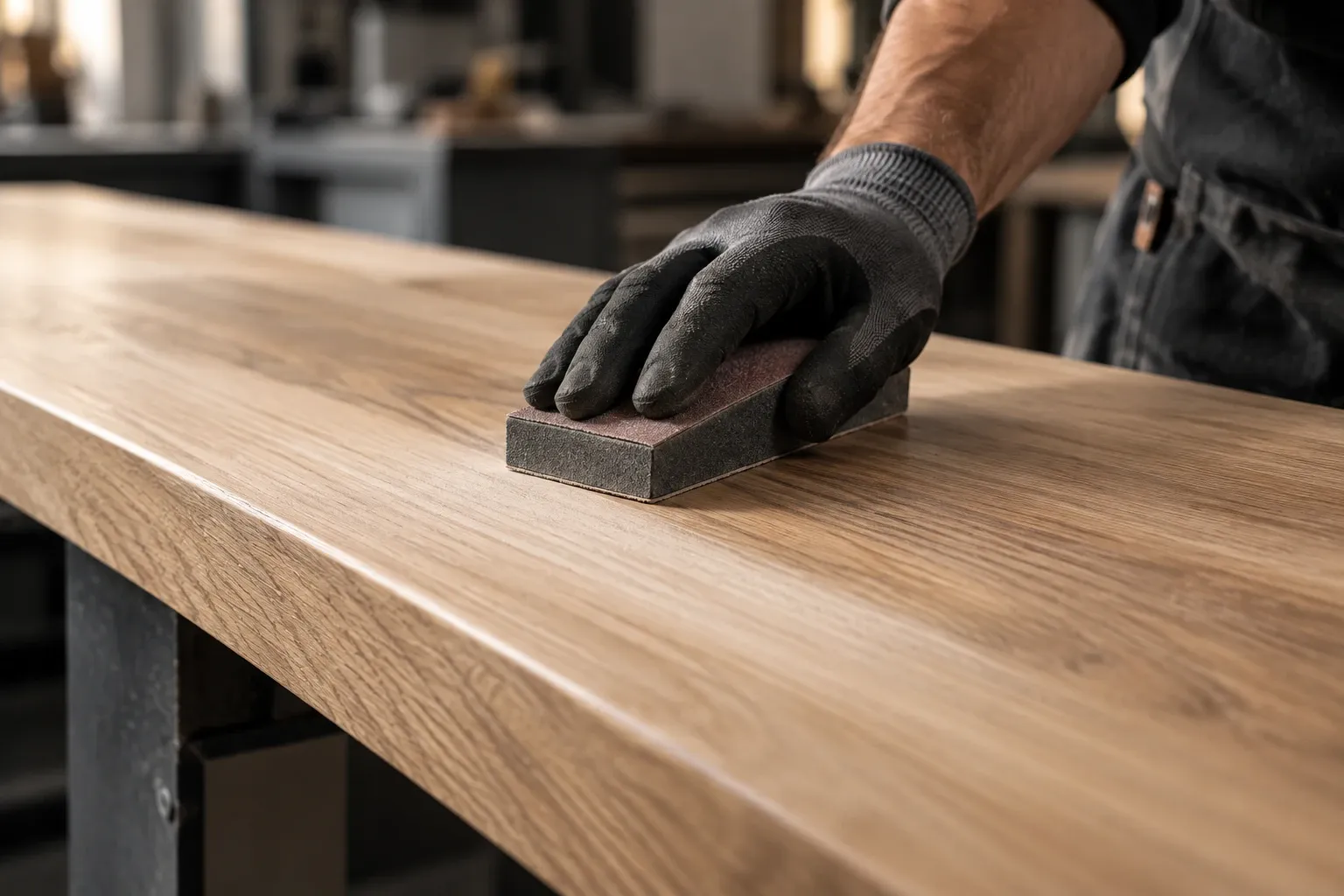
Between two coats – on furniture, doors, radiators and metal parts with alkyd or acrylic paint – a light sanding between coats is enough: P240 to P320 on wood varnish, P320 to P400 on fine lacquers and before the last coat. The paint must be fully cured, otherwise the paper smears.
It is only about keying, not removing: until the surface is evenly matt, with a non-woven pad on edges. Drying time, tools and dust are covered in the article “Sanding between coats: when, with what, which grit?”.
Keying paint for repainting and before clear coat
For repainting, intact old paint has to be matt everywhere: P400 to P600 dry or P800 wet on the surface, a non-woven pad in swage lines and on edges. If only new clear coat goes onto old clear coat, P800 to P1000 is enough – finer than before an opaque paint, because clear coat does not hide scratches.
You do not sand fresh base coat: the clear coat goes straight on after the flash-off time. If there is a dust nib in the base coat, take it off very lightly with a very fine grit and cover the spot with base coat once more.
FAQ
Is scuff sanding enough, or does the old paint have to come off completely?
Firmly bonded, sound paint only needs keying (P400 to P600). Flaking or cracked paint has to come off down to a sound substrate.
How do I know I have keyed enough?
The surface is evenly matt all over, with no shiny spots. Guide coat reveals areas the abrasive has not reached yet.
Terms in this article
- Primer surfacer
- Dust extraction
- Deep scratches
- Abrasive fleece
- Scuff sanding (keying)
- Adhesion promoter
- Sanding dust
- Degreasing
- Flash rust
- Raking light
- Intermediate sanding
- Clear coat
The whole sequence at once
3 grits, 1 × smallest pack each: PRO NET 150 (10 pcs) P320 · P400, PRO FILM 150 (10 pcs) P600.
Or as a set: Car paint starter set (P120–P600) for €69.90 →
incl. VAT, plus shipping