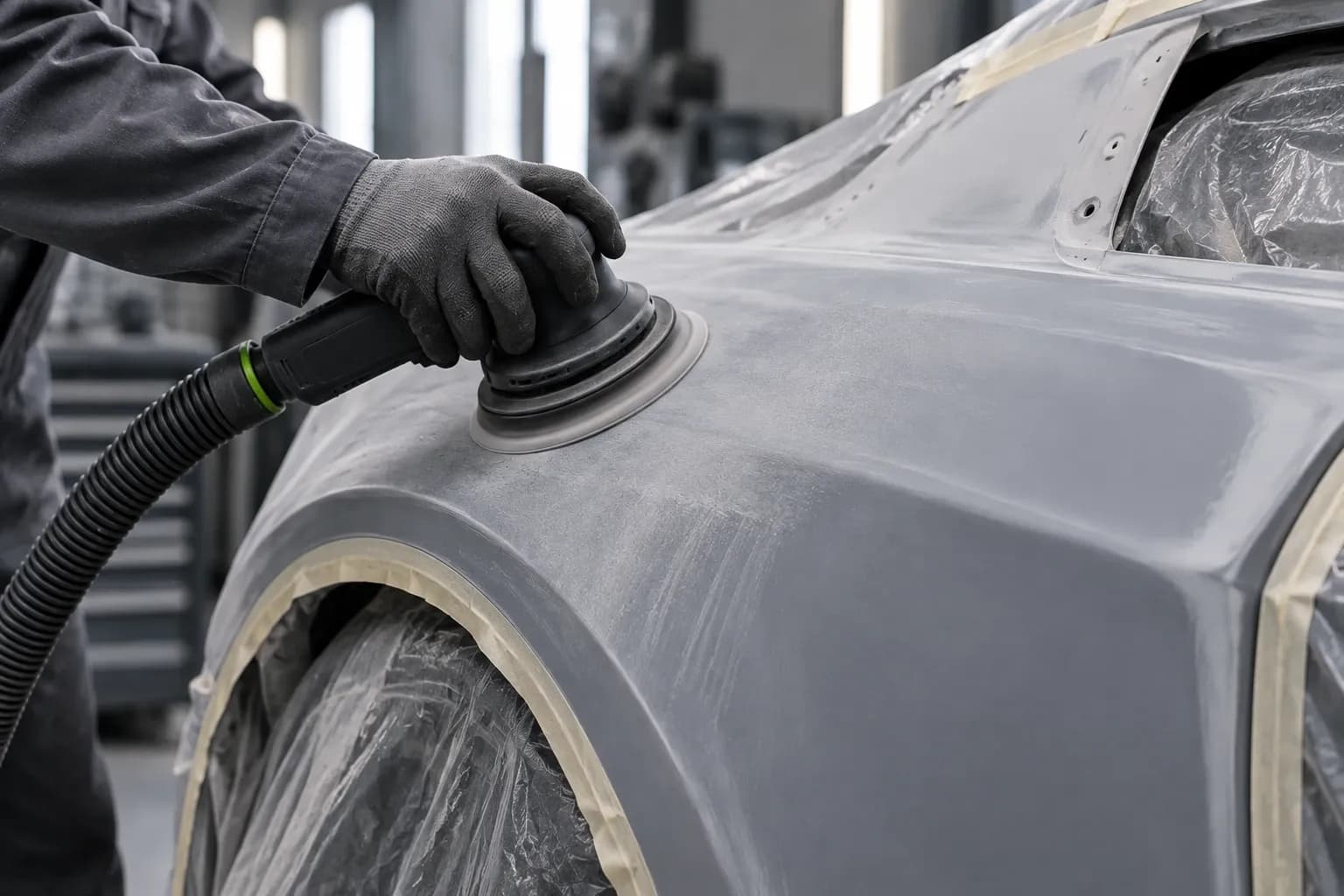
Optimally prepared.
Primer
Smooth primer surfacer and primer before the top coat – dry with mesh or wet with sheets.
2 work stepsGrit P320 to P600Car paint starter set €69.90
The film
Sanding for primer
Dry with mesh or wet with sheets – ready for base coat at P500 to P600.
Work steps
2 steps in working order – from coarse to fine. For each step, the grits and the matching product.
- 1
Sand primer surfacer
Dry with dust extraction, evenly.
Tip: Let the primer surfacer cure completely; if the disc clogs straight away, it is still too soft. In the system: Sand primer surfacer & primer →
- 2
Paint preparation
Fine enough for top coat and clear coat.
Dashed grits belong to the work step but are not yet in the range for Primer – the link explains what the grit does.
The whole sequence at once
3 grits, 1 × smallest pack each: PRO NET 150 (10 pcs) P320 · P400, PRO SHEET 230 × 280 wet (25 pcs) P600.
Or as a set: Car paint starter set (P120–P600) for €69.90 →
incl. VAT, plus shipping
Matching products
6 products for Primer – recommended ones first, each card starts with the grit you need first here.
Abrasives
- Bestseller
- P80–P400
- Grit
- 150 mm
- Diameter
- 50 pcs
- Contents
€0.50 / pc · incl. VAT, plus shipping
- P400–P2000
- Grit
- 230 × 280 mm
- Dimensions
- 25 pcs
- Contents
€0.80 / pc · incl. VAT, plus shipping
- Bestseller
- P80–P600
- Grit
- 150 mm
- Diameter
- 50 pcs
- Contents
€0.50 / pc · incl. VAT, plus shipping
- Bestseller
- P240–P1500
- Grit
- 150 mm
- Diameter
- 10 pcs
- Contents
€1.59 / pc · incl. VAT, plus shipping
Accessories · Sets & bundles
- Bestseller
- P120–P600
- Grit
- 150 mm
- Diameter
- 60 PRO CUT 150 discs
- Contents
incl. VAT, plus shipping
What matters with Primer
What counts beyond the grit – technique, typical defects and the related guides.
What can go wrong
View all sanding defects →Scratches from the coarse grit are still there
Individual straight scratches, clearly deeper than the rest of the scratch pattern – guide coat stays in them.
Usually: The jump to the next grit was too big, for example from P120 straight to P320.
The new paint won’t stick or beads off
The fresh coat pulls together, beads off in places or can later be lifted with a fingernail.
Usually: Shiny spots were left – anything still shiny has not been keyed and gives the paint nothing to hold on to.
Related guides · 3 articles
Primer
What grit before painting?
Primer surfacer with P320 to P400, old paint with P400 to P600, plastic with P320 to P400 – depending on substrate and paint.
P320 → P400 → P600
Read · 1 min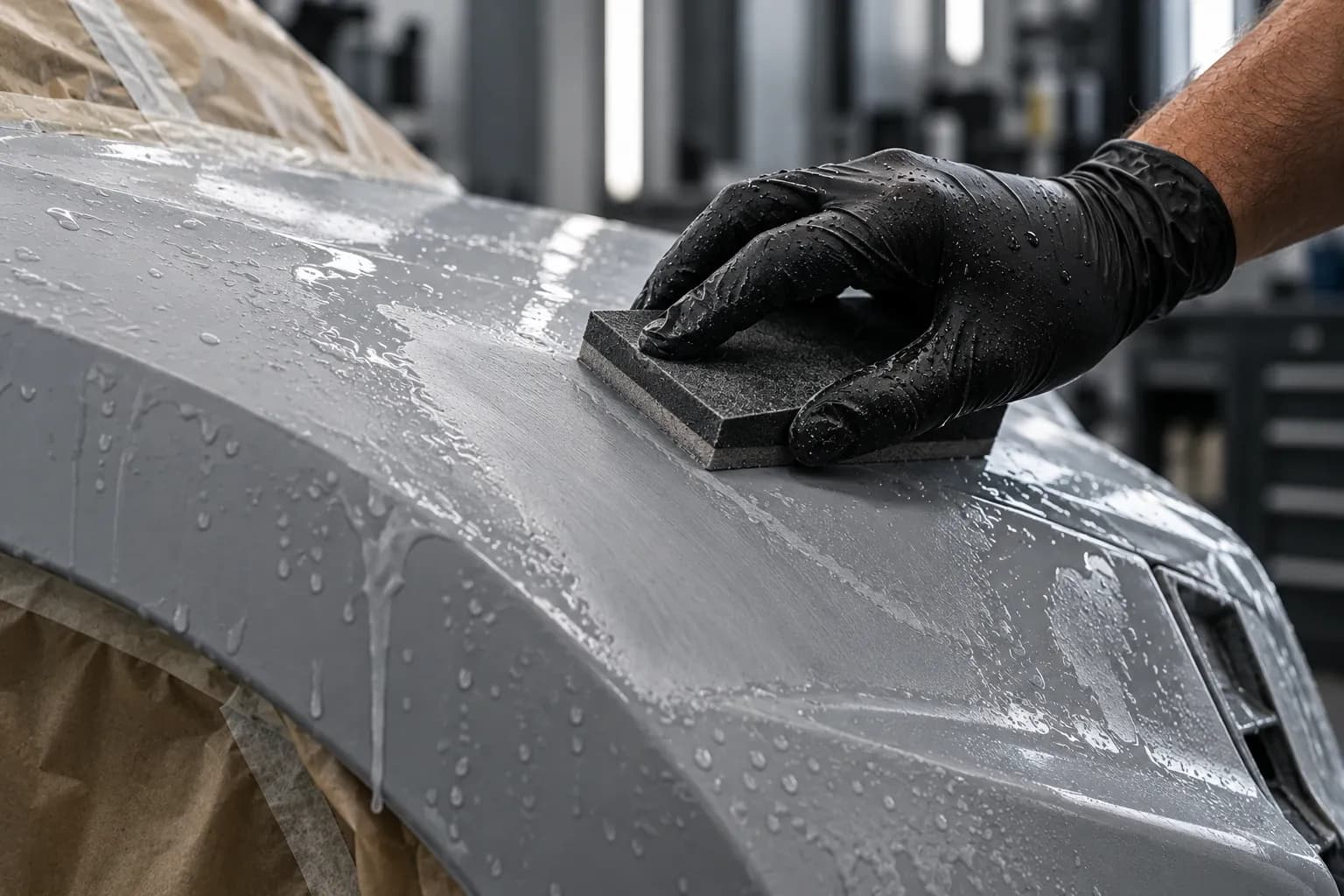
Primer
Sanding primer surfacer: wet or dry?
Dry with mesh and dust extraction is faster and cleaner; wet is fine and dust-free. P320 to P400 for the surface, P600 before clear coat or light colours.
P320 → P400 → P600
Read · 1 min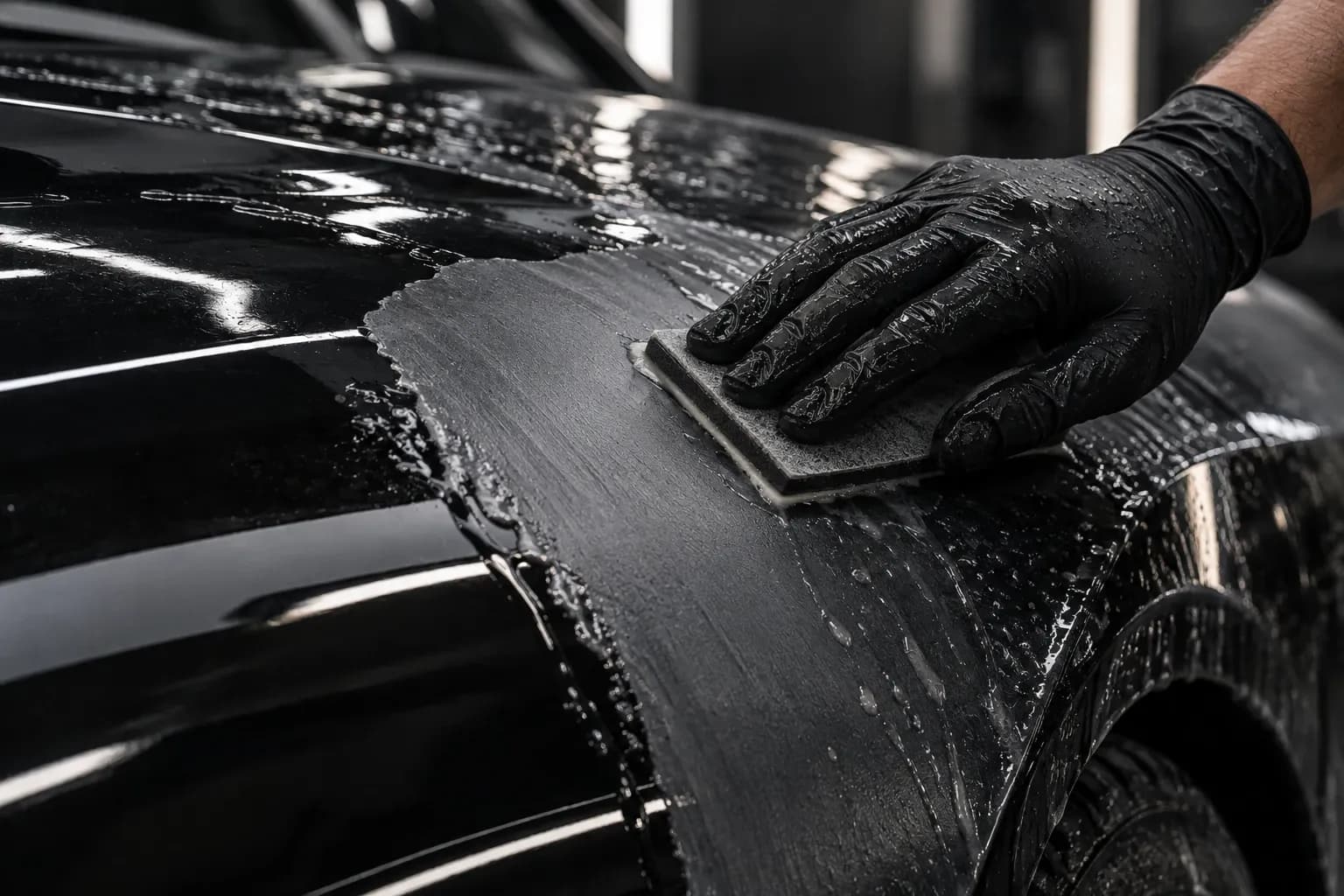
What grit sandpaper for car paint?
From body filler to finish: the grit sequence for a paint repair – and why you never skip a step.
P80 → P120 → P180 → P240 → P320 → P400 → P600
Read · 2 min
FAQ on Primer
Which grit do I use on primer surfacer before the top coat?
For solid colour P400 to P500, before base coat plus clear coat P500 to P600 – dry with mesh and dust extraction, or wet with sheet and block.
Sand primer surfacer dry or wet?
Dry with mesh and dust extraction is faster, the primer absorbs no water and you can see straight away how far you have got. Wet with sheets works without dust; then let the primer dry completely before painting.
Why do sanding scratches in the primer show after painting?
Usually the primer was finished too coarse or sanded too early: if it has not fully cured, it later sinks back into the scratches. So respect the drying time, work with guide coat and sand to P400–P500 before the top coat, and to P600 under base coat.
More applications
Different surface, different process – each application with its own work steps and grits.
- Car & paintPerfect surfaces – from repair to finishP80 – P3000
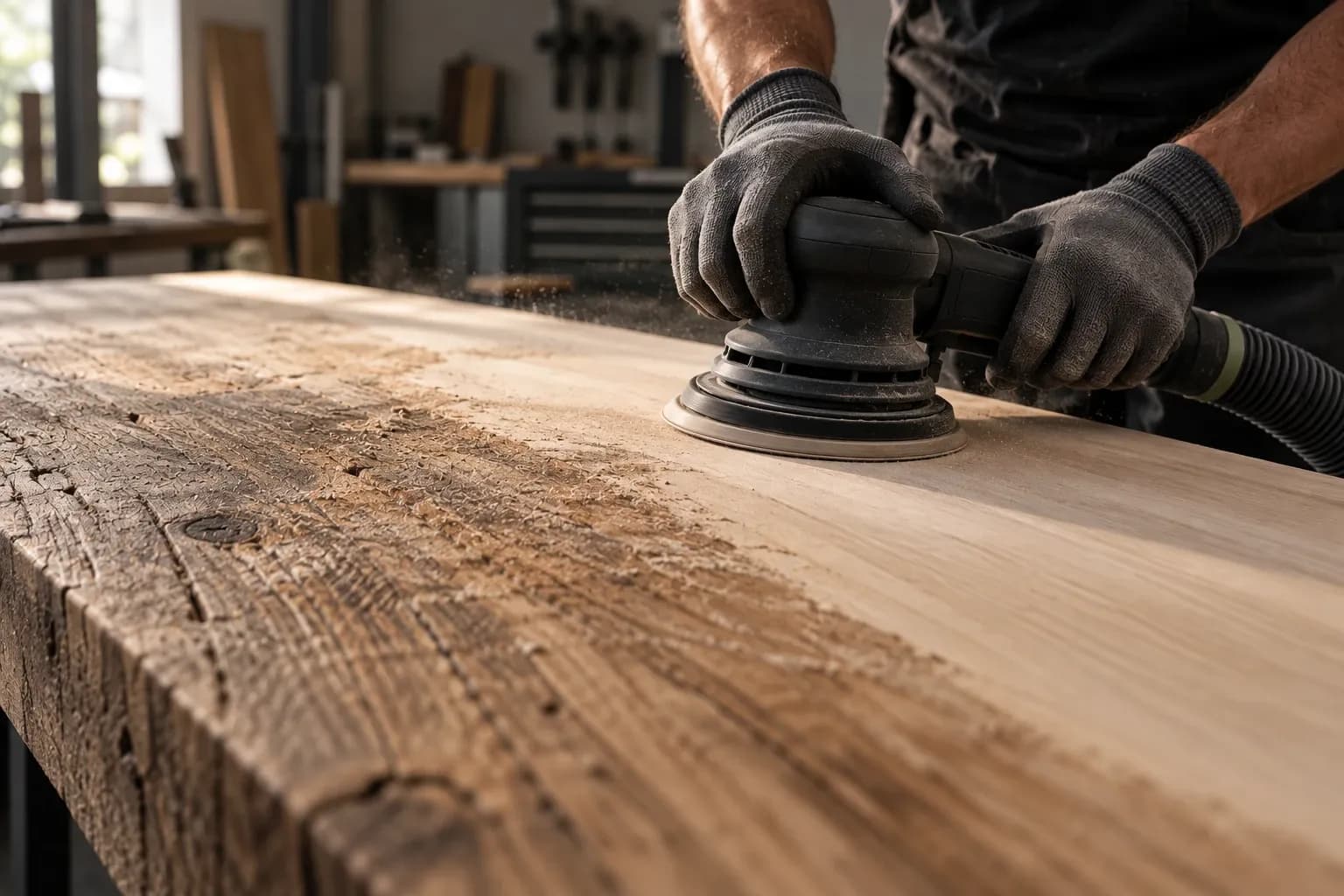 WoodFrom raw to perfect – for furniture, interiors and moreP40 – P320
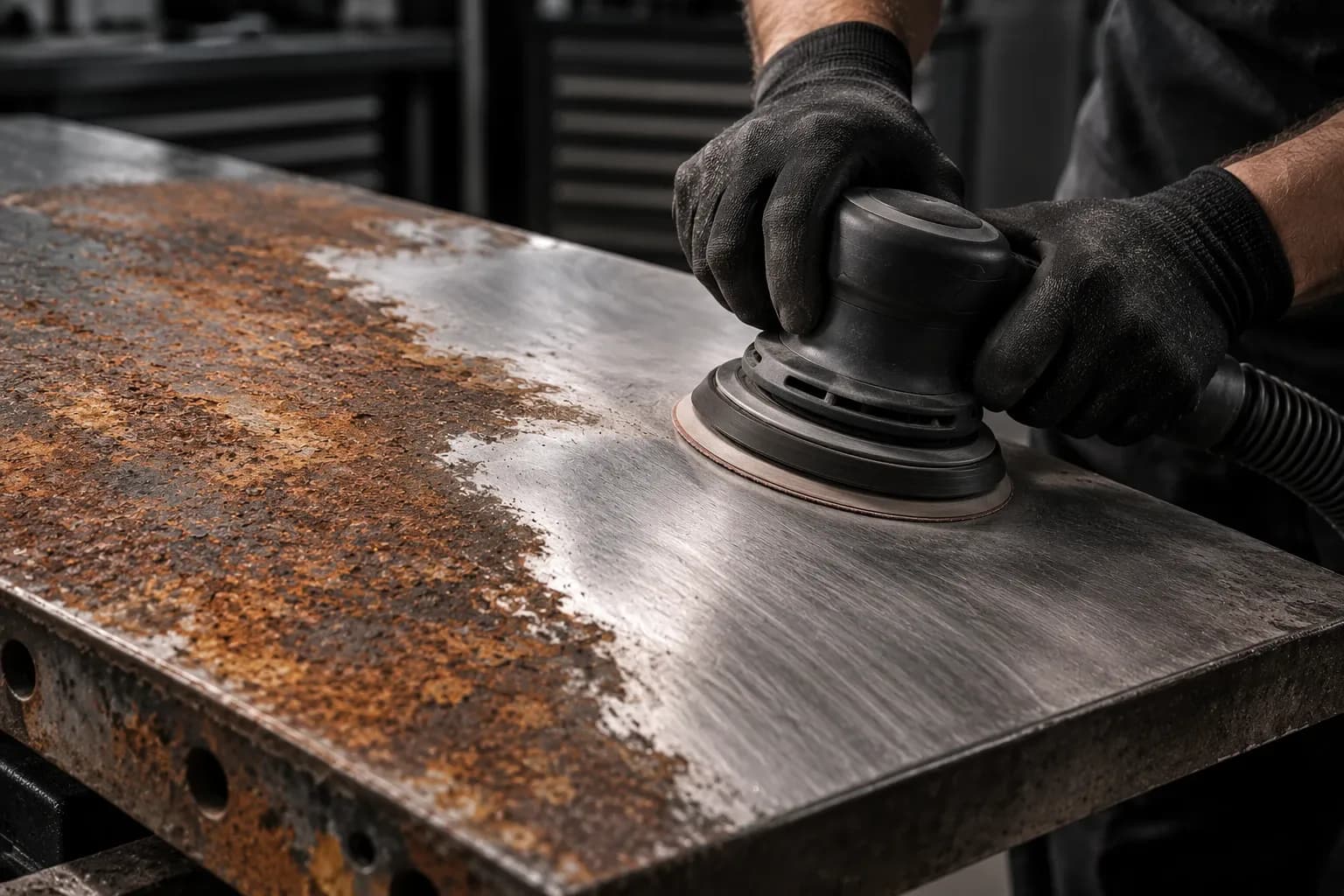 MetalRemove rust, refine surfaces, protect for goodP40 – P400
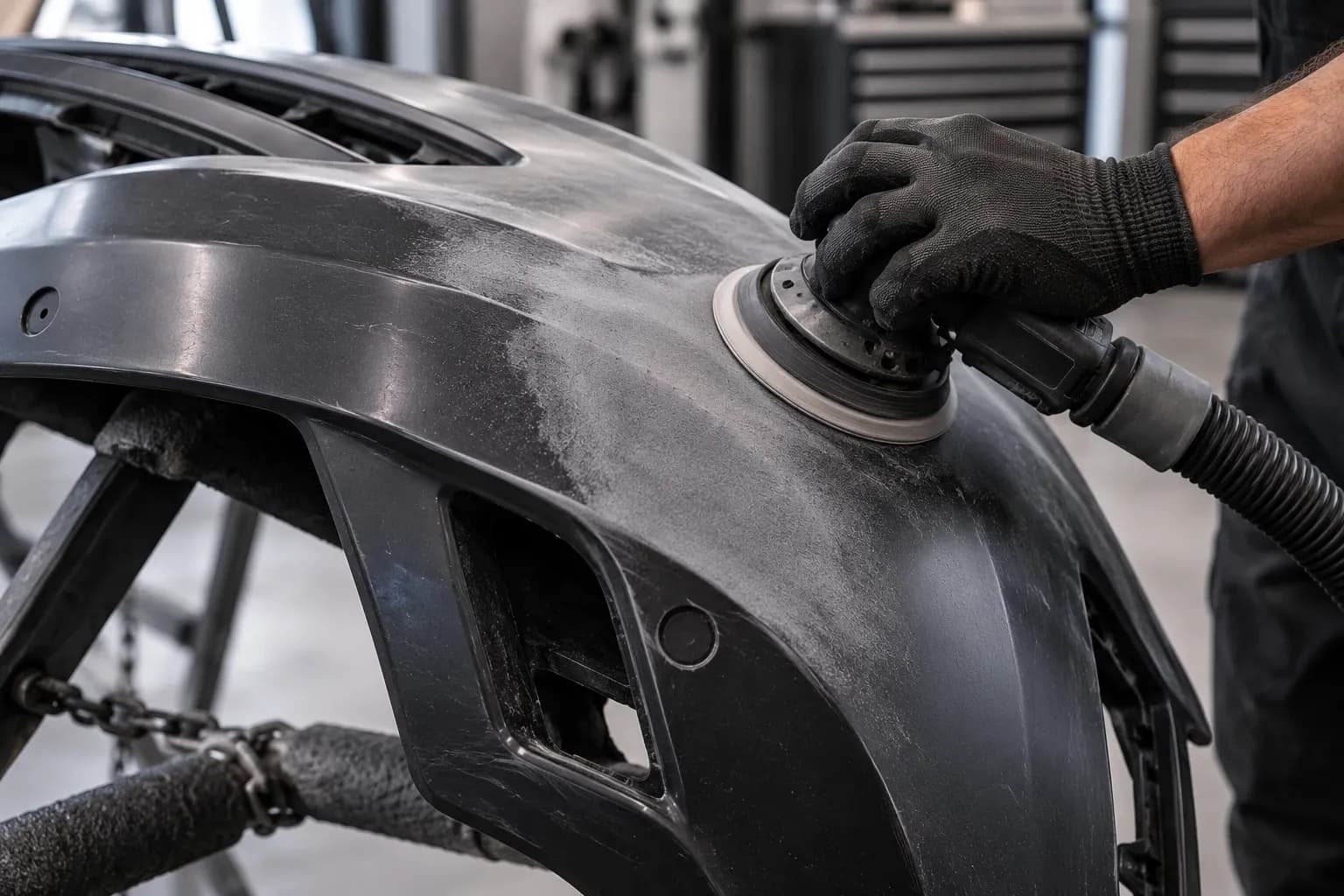 PlasticSand safely – for optimum adhesion and perfect resultsP180 – P1000
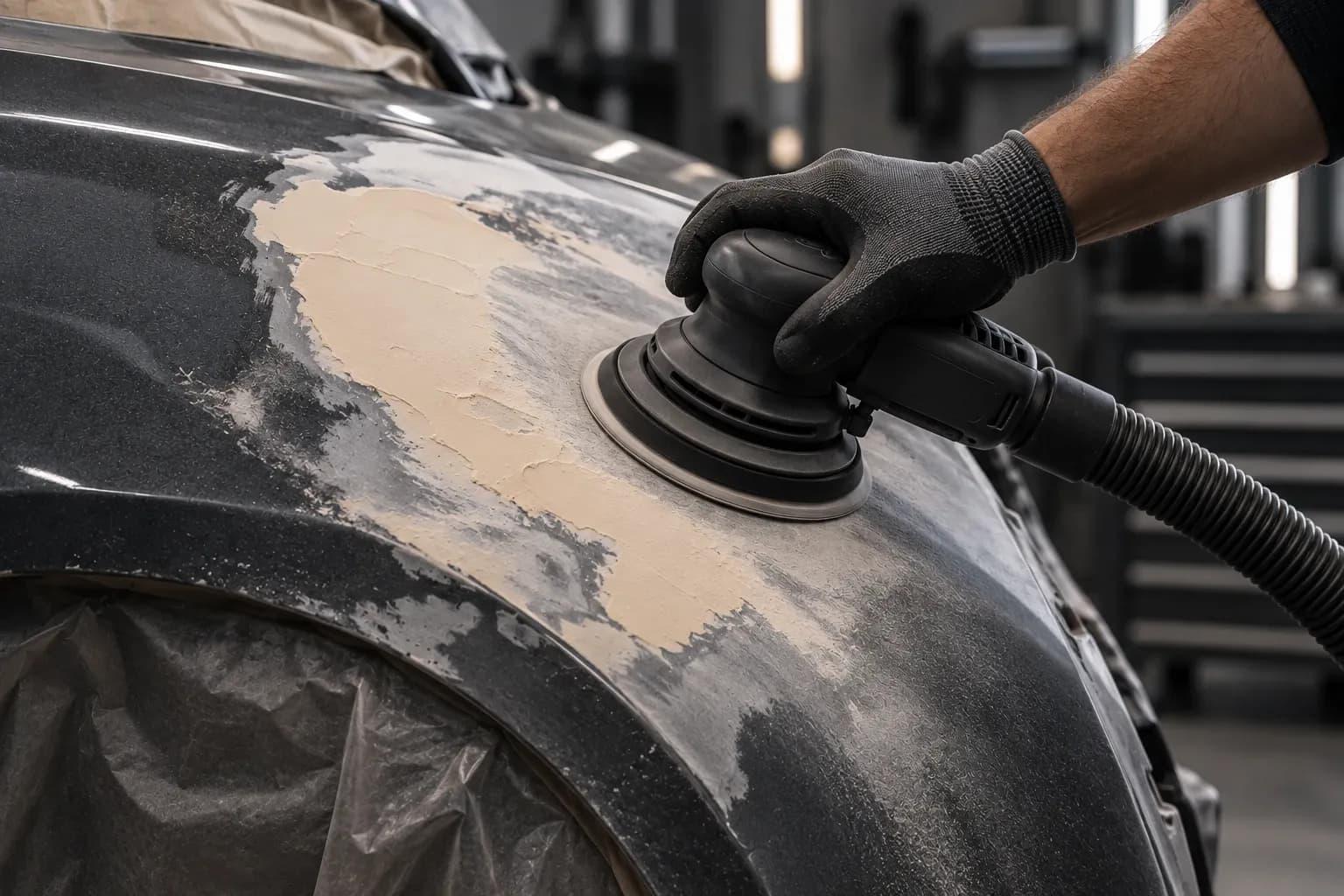 Body fillerLevel fast – shape cleanly – prepare perfectlyP80 – P240
Still unsure?
The abrasive finder asks about your machine and goal – the material is already set – and tells you the product and grit.
Find abrasives for Primer →