Metal · 1 min read
Keying and painting a radiator
Spot-treat rust with P120, matt down the rest with P240 or abrasive fleece – and why you should keep the machine away from the fins.
Last updated: · published
Preparation
Turn off the heating and let the radiator cool down, cover the floor and wall, and remove dust and grease thoroughly. Paint only adheres to a clean, matt surface.
Sanding
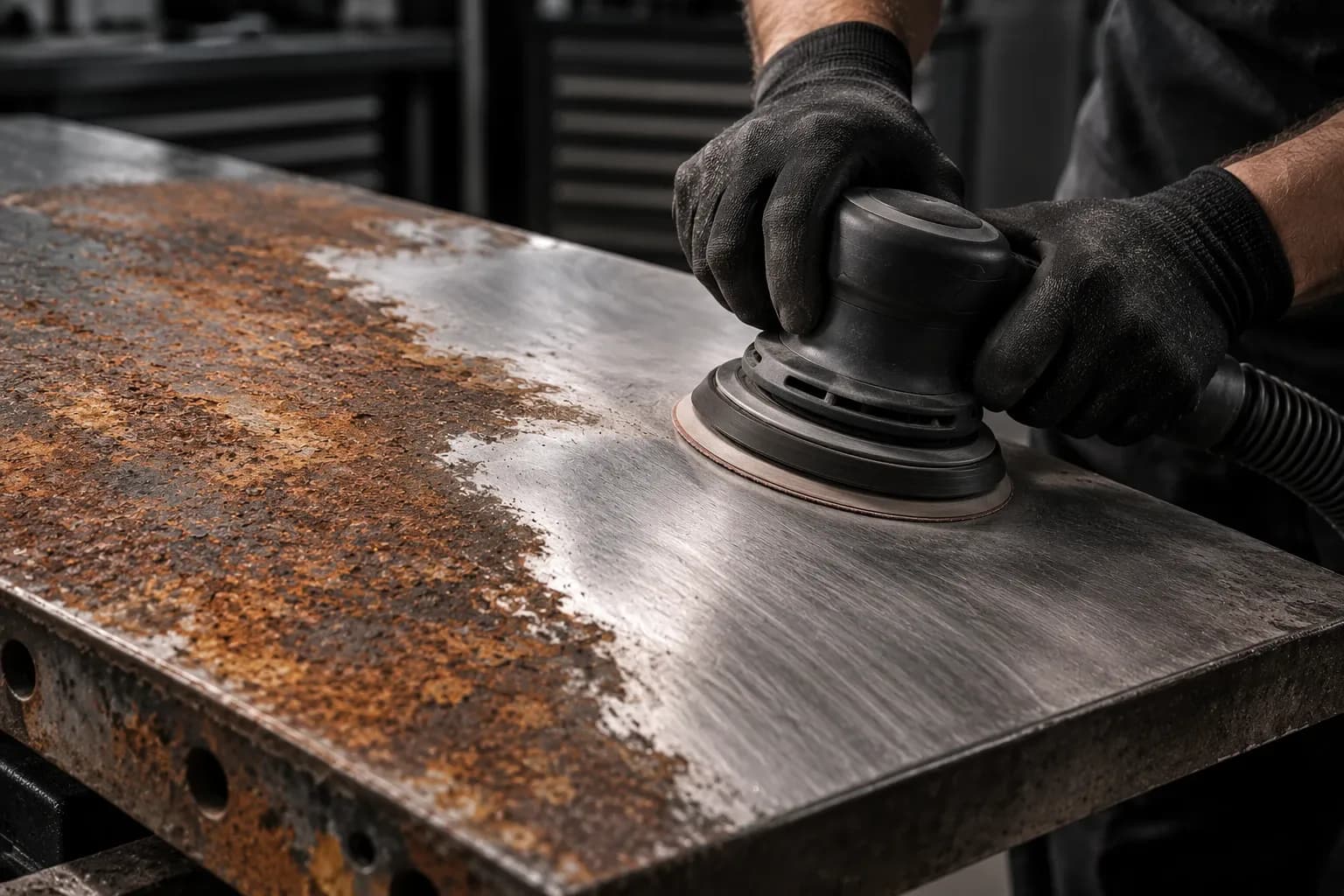
Sand rusty spots back to bare metal with P120 and feather the edges into the intact paint with P180. Only matt down the remaining paint: with P240 or abrasive fleece, which can be worked into curves and between the fins.
A small random orbital sander can help on flat surfaces; fins, ribs and edges by hand – there the machine only presses dents or sands through the edges.
Priming and painting
Treat bare spots immediately with an anti-rust primer, then apply a heat-resistant radiator paint as directed by the manufacturer. Only turn the heating back on once it has fully dried.
Between the fins
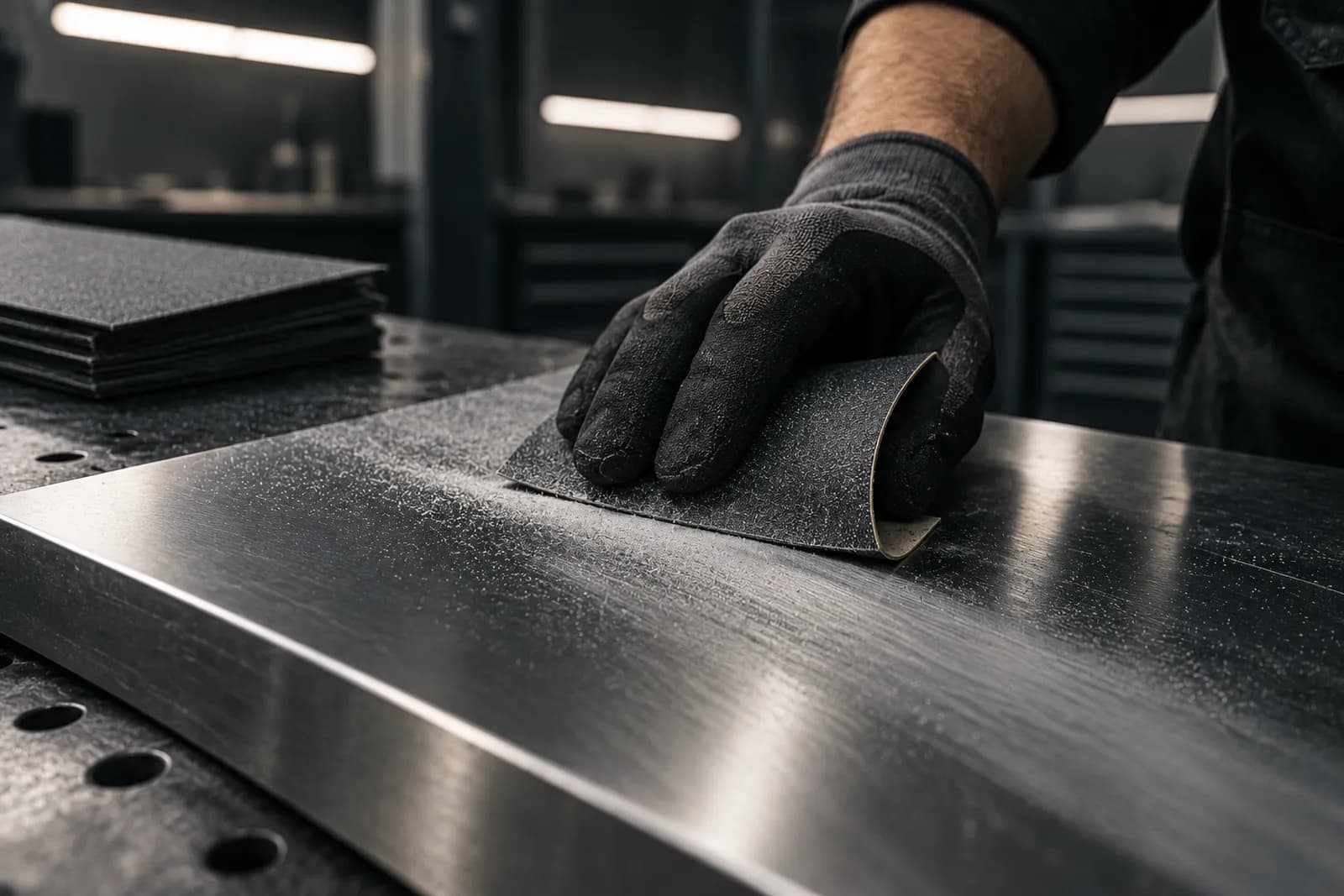
Where neither machine nor sanding block can reach, a strip of abrasive fleece or sandpaper does the job: wrap it round a flat ruler, or hold both ends like a shoe-shine cloth and pull it back and forth. You are only matting – the paint should be dull, not removed.
Old paint and dust
Very old radiators may have lead-based paint. If in doubt, do not dry sand – work wet with abrasive fleece and wear a mask (FFP3). In any case: vacuum the dust rather than sweeping it, and wipe down with a slightly damp cloth before painting.
FAQ
Does all the old paint have to come off?
No. Only sand loose and rusty spots back to metal, and matt down the intact paint with P240 or abrasive fleece – the new paint will hold on that.
Terms in this article
All terms in the sanding glossary →The whole sequence at once
3 grits, 1 × smallest pack each: PRO STRIP 70 × 420 (25 pcs) P120 · P180 · P240.
incl. VAT, plus shipping