Metal · 1 min read
Derusting and painting railings and garden gates
Loose rust and old paint off with P60 to P80, transitions with P120, key with P180 – bars and corners by hand, with non-woven abrasive or a sanding roll.
Last updated:
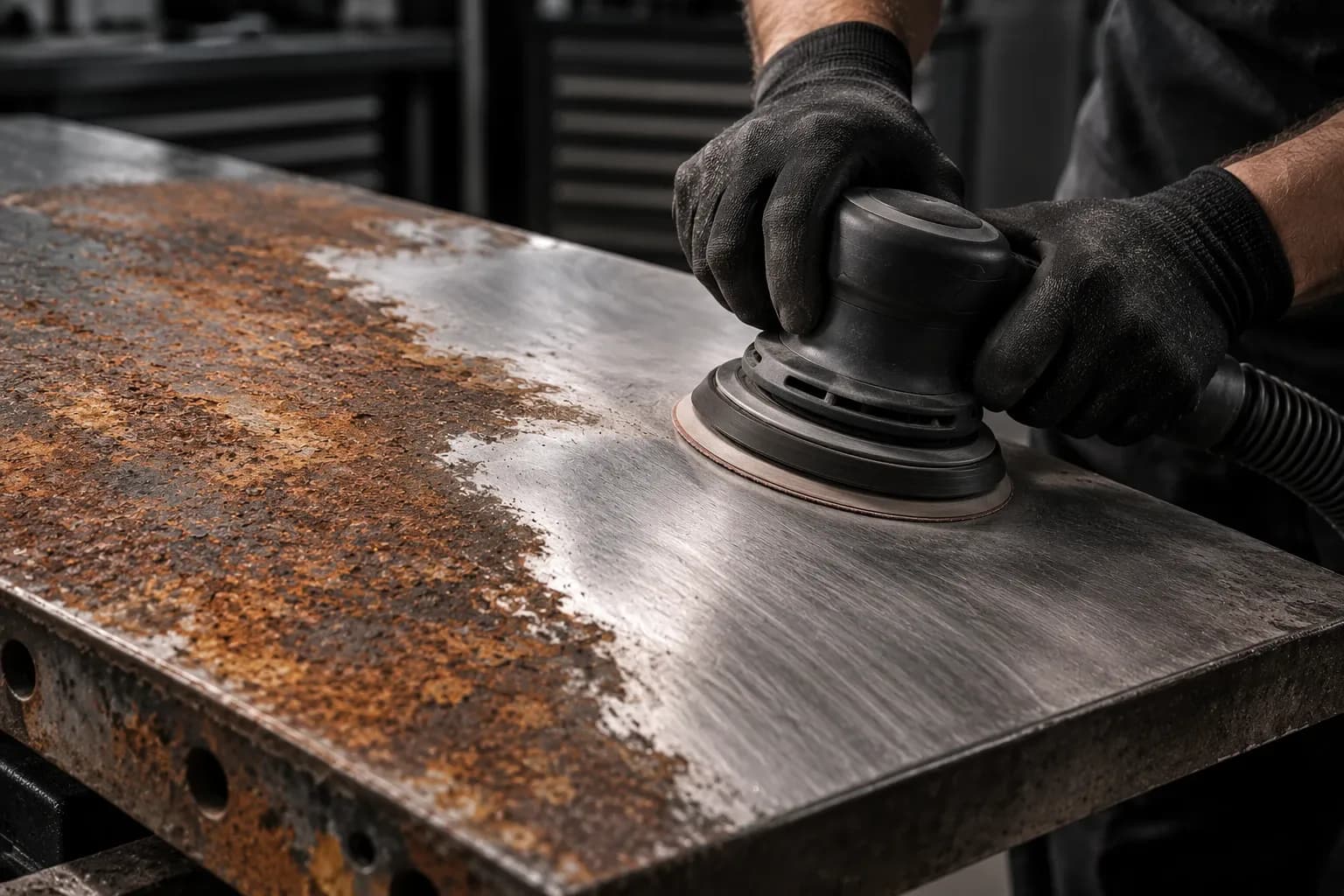
Rust and loose paint
Bars, corners, scrollwork
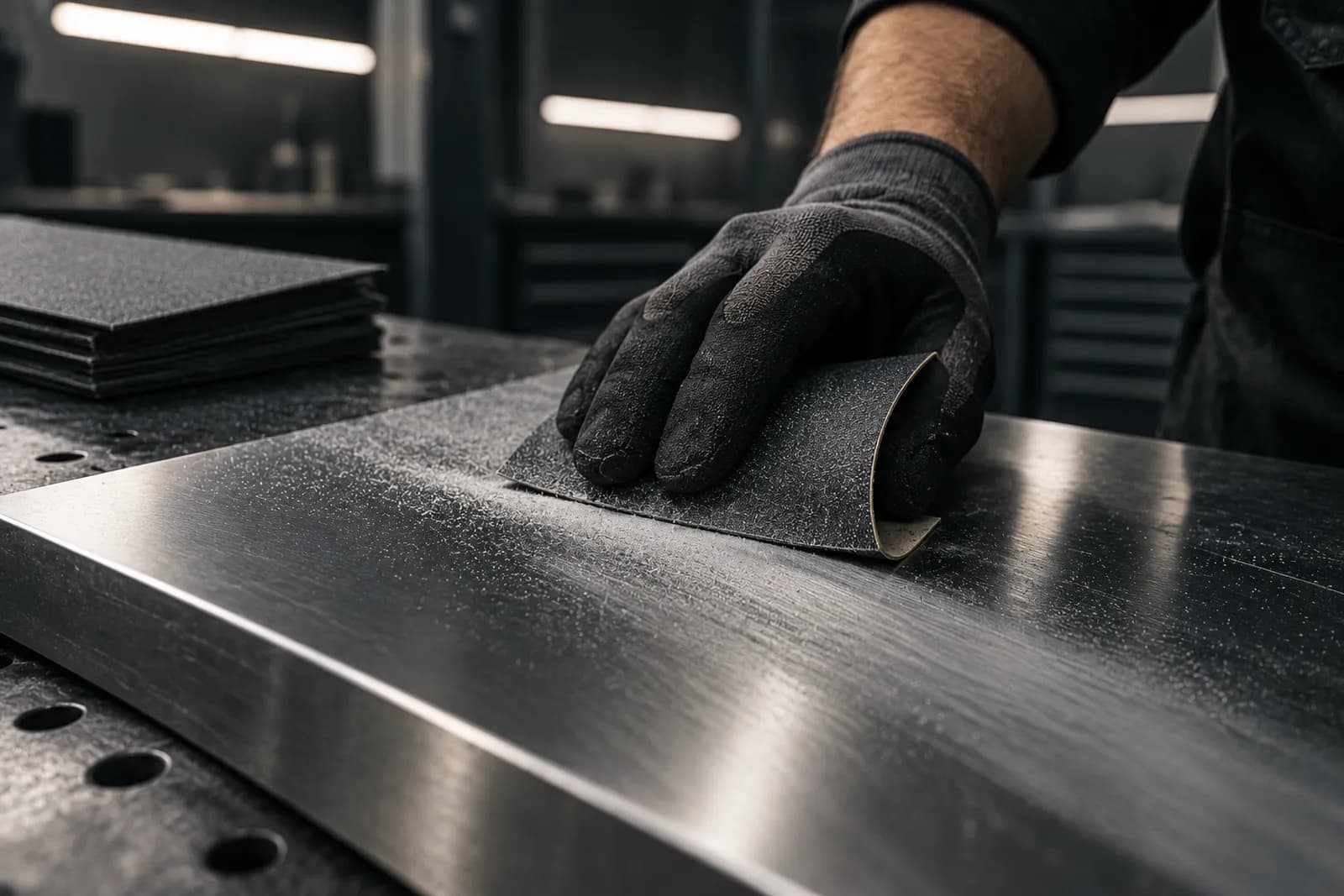
Round bars and decorative parts are best sanded with a strip torn from a sanding roll, wrapped round the bar like a polishing cloth and pulled back and forth. In corners and on weld spots, non-woven abrasive helps because it adapts to any shape.
Keying and painting
Galvanised parts
Many garden gates and railings are hot-dip galvanised. The zinc layer is the rust protection – it must not be sanded away. Only rough up galvanised surfaces with non-woven abrasive until they are evenly matt, then prime with an adhesion primer for zinc. Only sand down to bare metal where rust is already coming through.
FAQ
Can I use rust converter instead of sanding?
No. Rust converter is meant for residues in pores and recesses. Loose rust and old paint have to come off first, otherwise neither the converter nor the paint will hold.
Terms in this article
All terms in the sanding glossary →The whole sequence at once
3 grits, 1 × smallest pack each: PRO ROLL 115 P80 · P120 · P180. We don’t stock P60 for this yet. P60 is available for 125 mm backing pads as PRO CUT 125.
incl. VAT, plus shipping