Metal · 1 min read
Sanding stainless steel and aluminium
Soft and stainless metals sand differently from mild steel: aluminium clogs, stainless steel discolours. The sequence that gives you an even scratch pattern.
Last updated:
Aluminium: avoid clogging
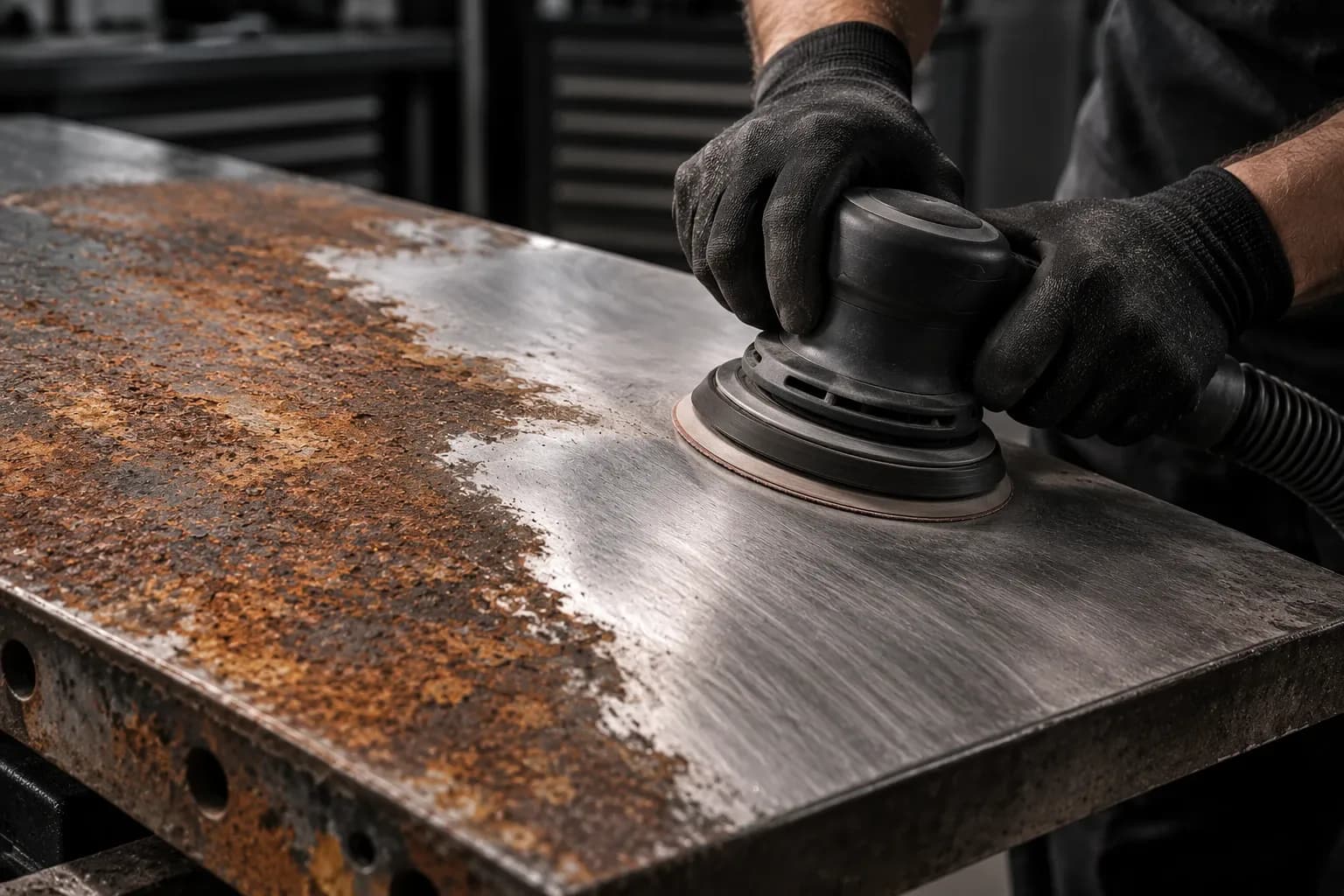
Aluminium is soft and smears into the abrasive. Work with light pressure and medium speed, and tap out or change the disc more often. Abrasive mesh clogs less quickly because the dust is extracted through the mesh.
Remove scratches with P120 to P180, and go up to P320 or P400 for an even finish. If you plan to paint, stop at P240.
Stainless steel: keep it cool
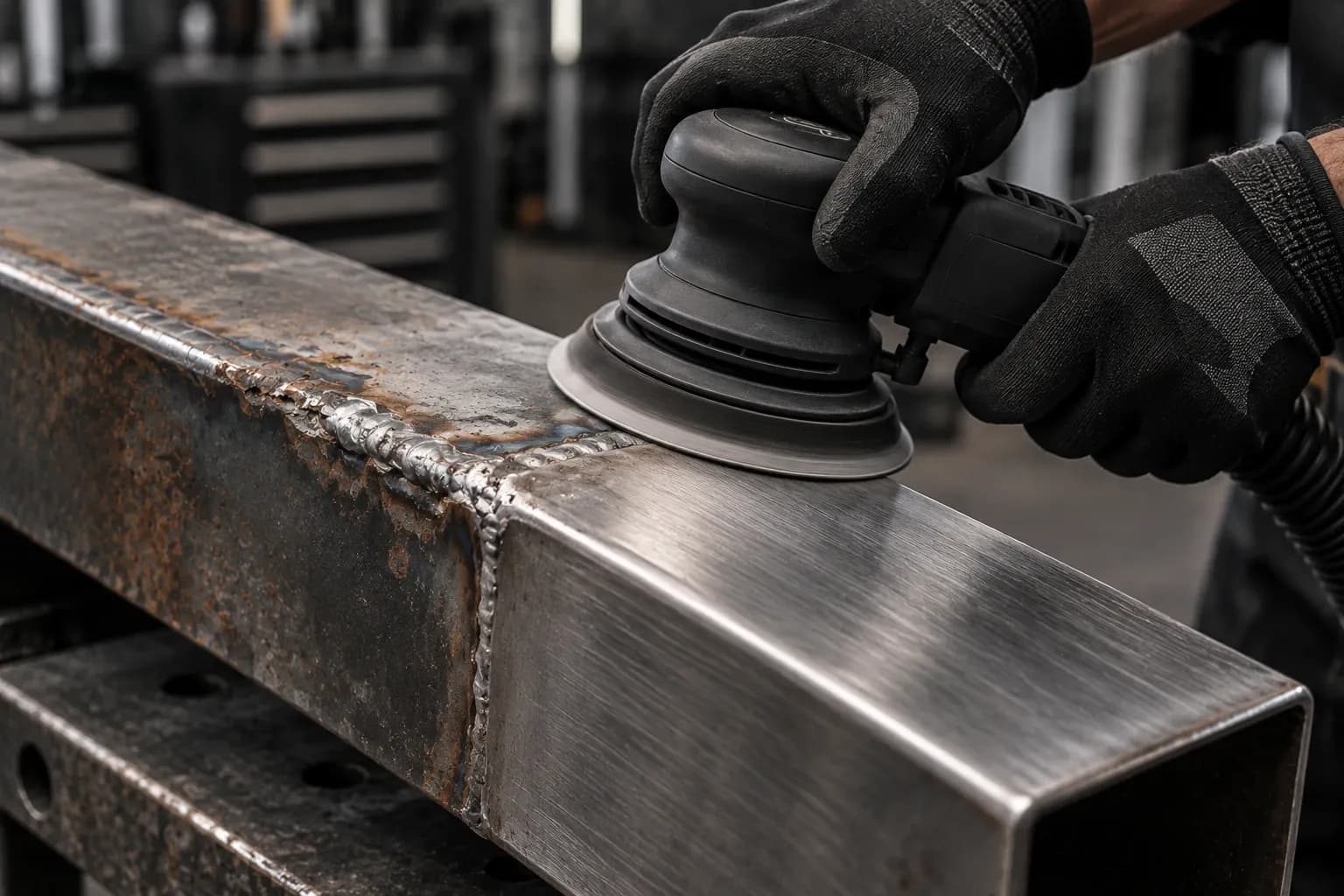
Stainless steel discolours when it gets hot – blue or golden heat tints are hard work to remove afterwards. Sand in short bursts, let the spot cool down and never dwell in one place.
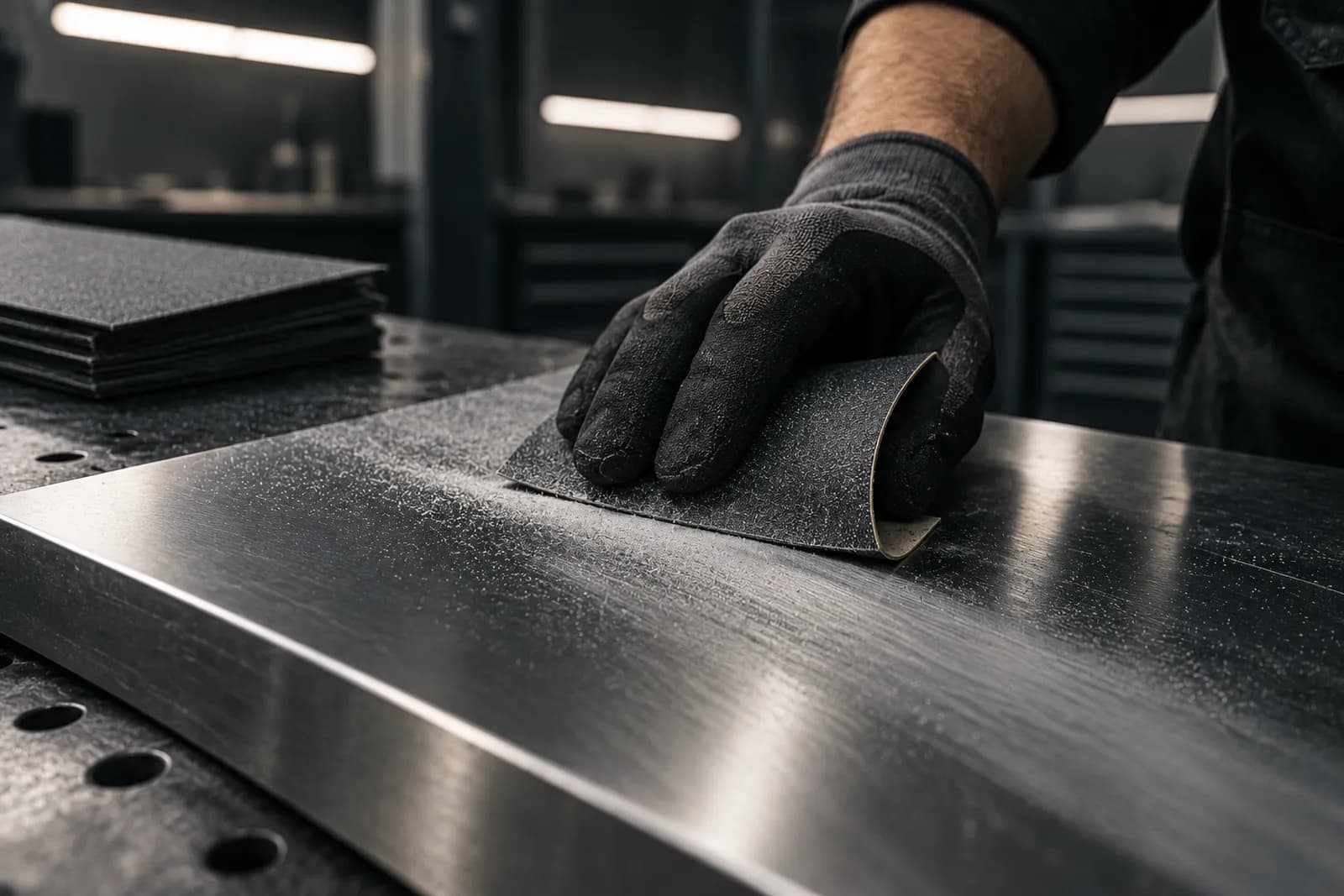
For a directional (brushed) finish, work with abrasive fleece or a sheet on a hand block in long, straight strokes, always in the same direction.
No mild steel on stainless
Abrasives previously used on ordinary steel carry iron particles onto stainless steel – where they later rust as brown specks. Keep separate discs and fleece for stainless steel.
FAQ
Can I use the same disc for stainless steel as for mild steel?
Better not. Iron particles from the steel stay in the abrasive and get pressed into the stainless steel – where they show up as surface rust. Use dedicated discs for stainless steel.
Terms in this article
All terms in the sanding glossary →The whole sequence at once
6 grits, 1 × smallest pack each: PRO NET 150 (10 pcs) P80 · P120 · P180 · P240 · P320 · P400.
incl. VAT, plus shipping