Wood · 2 min read
Sanding wood before oil or varnish: which final grit?
For oil, P180 to P240 is enough; under varnish, finish at P240 and key between coats with P320. Plus the damp-cloth trick that keeps the surface smooth after the first coat.
Last updated: · published
KORNDEX sells abrasives – matching products are linked below the article.
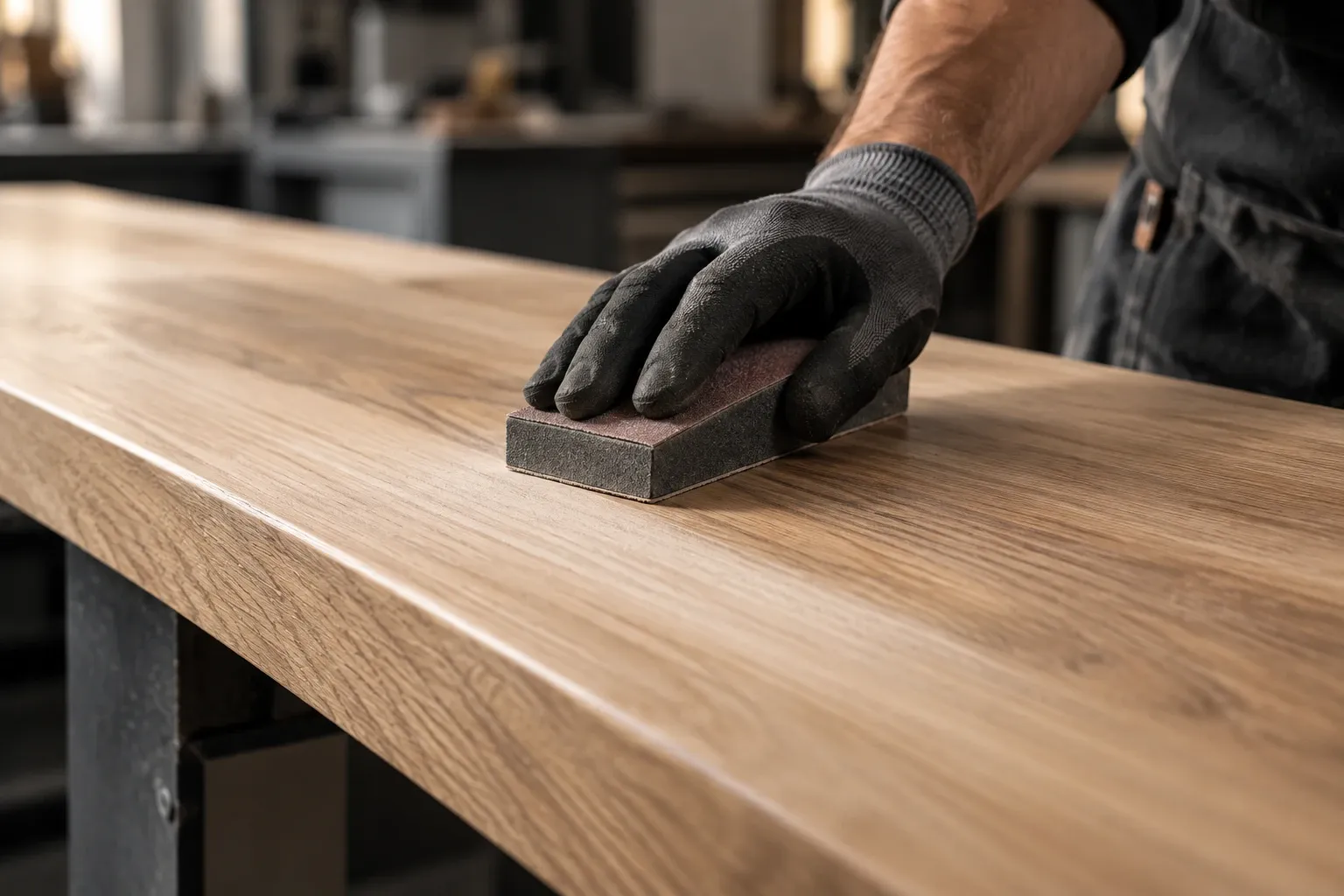
How fine to sand wood before oiling? P180 to P240
How fine to sand wood before varnishing? P240
Under varnish, your last pass can be P240. After the first coat the wood fibres stand up and the surface feels rough: let it dry, scuff it lightly with P320, remove the dust, apply the next coat. Between coats you only key the surface – never sand through.
Raise the grain before the final pass
Especially with water-based varnishes and stains, it pays to wipe the sanded surface with a damp cloth. The fibres stand up; once dry, go over it again with your final grit. The finish then has nothing left to raise.
Dust out of the pores
Before oiling or varnishing, vacuum the sanding dust thoroughly, including from the pores – oak and ash hold a lot of it. Then wipe down with a tack cloth. Dust trapped in oil or varnish leaves the surface grey and rough.
After the first coat of oil
Oil raises the grain too. Once the first coat has dried, go over the surface lightly with P320 or a fine non-woven abrasive, remove the dust, then apply the next coat. Abrasive fleece follows mouldings and edges without sanding through.
Painting wood: which grit?
Under opaque paint – acrylic or alkyd paint on windows, doors, furniture – sanding on raw wood ends at P120 to P180; the paint hides the scratch pattern. Key old, firmly bonded paint with P180 to P240; take loose spots down to the wood with P80 and feather the edges.
Between primer and top coat, sand lightly with P240. Finer than P240 brings nothing under opaque paint; coarser than P120 shows, especially under gloss paint.
FAQ
Should I sand differently before a wood stain than before varnish?
A stain or wood glaze soaks in like oil. So stop at P180, as you would before oil, so it is absorbed evenly and does not go blotchy.
Terms in this article
All terms in the sanding glossary →The whole sequence at once
4 grits, 1 × smallest pack each: PRO CUT 150 (10 pcs) P120 · P180 · P240 · P320.
Or as a set: Wood starter set (P80–P240) for €49.90 →
incl. VAT, plus shipping