Wood · 1 min read
Sanding and repainting an old wooden door
Strip it completely or just key it? When you need P80, when P180 is enough – and why mouldings and edges are sanded by hand.
Last updated: · published
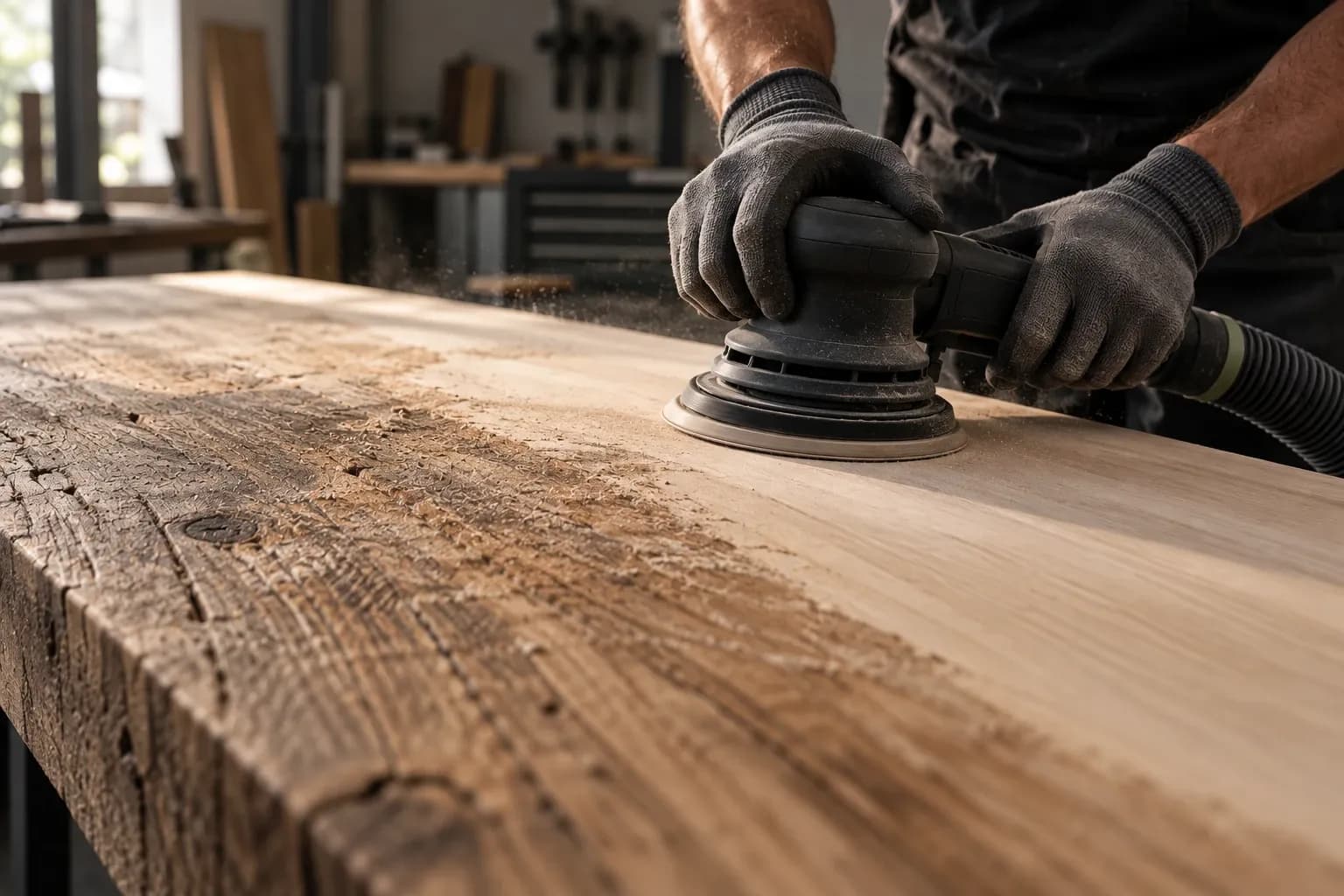
Keying is often enough
Back to bare wood
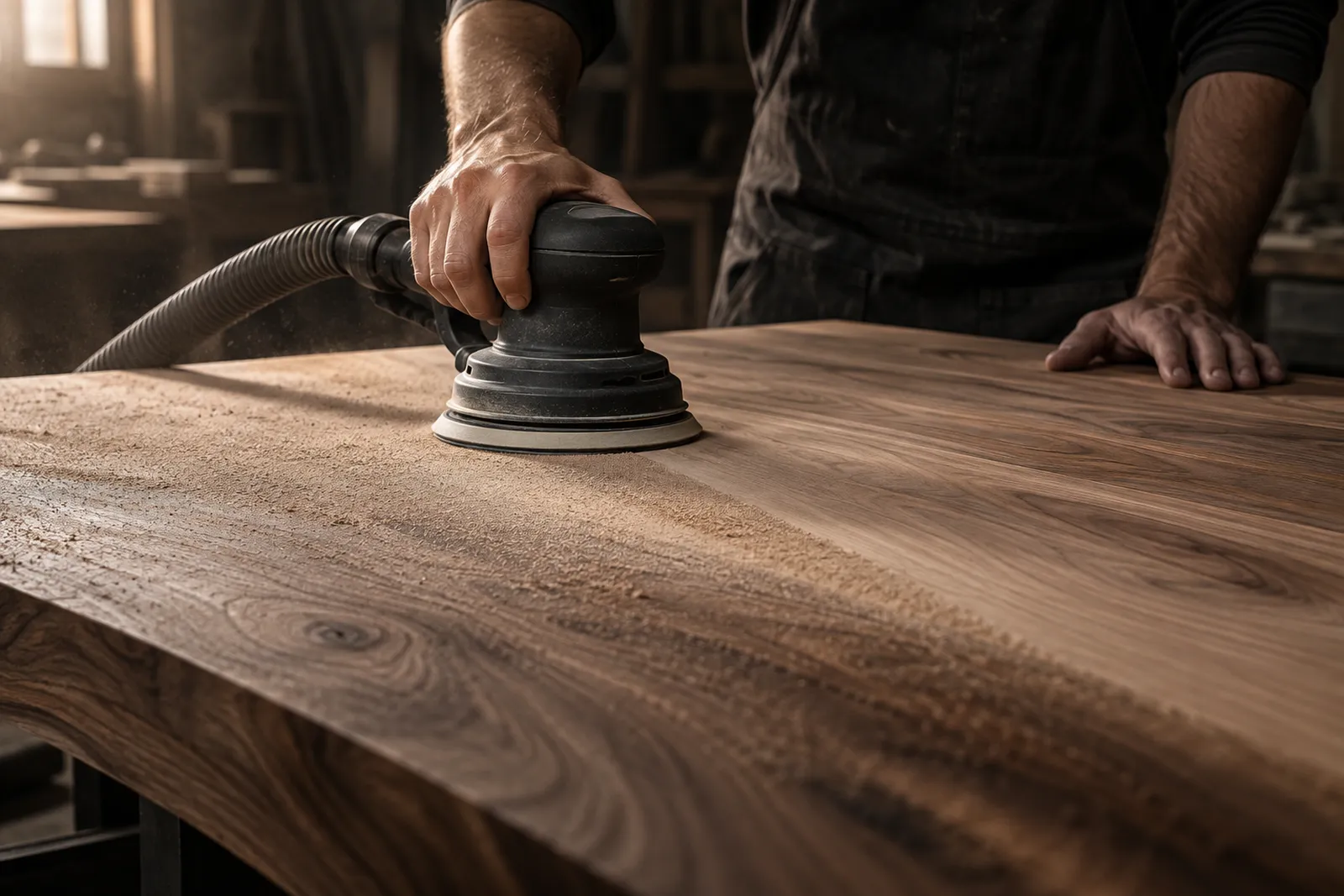
Remove the old paint with P80 – on thick layers, P60 if need be – then P120 and P180 for a smooth wood surface. Large areas with the random orbital sander; mouldings, panels and edges by hand with a block or foam pad, so the profiles do not get rounded over.
Old paint can contain lead, especially on doors and windows dating from before the 1970s. If in doubt, have it tested, and never dry sand without dust extraction and a mask.
Between coats
After the primer and the first coat, key lightly with P240, remove the dust, apply the next coat. That way the surface gets smoother with every layer.
FAQ
Do I need to take the door off its hinges to sand it?
You can sand it while it hangs, but laid flat on two trestles the result is more even – and the paint will not run down the edges afterwards. Unscrew the fittings first.
Which grit should I finish with on bare wood before painting?
P180. Before water-based paint, dampen the wood once, let it dry and briefly sand the raised fibres with P240.
Terms in this article
All terms in the sanding glossary →The whole sequence at once
4 grits, 1 × smallest pack each: PRO CUT 150 (10 pcs) P80 · P120 · P180 · P240.
Or as a set: Wood starter set (P80–P240) for €49.90 →
incl. VAT, plus shipping