Wood · 1 min read
Sanding and repainting wooden windows
Loose paint off with P80, smooth with P120, key with P180 – and why grey, weathered wood has to be sanded back to fresh timber.
Last updated:
What has to come off
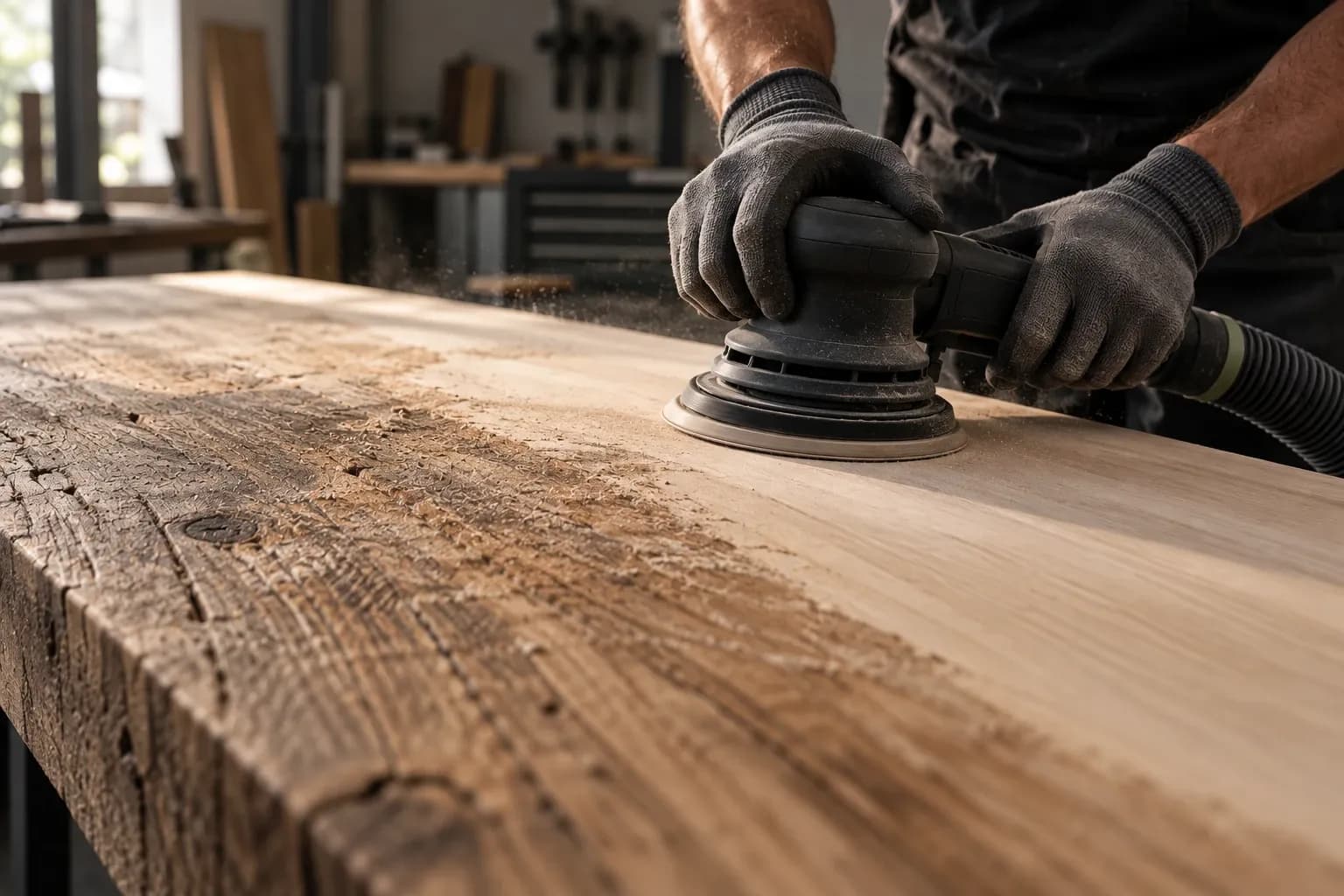
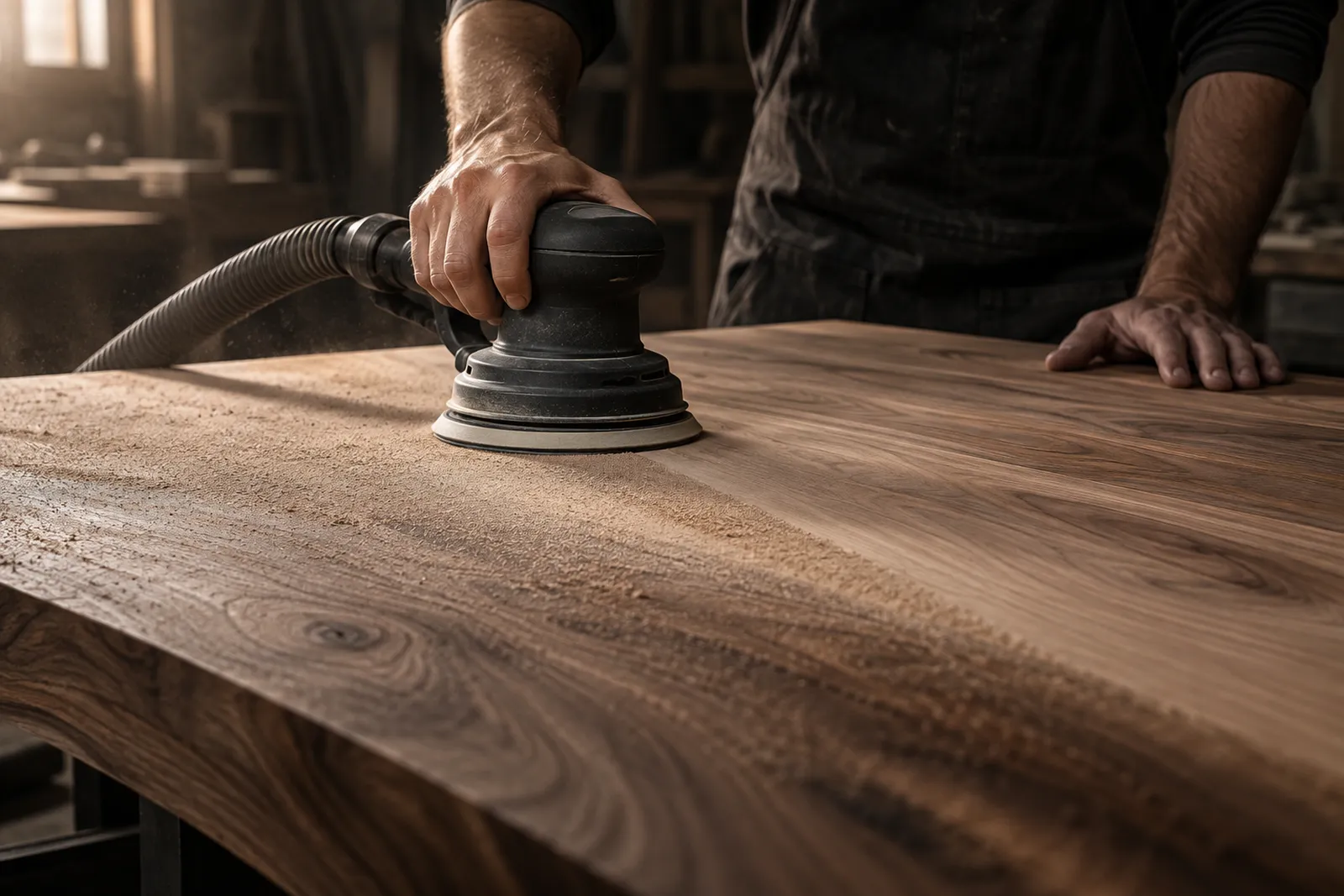
Loosen flaking paint and stain with a scraper, then sand off everything loose with P80. Old paint that is still firmly bonded can stay – it just gets keyed. Grey, weathered wood has to go until fresh, pale timber appears: no paint will hold on the grey layer.
Profiles and glazing beads
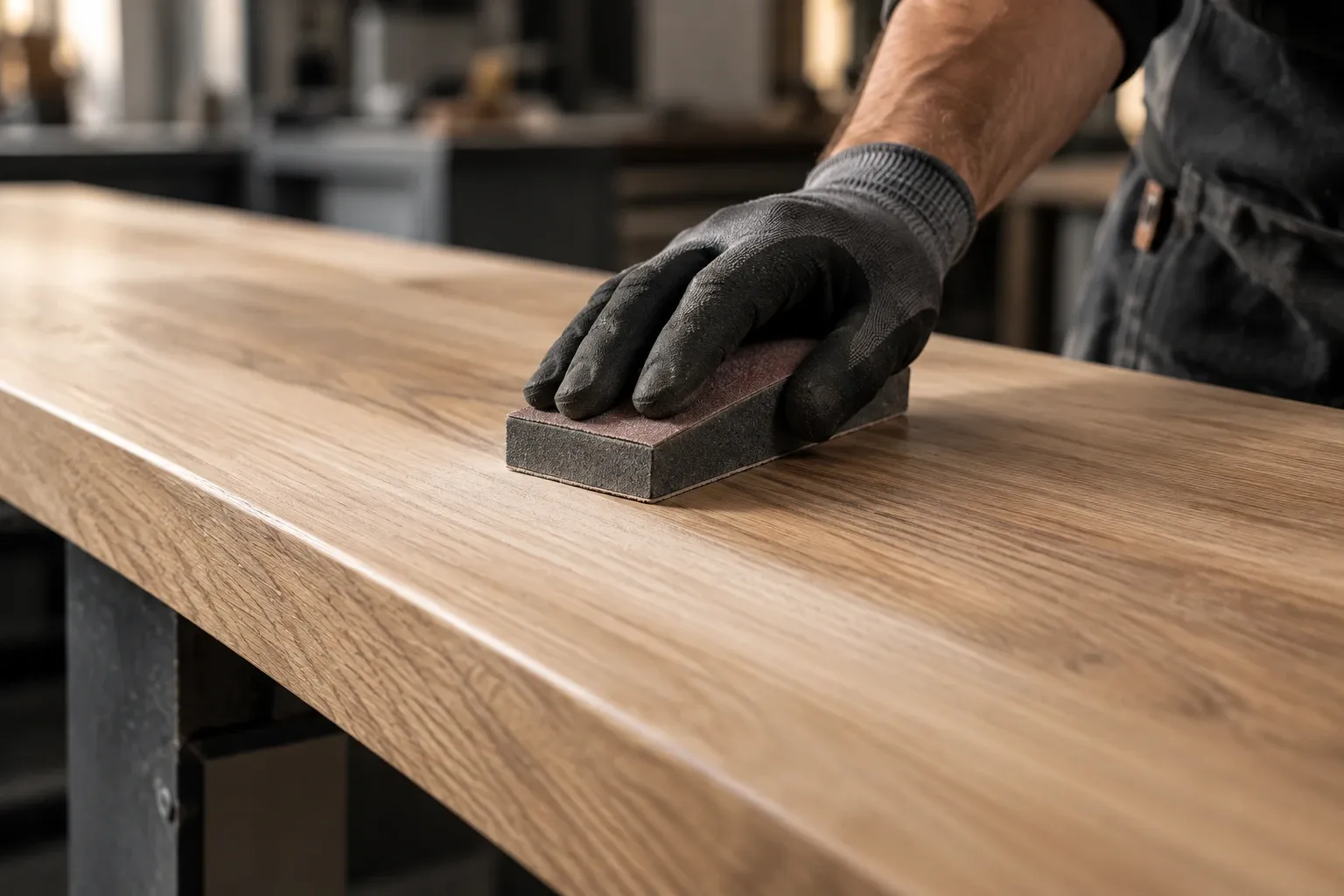
Frames and casements have lots of profiles, rebates and narrow beads that no backing pad can reach. Work there with sanding strips on a hand block, folded paper or non-woven abrasive. Protect the glass with masking tape – sandpaper scratches glass.
Keying and painting
Rotten spots and weatherboards
The bottom rail and the weatherboard take the most rain. Test with a screwdriver: where it goes in easily, the wood is rotten. Chisel these spots out back to sound wood, fill with wood repair compound and, once cured, sand flush with P120 and P180.
Seals and joints
Remove rubber seals or mask them carefully – painted-over seals go hard and stop sealing. Renew cracked putty or silicone around the glass before painting; over old joints the new paint cracks again straight away.
FAQ
Do I need to take the casements off to sand them?
It makes working on rebates and edges much easier. Unscrew or mask the ironmongery and take the seals out if they come loose.
Terms in this article
All terms in the sanding glossary →The whole sequence at once
3 grits, 1 × smallest pack each: PRO CUT 150 (10 pcs) P80 · P120 · P180.
Or as a set: Wood starter set (P80–P240) for €49.90 →
incl. VAT, plus shipping