Wood · 1 min read
Keying and repainting painted furniture
For new paint over old, keying with P180 to P240 is usually enough. When you do need to go back to bare wood, and how to reach mouldings and edges.
Last updated:
Key it, do not strip it
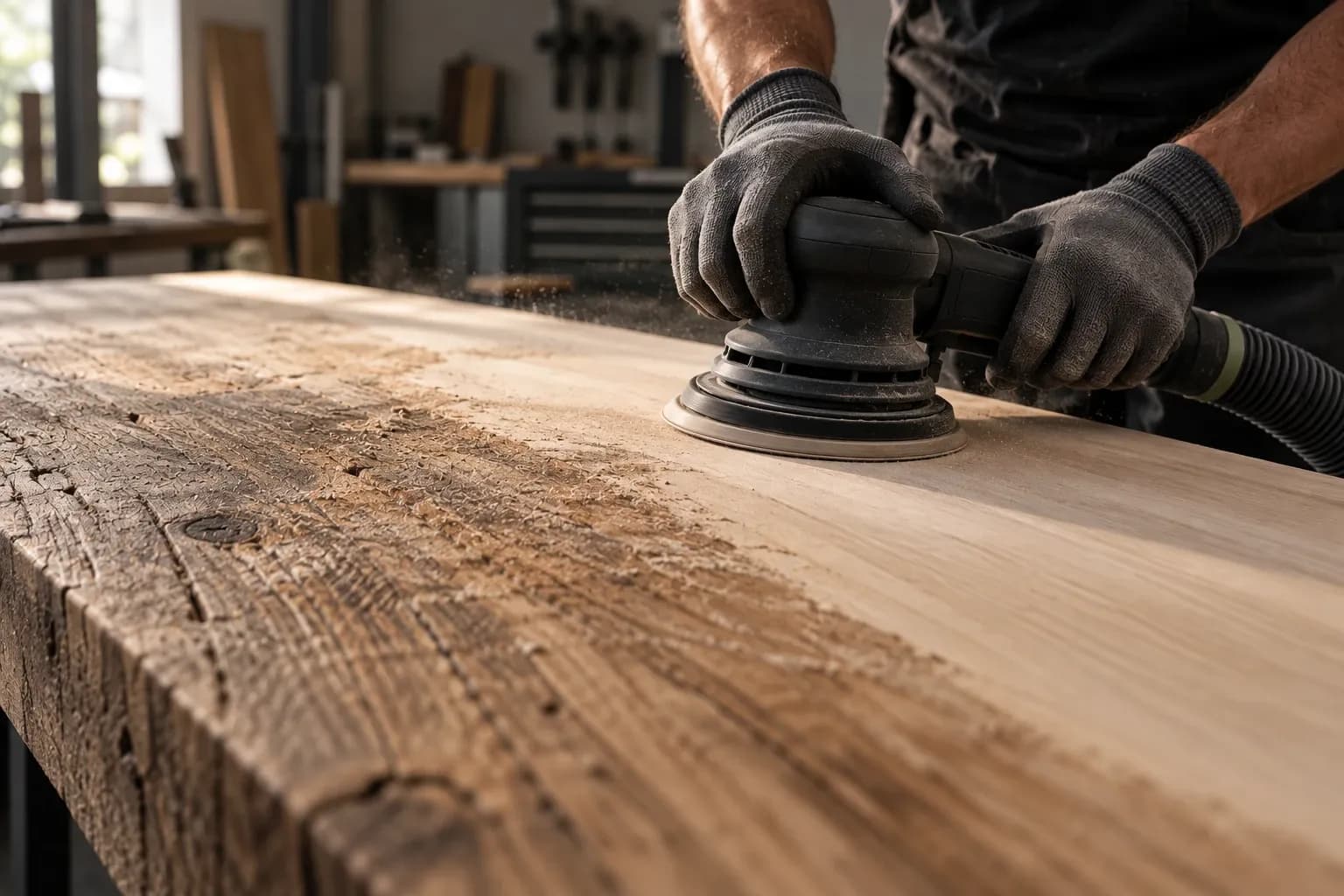
If the old paint is sound and just dull or scratched, it does not need to come off. Matt it down evenly with P180 to P240 until no shiny spots remain – that gives the new paint something to grip. Smooth out chips beforehand with P120.
If the paint is flaking or tacky, it has to come off: then sand back to bare wood, as with an old wooden door.
Mouldings, handles, edges
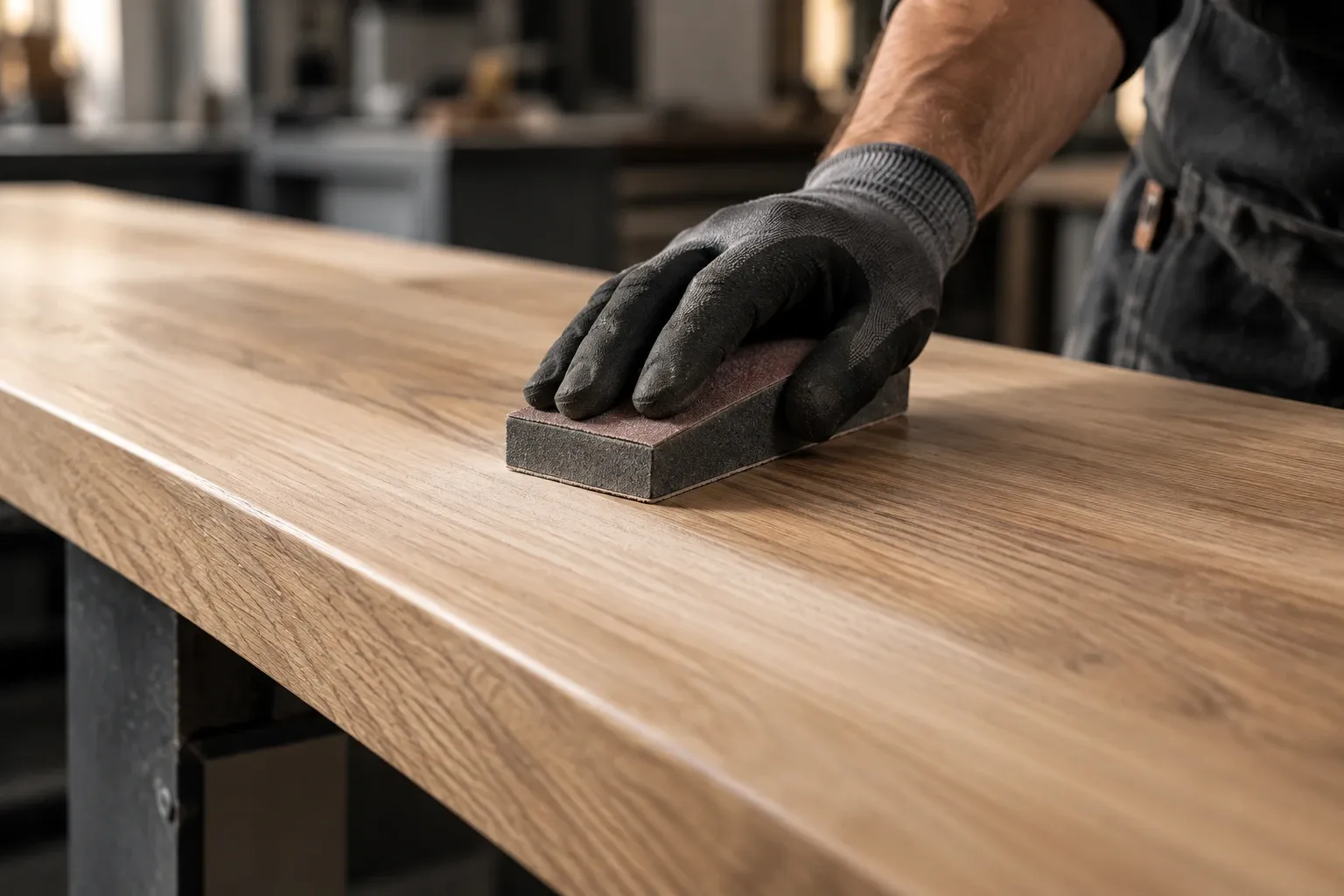
Key routed profiles, panels and turned parts with abrasive fleece or a sanding sponge – it follows the shape without sanding through the edges. Flat surfaces with a block or a random orbital sander.
Before painting
Vacuum the sanding dust thoroughly and wipe down with a slightly damp cloth. On high-gloss or unknown finishes, use a bonding primer. Between two coats, key lightly with P240 to P320.
Clean first, then sand
Old furniture often carries furniture polish, wax or silicone. Sand over it and you spread it into the scratches – the new paint then beads up or forms craters. So wash it down first with sugar soap or a degreasing cleaner and let it dry.
Very old paint can contain lead. On furniture of unknown origin, sand with dust extraction and wear an FFP2 mask.
FAQ
Do I need to sand at all before chalk paint?
You will often hear no – but a quick key with P180 to P240 noticeably improves adhesion on glossy paint. Either way, clean and degrease thoroughly.
Terms in this article
All terms in the sanding glossary →The whole sequence at once
3 grits, 1 × smallest pack each: PRO CUT 150 (10 pcs) P120 · P180 · P240.
Or as a set: Wood starter set (P80–P240) for €49.90 →
incl. VAT, plus shipping