Wood · 1 min read
Sanding handrails, window sills and chests of drawers: grit for furniture parts
Scuff painted wood with P120 to P180, smooth raw wood up to P180. By hand, along the grain, with a block on edges and profiles.
Last updated:
KORNDEX sells abrasives – matching products are linked below the article.
The answer in one paragraph
Handrail and window sill: lots of hand contact
A handrail or window sill is touched often. Remove splinters and rough spots with P120, then P180 for a smooth surface and, if you want to oil or paint, P240 to finish. Wipe off dust thoroughly.
Chest of drawers and furniture
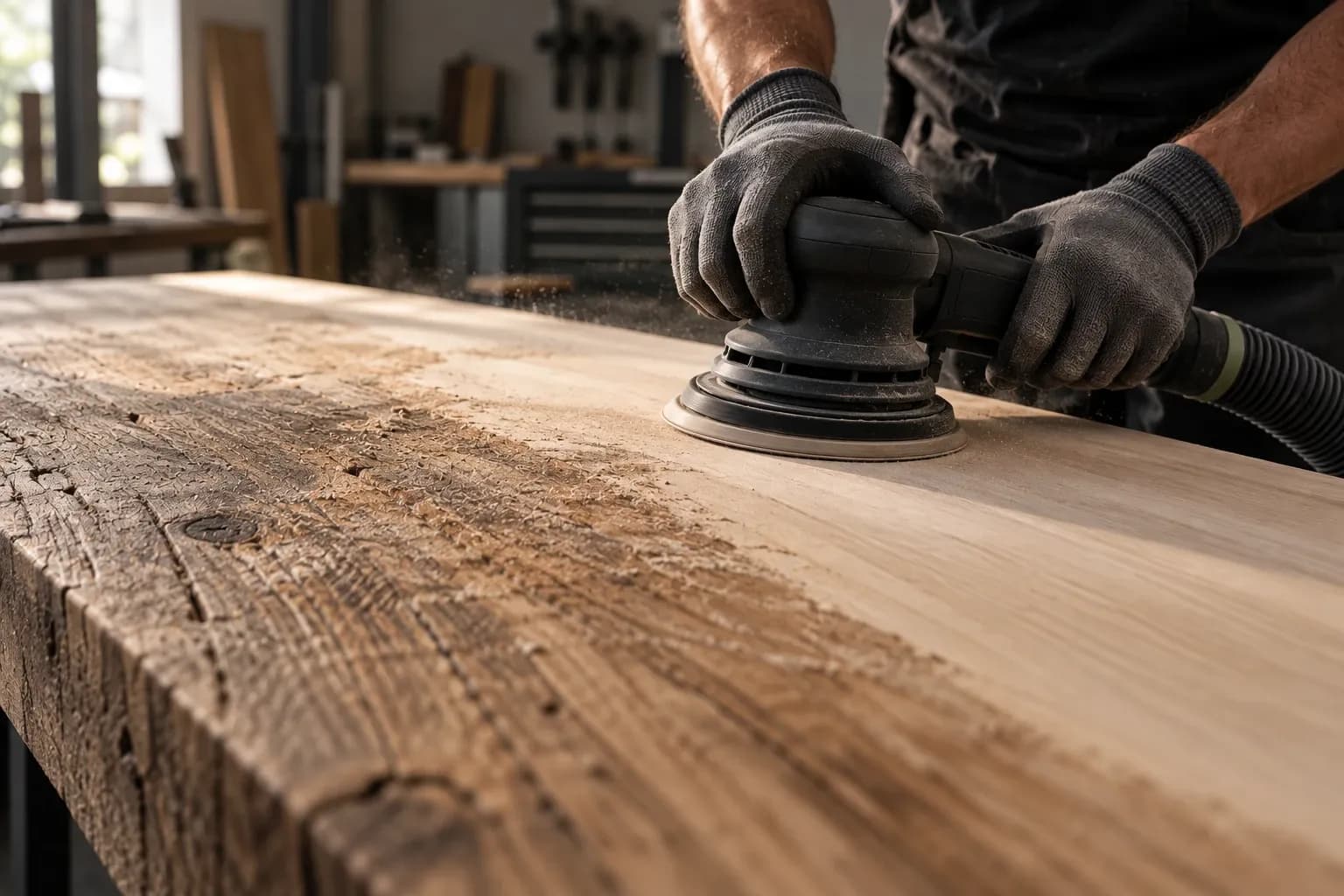
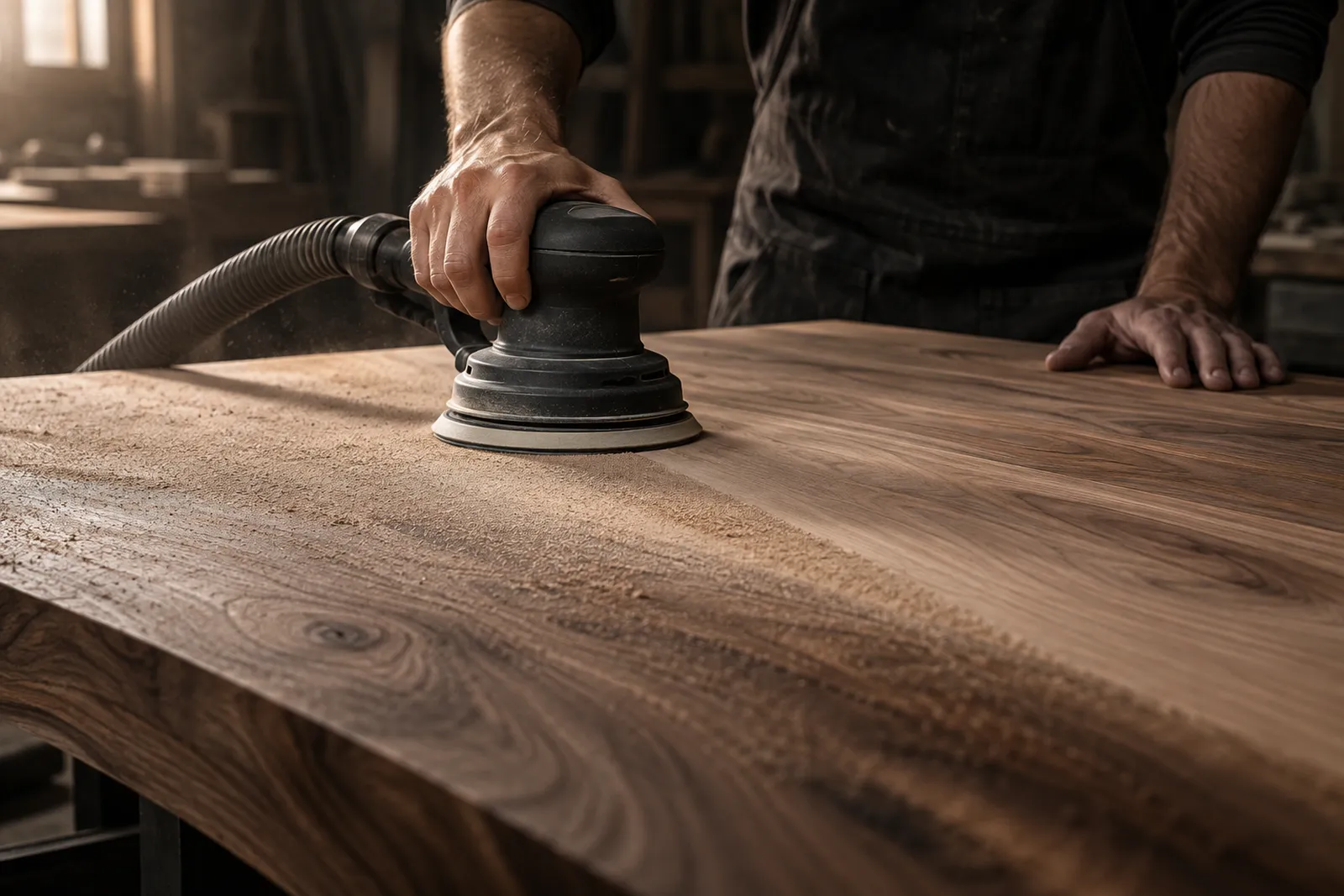
Flat surfaces are sanded with the random orbital sander and a soft interface pad, edges, feet and drawer fronts with a block or foam pad. Be careful with veneer: the top layer is thin, better by hand and with fine grit.
Typical mistakes
Sanding across the grain: scratches only show under paint or oil.
Rounding the edges: guide with the block and do not tilt.
Skipping a grit: from P80 to P240 leaves deep marks.
FAQ
Which grit for a wooden window sill?
P120 for rough spots, P180 for a smooth surface and P240 to finish before oil or paint – always along the grain.
Do I have to sand painted furniture completely?
No. If the paint is sound, scuffing with P120 to P180 until the surface is matt is enough.
Terms in this article
All terms in the sanding glossary →The whole sequence at once
3 grits, 1 × smallest pack each: PRO CUT 150 (10 pcs) P120 · P180 · P240.
Or as a set: Wood starter set (P80–P240) for €49.90 →
incl. VAT, plus shipping