Metal · 1 min read
Sanding and polishing brass and copper
Soft non-ferrous metals: patina with non-woven abrasive, scratches off with P240, then wet up to P2000 and polish – and why you seal it afterwards.
Last updated:
Clean first, then sand
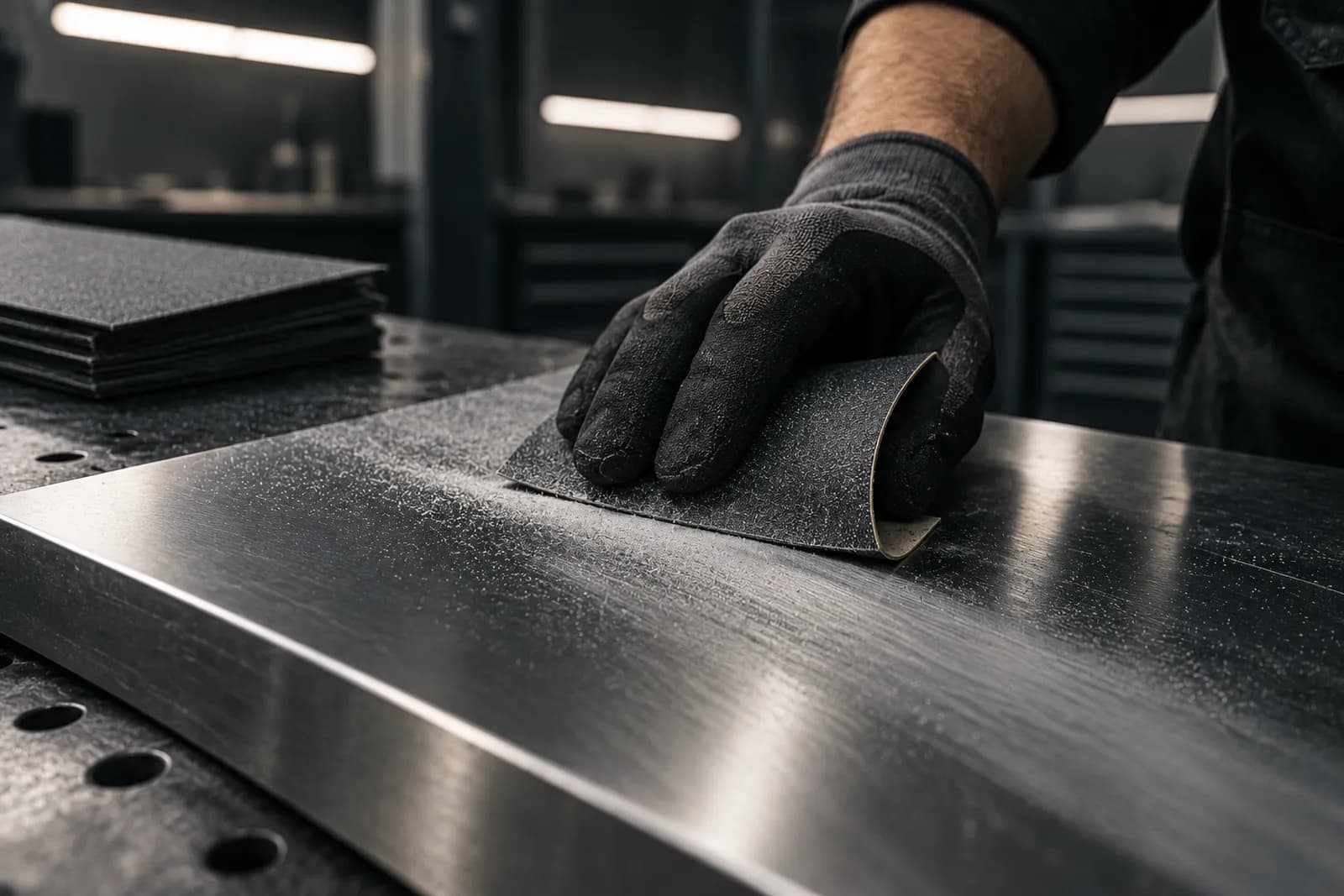
Tarnished brass and copper carry a thin oxide layer; underneath, the metal is usually smooth. Light patina comes off with non-woven abrasive without leaving scratches. Only scratches, dents or soldered joints need sandpaper: P240 for removal, then P400.
Brass and copper are soft – the grit digs in deep very quickly. Going coarser than P240 is rarely worth it, and even after P240 it takes four or five steps before the scratches disappear.
Fine sanding, wet
From P600, carry on wet: P600, P1000, P1500, P2000. Water cools and stops metal swarf from lodging in the grit and cutting new scratches. Wrap a strip of sandpaper around pipes and curves and pull it back and forth like a shoe-shine cloth – that gives an even finish all the way round.
If you want a brushed look, stop after P400 or with fine non-woven abrasive and sand everything in one direction.
Polishing and protecting
FAQ
Can I sand chrome-plated or brass-plated parts?
Only very carefully: the plating is often just a few micrometres thick, and P400 goes through it quickly. Only polish plated parts – don’t sand them.
Terms in this article
All terms in the sanding glossary →The whole sequence at once
6 grits, 1 × smallest pack each: PRO FILM 150 (10 pcs) P240 · P400 · P600 · P1000 · P1500, PRO SHEET 230 × 280 wet (25 pcs) P2000.
incl. VAT, plus shipping