Plastic & resin · 1 min read
Sanding GRP: boats, motorhomes, body parts
Keying gelcoat, levelling repairs, refining before paint: the sequence from P80 to P600 – and why the dust must stay out of your lungs.
Last updated: · published
KORNDEX sells abrasives – matching products are linked below the article.
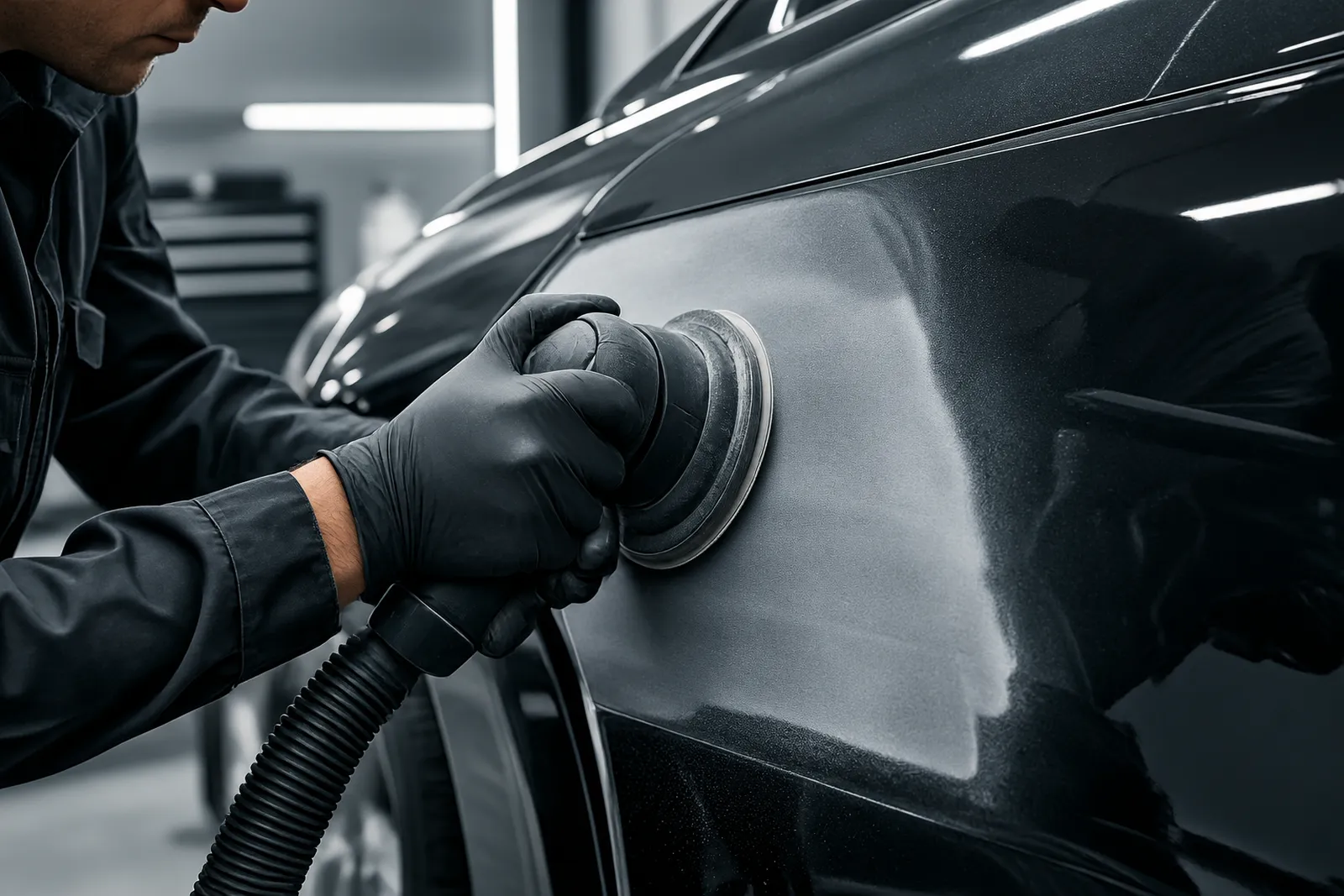
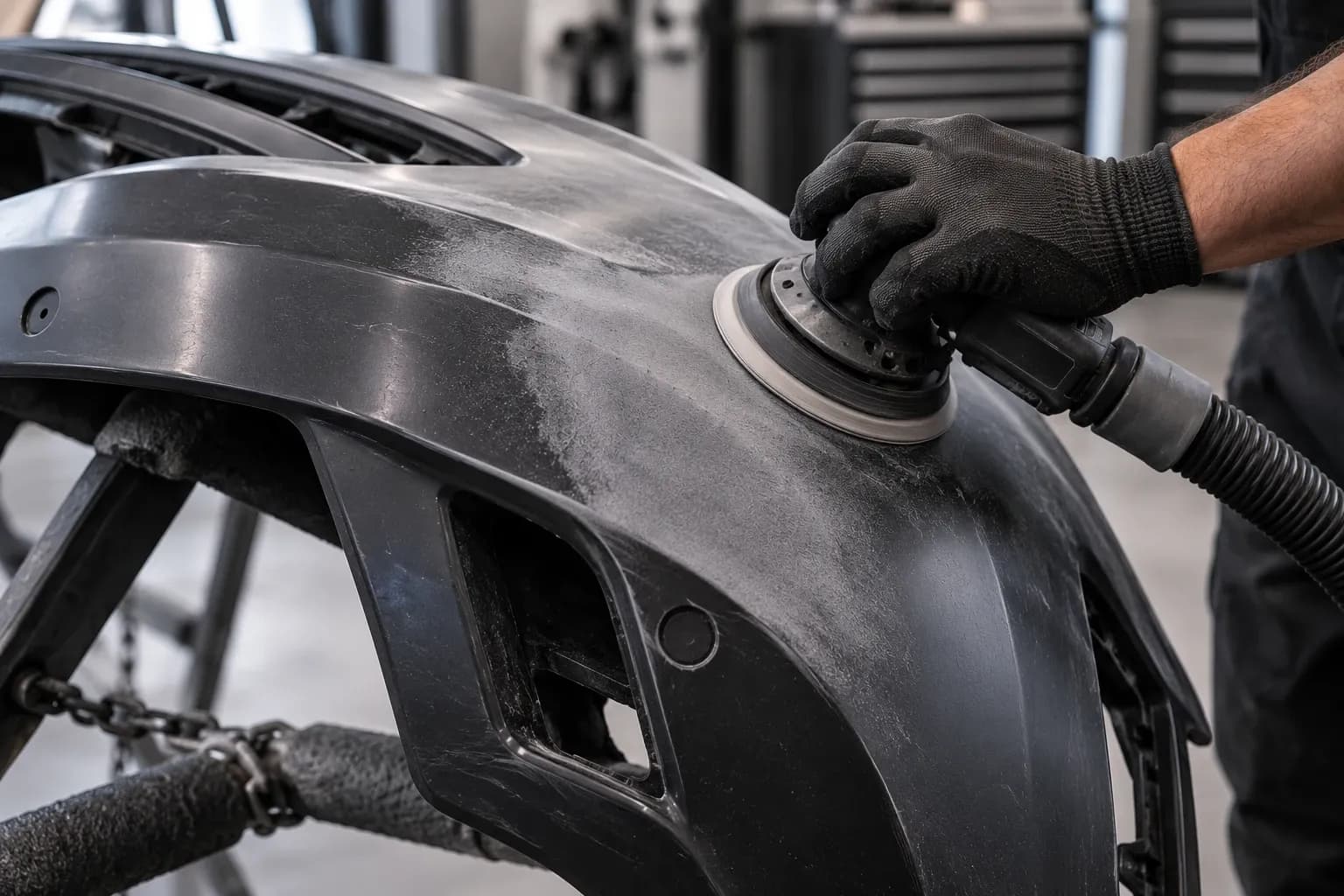
Levelling the repair
Gelcoat and paint preparation
Protection from the dust
GRP dust contains fine glass fibres that irritate skin and airways. Dust extraction on the machine, at least an FFP2 mask, long sleeves and gloves. Wet sanding binds the dust wherever it is possible.
Sanding a boat: hull, deck, underwater hull
Hull above the waterline: gelcoat or paint as above – for painting, P240 to P320 until matt; to refresh, wet up to P600 and polish. Large areas with the random orbital sander and an interface pad, curves at bow and transom by hand.
Deck: do not sand non-slip areas and textures flat, only matt them with a non-woven pad. A teak deck is only sanded lightly and along the grain, with P80 to P120 – the planks are thin, and every sanding costs substance.
Underwater hull: old antifouling is a topic of its own with its own protection rules. Follow the manufacturer’s data sheet, sand wet or with extraction, and wear a mask and gloves.
FAQ
Which grit should I use to key antifouling?
Usually P120 to P180, until the surface is matt and sound. Antifouling dust is toxic: wet sand or use extraction, and wear a mask and gloves.
Terms in this article
All terms in the sanding glossary →The whole sequence at once
7 grits, 1 × smallest pack each: PRO NET 150 (10 pcs) P80 · P120 · P180 · P240 · P320 · P400, PRO CUT 150 (10 pcs) P600.
Or as a set: Finish set for high gloss (P1000–P2000) for €59.90 →
incl. VAT, plus shipping