Abrasives · 1 min read
P240 or 240 grit? Converting grit scales
The European P-grade (FEPA) and the American grit rating (CAMI) only match in the coarse range. From P240 onwards they drift apart – with a conversion table.
Last updated: · published
Up to 220 both numbers are the same; above that the P number is higher: 600 grit is roughly P1200.
Two standards, the same numbers
Coarse up to P220: practically identical
From P240: the P number is higher
In the fine range, the same particle carries a higher number under FEPA than under CAMI. Rough equivalents: P400 is about 320 grit, P600 about 400 grit, P800 about 500 grit, P1200 about 600 grit, P1500 about 800 grit and P2000 about 1000 grit. P1000 sits between 500 and 600 grit.
So if you follow an American guide that says “wet sand with 600”, reach for P1200 – not P600. Use P600 instead and you are sanding two grades coarser than intended, and you will see the scratches later in the clear coat.
What matters
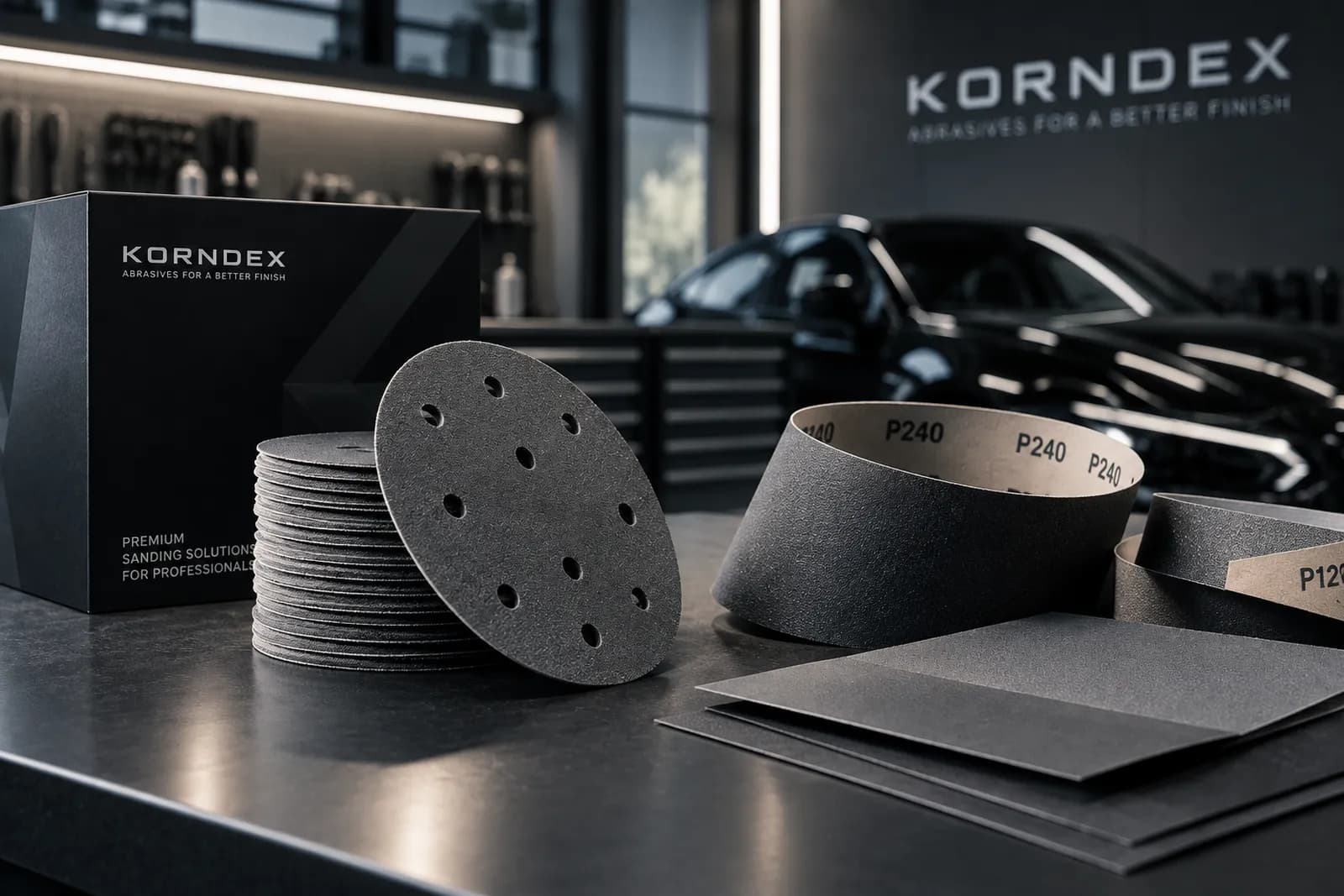
Never mix standards within one grit sequence: the rule of “never more than double the number” applies to the numbers of a single standard. All KORNDEX abrasives carry the FEPA P-grade; the grit guide explains every grade and what it is meant for.
FAQ
Does my sandpaper say P or grit?
European sandpaper made to FEPA has a P before the number. A number without a P usually comes from the USA (CAMI) or Asia.