Skip to content
KORNDEX – Home

Car & paint · 1 min read

Sanding and repairing rust bubbles on a car

Open the bubble, remove the rust down to bare metal, feather the edge: P80 to P320 – then primer, primer surfacer, paint.

Last updated: · published

KORNDEX sells abrasives – matching products are linked below the article.
Short answer: the grit sequence

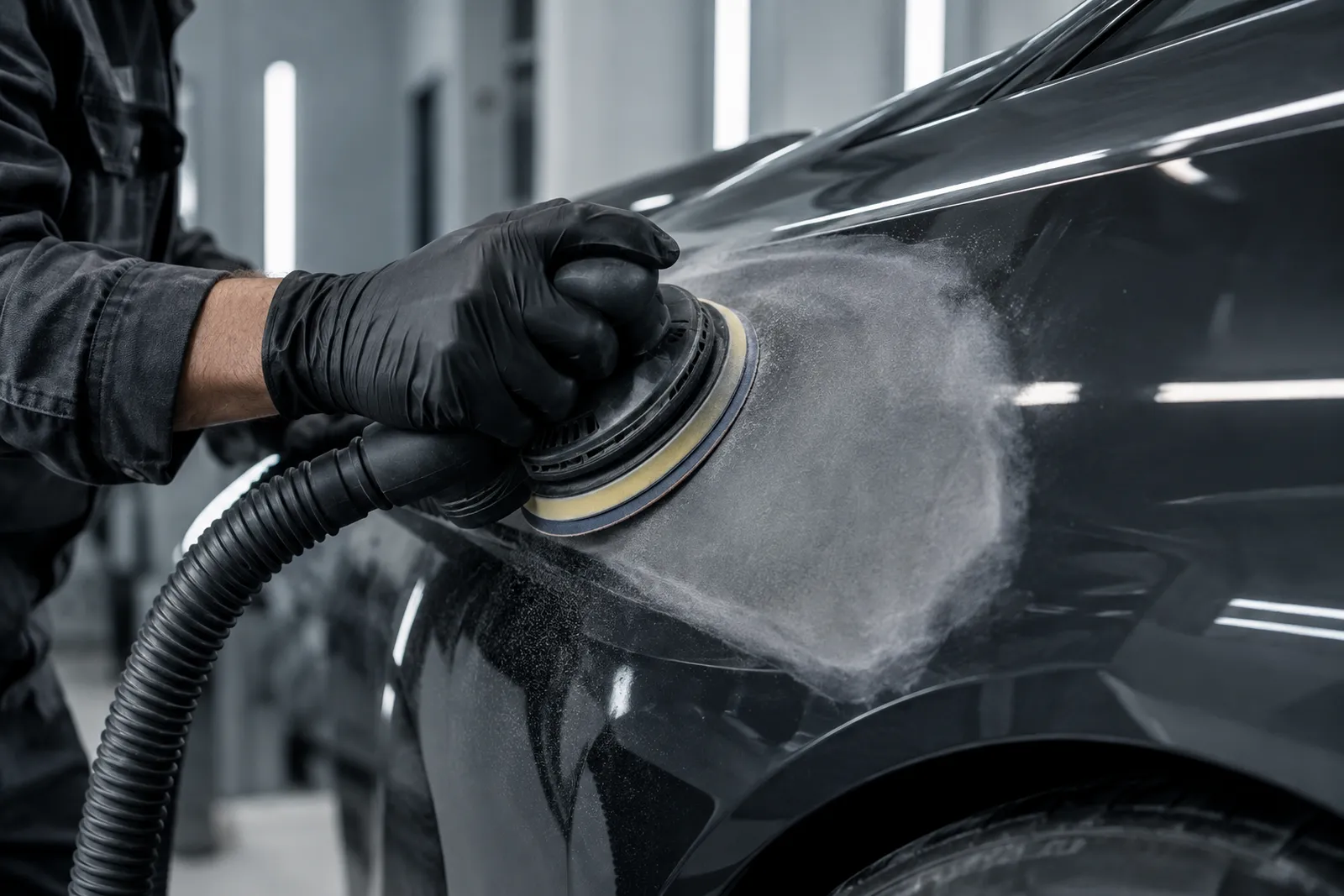
Random orbital sander on a wing, sanding dust on the paint

Down to bare metal

Under a rust bubble, the rust is almost always bigger than the bubble. Sand with P80 until there is bright, silver bare metal all round – any rust left in the pores will bloom again under the new paint.

If the panel is rusted through or very thin, sanding is no longer the repair: a section of the panel has to be replaced.

Feather the edge

Use P120 and P180 to feather the transition from bare metal to the old paint, so you can no longer feel the step with your finger. Then key the old paint around the area with P240 to P320 so the primer surfacer and paint will adhere.

Protect it quickly

Bare steel starts to rust within hours. Remove the dust, degrease and prime the same day. Then primer surfacer, sand it with P400 to P500, and top coat – as described in “Which grit before painting?”.

Sanding off and filling rust on a car

The order: rust off with P80 down to bare metal, feather the edge with P120 to P180, then prime first – body filler does not belong on bare, rust-prone steel, but on a suitable base as the filler manufacturer specifies. Fill dents and pitting from the rust thinly.

Shape the filler with P80, feather the transitions with P120 to P180 and finish with P240 before the primer surfacer – as described in “What grit for sanding body filler?”. Always sand body filler dry; it would soak up water and release it again under the paint.

FAQ

Can I just paint over the rust?

No. Rust under the paint keeps spreading and soon breaks through again. It has to come off, right down to bare metal.

Terms in this article

All terms in the sanding glossary →

The whole sequence at once

5 grits, 1 × smallest pack each: PRO CUT 150 (10 pcs) P80 · P120 · P180 · P240 · P320.

Or as a set: Car paint starter set (P120–P600) for €69.90 →

incl. VAT, plus shipping
More on this topic

Matching products

  • KORNDEX

    PRO CUT 150

    Professional sanding disc Ø 150 mm – maximum stock removal.

    €24.90

    €0.50 / pc · incl. VAT, plus shipping

  • KORNDEX

    PRO NET 150

    Mesh sanding disc Ø 150 mm – virtually dust-free, sands for longer.

    €24.90

    €0.50 / pc · incl. VAT, plus shipping

  • KORNDEX

    Soft interface pad

    Soft interface pad Ø 125 or 150 mm – for contours and for mesh discs.

    €8.90

    incl. VAT, plus shipping

  • KORNDEX

    Hand sanding block 70 × 198

    Hand sanding block with hook and loop and extraction port – for strips and rolls.

    €14.90

    incl. VAT, plus shipping

  • KORNDEX

    FFP2 dust mask

    Fold-flat FFP2 mask with valve – 10 pcs.

    €12.90

    incl. VAT, plus shipping

  • Random orbital sander on a wing, sanding dust on the paint

    Car & paint

    Repairing stone chips on a car: sanding the edge

    Sand the edge with P400, remove rust down to bare metal, and after painting blend wet with P1500 and P2000 and polish.

    P400 → P600 → P1500 → P2000

    Read · 1 min
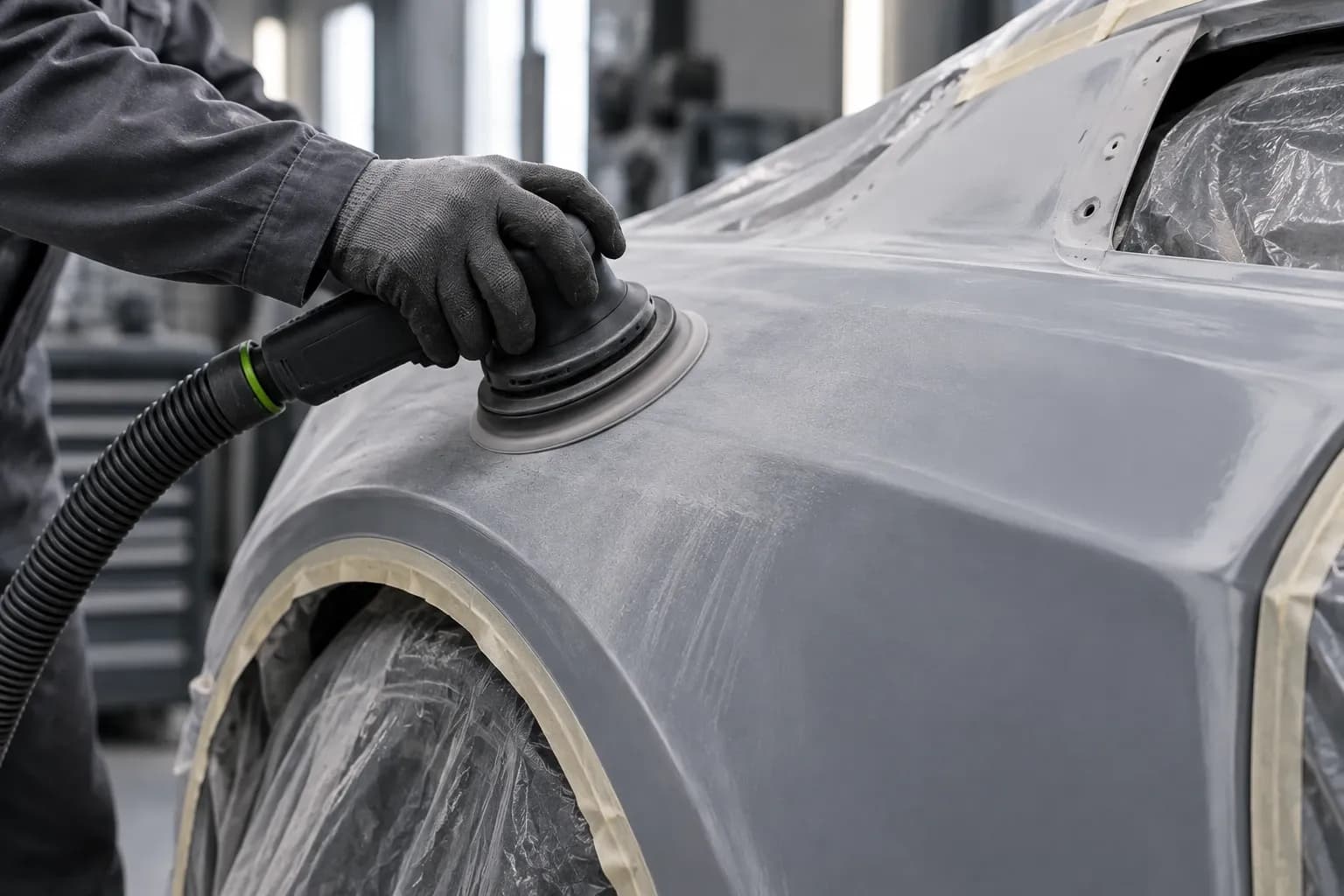
  • Random orbital sander on grey primer surfacer on a masked car body

    Car & paint

    What grit before painting?

    Primer surfacer with P320 to P400, old paint with P400 to P600, plastic with P320 to P400 – depending on substrate and paint.

    P320 → P400 → P600

    Read · 2 min
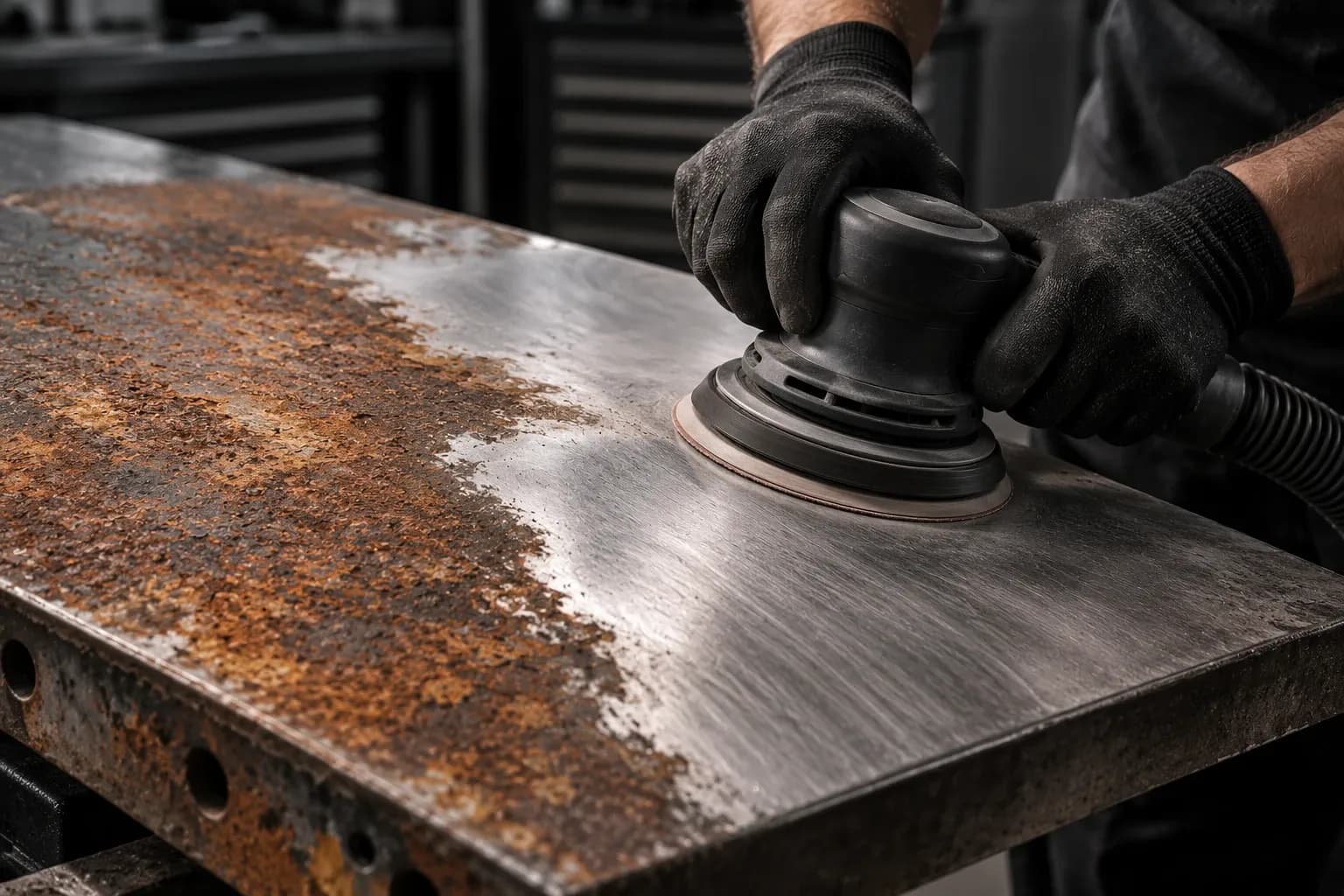
  • Random orbital sander removing rust from a steel sheet

    Metal

    Sanding metal: which grit for rust, welds and paint?

    Removing rust and mill scale, dressing welds, keying bare metal for primer – which grit for what, and how to tell it is too coarse.

    P60 → P120 → P240 → P400

    Read · 3 min